



SHOPPING CART
Your cart is empty.
shop now
Your cart is empty.
shop now
Every test in material science can fail if the wrong consumables get used or supplied late to the lab. Results then always lose trust.
The most important test consumables for material scientists include sample pans, crucibles, seals, and reference materials. These components directly affect measurement quality, equipment compatibility, and the reliability of every experimental result.
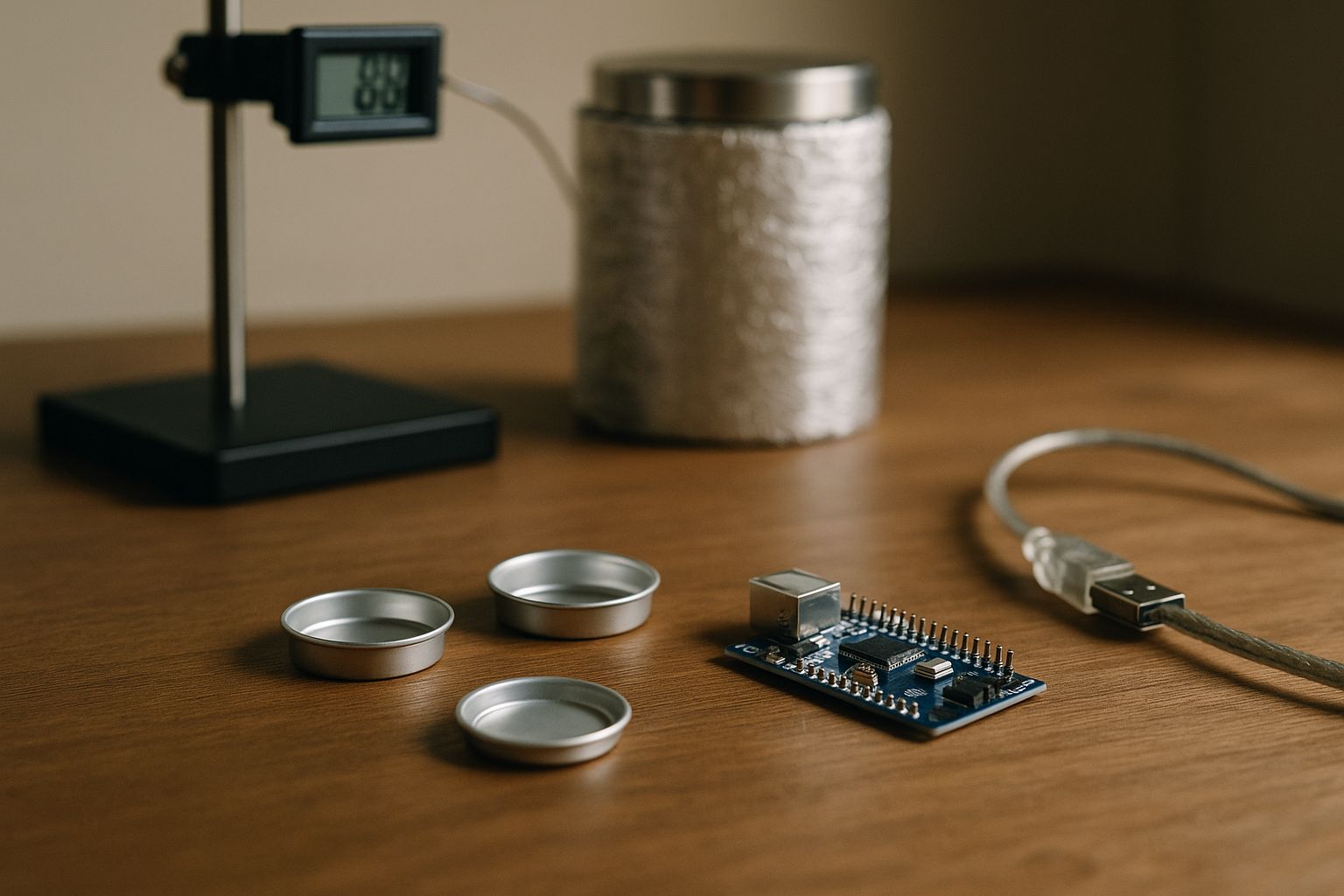
This guide helps you choose the right consumables for your material analysis so your data stays accurate and your experiments go smoothly. Many engineers and lab technicians ask which products are truly critical and how to avoid errors just caused by consumables. I explain it all in the sections below with real product insights and tips from experience.
When laboratories run tests, many supplies get used up fast. Usually, people don't notice them—until results start to slip.
Common test consumables in material science include crucibles, sample pans, lids, O-rings, and calibration standards. Each item may appear small, but it must work perfectly for accurate readings.
| Type of Consumable | Typical Material | Main Use | Replacement Frequency |
|---|---|---|---|
| Sample Pan | Aluminum, Platinum | Holds samples for DSC or TGA | Every run |
| Crucible | Ceramic, Platinum, Alumina | High-temp heating, TGA, STA | Weekly to monthly |
| Lid/Seal | Aluminum, Stainless Steel | Seals pans; controls atmosphere | Every run |
| Calibration Standard | Indium, Tin, Sapphire | Reference point verification | Monthly |
| O-Ring / Gasket | Silicone, PTFE | Pressure or volatile sample seal | Each assembly |
The most frequently changed items, like sample pans, must always fit your test method. Using mismatched or low-quality consumables can introduce hidden errors right from the start.
Small parts like pans and seals can make or break entire test runs. Failures lead to wasted time and doubt in the lab's work.
Test consumables influence results by controlling contamination, heat transfer, and stability during experiments. Even the smallest flaw, like an imprecise lid, can disturb data and force researchers to repeat entire series.
| Consumable | What Goes Wrong? | Test Affected | Impact on Accuracy |
|---|---|---|---|
| Aluminum Pan | Poor purity; deformation | DSC, TGA | Wrong peak temperature, drift, baseline shift |
| Platinum Crucible | Contamination from reuse | STA, TGA | False weight loss, secondary reactions |
| Sealing Lid | Poor fit, leaks | Volatile sample or gas reaction | Loss of mass, pressure errors |
| Calibration Standard | Outdated or impure | All calibration tests | Offsets every subsequent measurement (see Calibration) |
When I first switched to a new supplier, I noticed baseline noise increased in my DSC data. The cause turned out to be an inconsistency in pan lid thickness. Issues like this demonstrate that even a very minor detail in scientific testing can have a large impact on data reliability.
Every material testing device has unique needs. Not all pans or crucibles work for every system or analysis type.
Specialized consumables are needed for instruments like Differential Scanning Calorimetry (DSC), Thermogravimetric Analysis (TGA), and Simultaneous Thermal Analysis (STA). These tests require compatible pans, crucibles, and seals to ensure correct sample containment and reliable performance.
| Instrument | Main Consumable | Tested Feature | Why Specialized? |
|---|---|---|---|
| DSC | Sealed Aluminum Pan, Crimped Lid | Melting point, phase transition | Seals must prevent evaporation or contamination (phase transition accuracy needs this) |
| TGA | Platinum Crucible, Open Pans | Weight loss, thermal stability | Material must not react; withstands high temp |
| STA | Pt Crucible, Reference Mass | Simultaneous heat and mass change | Needs dual compatibility, zero cross-talk |
| DMA | Clamp, Single-use Pad | Viscoelastic properties | Pad must match geometry, not deform under load |
| Custom Reactor | Special Seal, Fused Quartz Pan | Extreme pressure or chemical | Seal type must match stress/tolerance |
I have seen many teams try to substitute generic pans for high-end instruments. Most of the time, they run into issues with leaks, sample loss, or incorrect temperature readings. Choosing the right consumables for each scientific instrument is one of the most important steps for reliable outcomes.
I found early in my work that guessing at consumables almost always leads to setbacks. Matching products to needs is crucial.
To pick proper consumables, first check your instrument’s model and the test requirement. Read the equipment manual, consider the material type, test environment, and analyze sample size. Then choose consumables proven compatible and designed for the analysis conditions.
| Selection Step | Key Questions | What to Check | Tips for Success |
|---|---|---|---|
| Know Instrument | Model & specs? | Pan size, geometry, temp range | Check against manufacturer’s list |
| Identify Test | DSC or TGA? | Sample volatility, heat flow | Choose seals for volatile, open pans for stable |
| Consider Material | Metals, polymers, liquids? | Reactivity, corrosion | Use inert pans for corrosive samples |
| Analyze Conditions | Temperature, pressure? | Maximum tolerance needed | Pick correct material (Al, Pt, Quartz) |
| Check Compatibility | Matched to instrument? | Brand, design fit | Use compatible products like REDTHERMO sample pans |
Proper selection is the only way to maintain reliable data integrity. I always use a printed compatibility chart for each test station and only stock consumables with full specifications and peer feedback. In research, this saves both time and costly mistakes and helps keep every experiment reproducible.
Choosing the right test consumables is essential for scientists to trust their data and achieve true repeatability in material science experiments.
Contact REDTHERMO for Consumable Selection Support

C082.Wangdefu International Building, Furong, Changsha, Hunan, China


+86-19907415020