



SHOPPING CART
Your cart is empty.
shop now
Your cart is empty.
shop now
Buying the wrong DSC pans for your home lab wastes your time and money. If you want reliable testing, you need to make smart choices from the start.
You should consider pan compatibility, important technical specifications, and the batch size that fits your home lab's needs. Buy from trusted suppliers for proven quality and results.
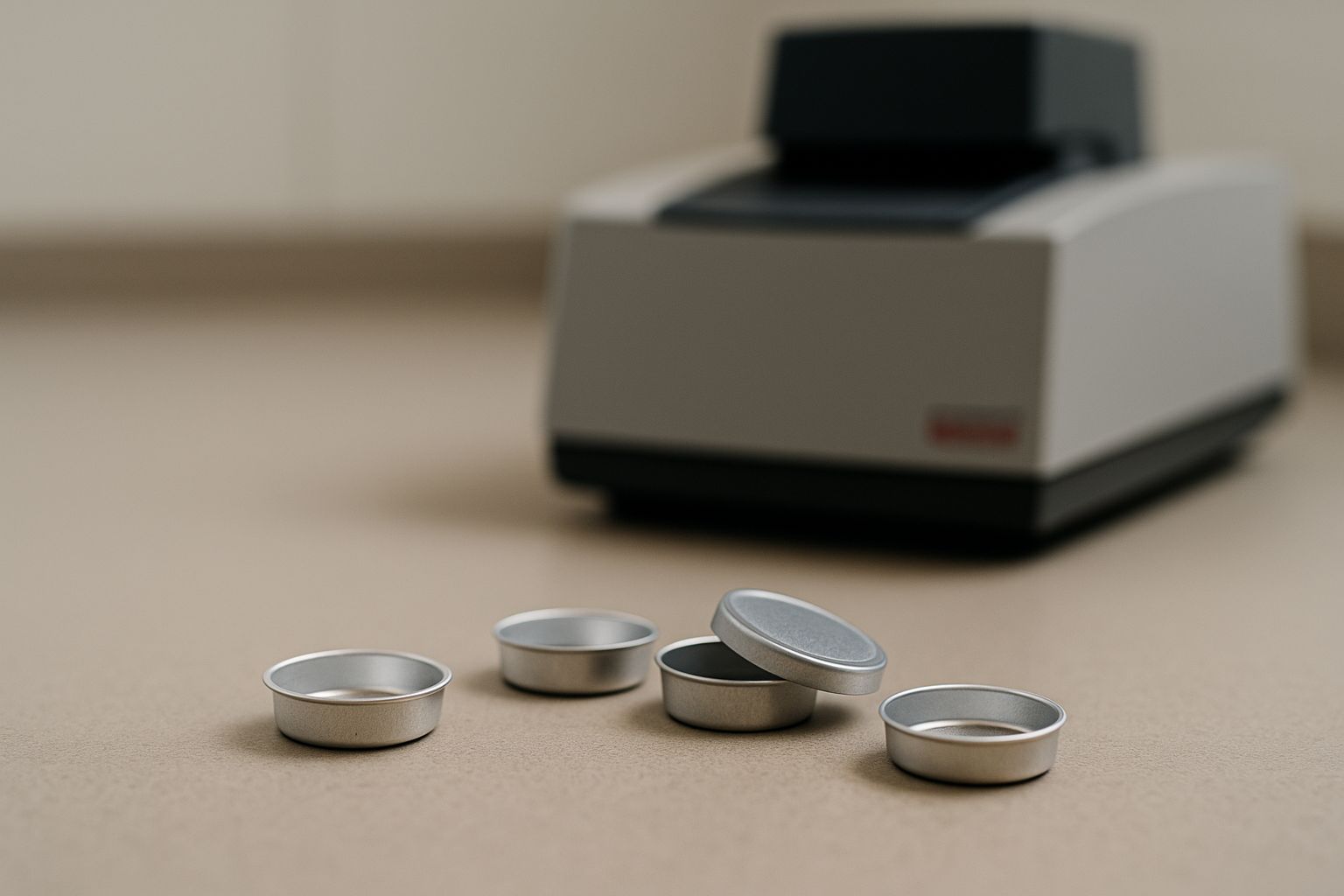
You might think buying pans is simple, but each choice impacts your results and costs. If you select the right pans, you avoid headaches and get accurate data. Let’s look at what you should know before making a purchase.
Guessing the wrong pan size or purity can spoil your tests. When you know what matters most, you avoid frustration and keep your costs down for your home setup.
The essential technical specifications are material purity, pan dimensions, sealing ability, and heat tolerance. These directly impact sample safety, compatibility, and data reliability for home users.
| Specification | Why It Matters | Typical Requirement |
|---|---|---|
| Material Purity | Prevents contamination and ensures consistent heat transfer. | ≥99.99% Aluminum or platinum for sensitive analysis |
| Pan Dimension | Guarantees instrument fit, prevents sensor errors. | Diameter/tolerance specific to your DSC model (±0.01mm) |
| Sealing Method | Protects sample from air and moisture. | Crimped or sealed lid as required by test method |
| Thermal Stability | Maintains integrity at high test temperatures. | At least 400–600°C for aluminum pans |
My experience taught me that ignoring even a small detail, such as the pan's wall thickness, can cause baseline drift or sample loss. By comparing the DSC method with TGA, you find each test has unique pan needs. Standardizing your choices helps the home laboratory run smoothly and with confidence.
If you worry about high costs, aftermarket pans look appealing. But do they meet your home lab’s requirements for accuracy and safety?
Aftermarket DSC sample pans offer reliable quality, provided you confirm their material purity and size compatibility. Many home users benefit from cost savings and fast delivery with these trusted alternatives.
| Comparison | Aftermarket DSC Pans | Original Manufacturer Pans |
|---|---|---|
| Material Purity | High (≥99.99%, check supplier specs) | High (certified by manufacturer) |
| Compatibility | Must check with DSC brand/model | Always guaranteed |
| Price | Lower (often 30-50% less) | High (premium) |
| Availability | Faster shipping from specialty providers | Occasionally backordered |
| Batch Size Options | Flexible, good for small labs | Often larger minimums |
When I compared aftermarket to original pans for my setup, I found that leading brands offer complete compatibility tables and purity certificates. For most home labs, quality assurance is just as important as price. Vet aftermarket suppliers by requesting technical documentation before your order. A close look at reviews and batch test reports ensures the pans meet your needs.
Mismatched pans cause poor seal or machine errors. If you match your sample pans with your equipment, you reduce waste and make every test reliable for your experiments.
To ensure compatibility, check your DSC instrument model and compare it to an updated pan compatibility chart. Look for match on pan size, lid style, and material before you buy.
| Step | Action | Result |
|---|---|---|
| 1. Get Model Number | Check your DSC equipment manual | Know required pan dimensions |
| 2. Use Compatibility Table | Download or request pan compatibility chart | Match model to right pan size/material |
| 3. Cross-Check Pan Specification | Measure existing pans with calipers | Catch differences in diameter/height |
| 4. Confirm Lid Type | Check if your test needs crimped or vented lid | Match sample condition requirements |
| 5. Contact Supplier Support | Ask supplier for technical datasheet | Get direct advice on compatibility |
Sometimes I discover tiny changes in the thermal analysis device may impact which pans fit well. Many pan suppliers have online model finders and fast email support. By taking the time to confirm every technical detail, you can trust your pans will always fit and work with your system. Good records of equipment and pan documentation help your home laboratory run with fewer mistakes.
You face the choice between bulk savings and storage limits. If you pick the right batch size, you avoid waste and keep your lab budget healthy.
For most home labs, buying in small packs is wise unless you use a high volume. Small batches reduce spoilage, lower upfront costs, and keep your inventory fresh with minimal space used.
| Purchase Mode | Advantages | Disadvantages | When To Choose |
|---|---|---|---|
| Bulk Purchase | Lower price per pan, fewer reorder events | Requires more storage, higher upfront cost, risk of unused stock | High throughput or group buy scenarios |
| Small Batches | Low storage needs, ideal for limited use, less capital locked | Higher unit price, may need to reorder often | Most home labs or initial method testing |
When I was starting out, I bought too many pans at once and later saw several expire before use. For home users, calculate your expected monthly testing frequency and review if small-batch subscription from a reputable supplier meets your needs. Staying flexible keeps lab routines simple and prevents overspending on consumables. You can find more about inventory management best practices for labs online.


C082.Wangdefu International Building, Furong, Changsha, Hunan, China


+86-19907415020