



SHOPPING CART
Your cart is empty.
shop now
Your cart is empty.
shop now
Struggling with inconsistent DSC results at home? Choosing the right sample pan can fix accuracy issues fast.
To get reliable home DSC results, pick sample pans made from 99.99% pure aluminum, uniform wall thickness, and tight manufacturing tolerances. Proper sealing and pan design help ensure repeatable performance for any level of experiment.
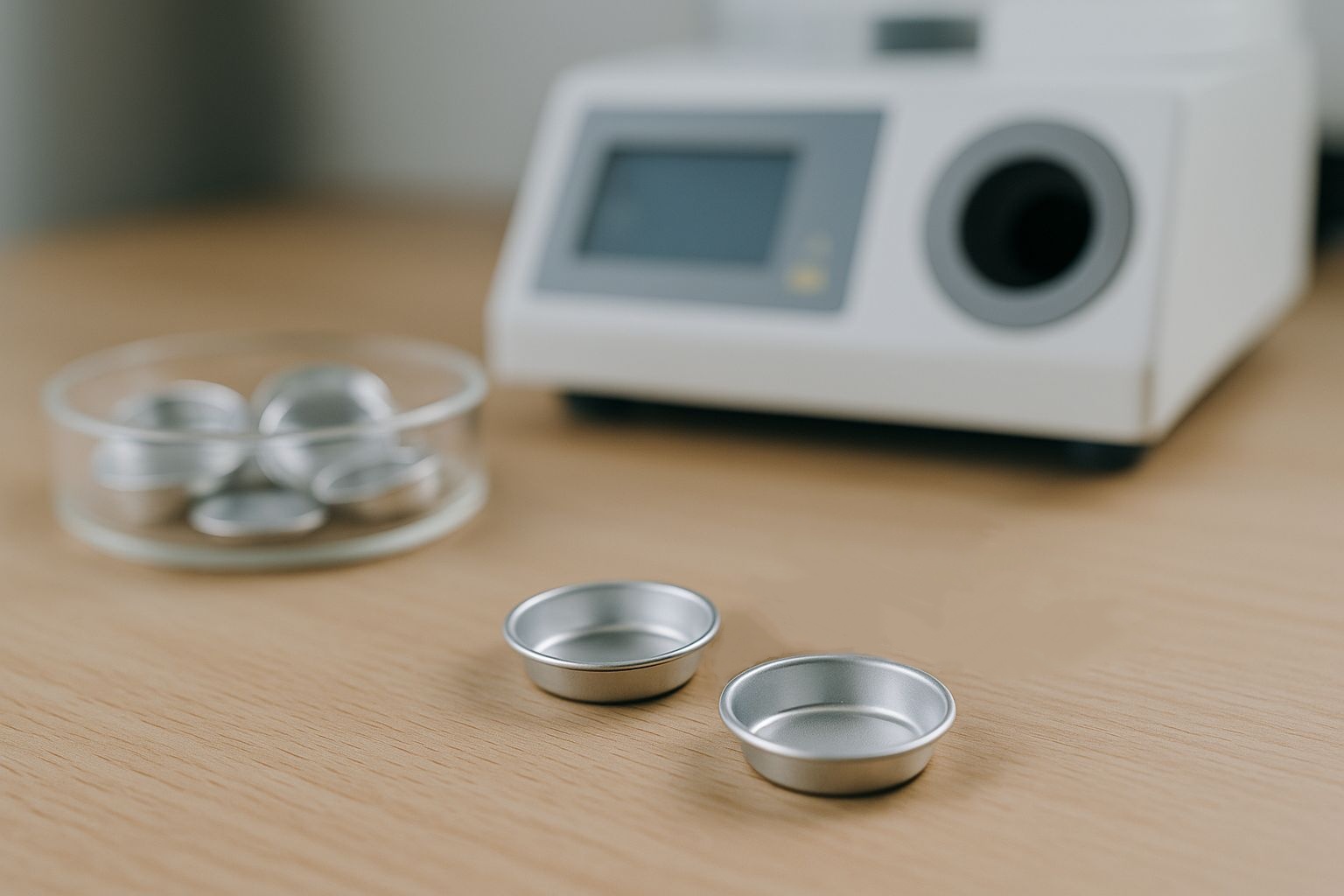
Even in a home lab, paying attention to the physical and chemical details of your DSC pans means each experiment is easier to repeat and trust. Let’s look at how pan materials, shapes, and seals matter for your results—plus how to choose the right pan for your setup.
It is easy to ignore the small details in sample pans, but those details have a real impact on your data accuracy.
DSC pans for home labs work best when made from aluminum with at least 99.99% purity and a wall thickness between 0.2–0.3 mm. These specs cut measurement errors.
| Parameter | Standard Value | Why It Matters | Key References |
|---|---|---|---|
| Aluminum Purity | ≥99.99% (4N) | Prevents contamination, improves repeatability. | ScienceDirect: Purity Effects |
| Thickness | 0.2–0.3 mm | Gives uniform thermal response, fits most home DSC holders. | Springer: Pan Thickness |
| Surface Finish | Clean, smooth, no scratches | Reduces baseline noise during test. | Thermal Analysis Guide |
| Dimensional Tolerance | ±0.01 mm | Ensures proper fit, prevents leaks. | Manufacturing Tolerance |
From my experience, low-quality pans cause unsteady baselines and even leaking. Consistent raw material specs help you trust every DSC run. Some home users experiment with less pure pans, but data variation increases with lower purity or rough finishes. For perfect repeatability, stick to the highest standards available to you.
Sometimes even with pure pans, your home DSC readings seem off. The actual shape and build of your pans can be the real difference maker.
The right pan design lets heat move evenly, so samples reach the proper temperature without hot spots. Shallow, flat-bottom pans give the best heat flow and more stable measurements at home.
| Design Parameter | Effect on Testing | Example Usage | Reference |
|---|---|---|---|
| Flat vs. Deep Dish | Flat pans have fast, even heating. Deep pans insulate, slowing response. | Flat: polymers, thin films. Deep: slow-release reactions. | Heat Transfer Basics |
| Wall Symmetry | Uniform walls reduce edge effects, giving better repeatability. | All precise mass-balance tests. | ScienceDirect: Geometry Effects |
| Rim Height | Low rim height speeds up heat transfer; high rims trap heat. | Low rim preferred for screening. | Pan Design Types |
When I worked with oddly shaped pans, I saw shifts in my melting peaks—sometimes several degrees off from standard data. Those small geometry changes in the pan can delay heat transfer and change result profiles. Always check if your sample pan design matches your test’s needs. Even home labs can benefit by keeping to trusted geometries.
Dealing with liquids or volatile powders can be messy. The way a pan closes makes all the difference in your results.
For home labs handling liquids or easy-evaporation samples, sealed pans (with O-rings or tight crimps) contain the sample best, protect sensors, and give a sharper signal.
| Closure Type | Leak Risk | Typical Use Case | Further Reading |
|---|---|---|---|
| Crimped Seal | Medium if not crimped hard | Routine solids, low-volatility liquids | Application Note: PerkinElmer |
| Hermetic (Press-Sealed) | Very low risk | High volatility, moisture-sensitive tests | METTLER Info |
| O-Ring / Gasketed | Lowest with proper fit | Organic solvents, water analysis | O-Ring Technology |
Once, I tested a solvent in a poorly sealed pan and lost half the sample before the test finished. For home work, I suggest hermetic or O-ring sealed pans every time you test something that can vaporize. While crimped pans are easy, they can leak under high heat or sharp temperature ramps.
Home labs rarely push pans to the breaking point, but using the wrong pan will wreck an expensive DSC sensor.
Most home-lab DSC pans handle up to 600°C for aluminum and as high as 1600°C for platinum, making them fit for the widest use cases.
| Pan Material | Max Operating Temp (°C) | Typical Uses | Source |
|---|---|---|---|
| Aluminum | 600 | General organics, polymers | ScienceDirect: Aluminum |
| Gold-coated Aluminum | 650 | Reactive samples, salt mixtures | Sigma-Aldrich Reference |
| Platinum | 1600 | High-temp ceramics, metals | Platinum (Wikipedia) |
| PTFE | 300 | Acidic or base samples, low-temp only | PTFE Properties |
In my experience, most home labs use aluminum or gold-plated pans since they balance cost and high temperature use. For rare high-heat tests, platinum is best but very expensive. Remember, always match pan type to your sample and heat requirements to avoid damaging your instrument. Always double-check pan specs in the manual that comes with your DSC. It can save your equipment.
Choosing the right DSC pan with high purity, tight specs, and proper sealing delivers reliable results and keeps your home lab running smoothly.


C082.Wangdefu International Building, Furong, Changsha, Hunan, China


+86-19907415020