



SHOPPING CART
Your cart is empty.
shop now
Your cart is empty.
shop now
Data errors, poor reproducibility, and sample loss are often caused by careless pan sealing in DSC analysis. I learned this hard lesson early on.
Proper DSС pan sealing is essential because it prevents sample evaporation, external contamination, and unstable baselines in measurements. Secure sealing supports precise thermal transitions and high-quality results.
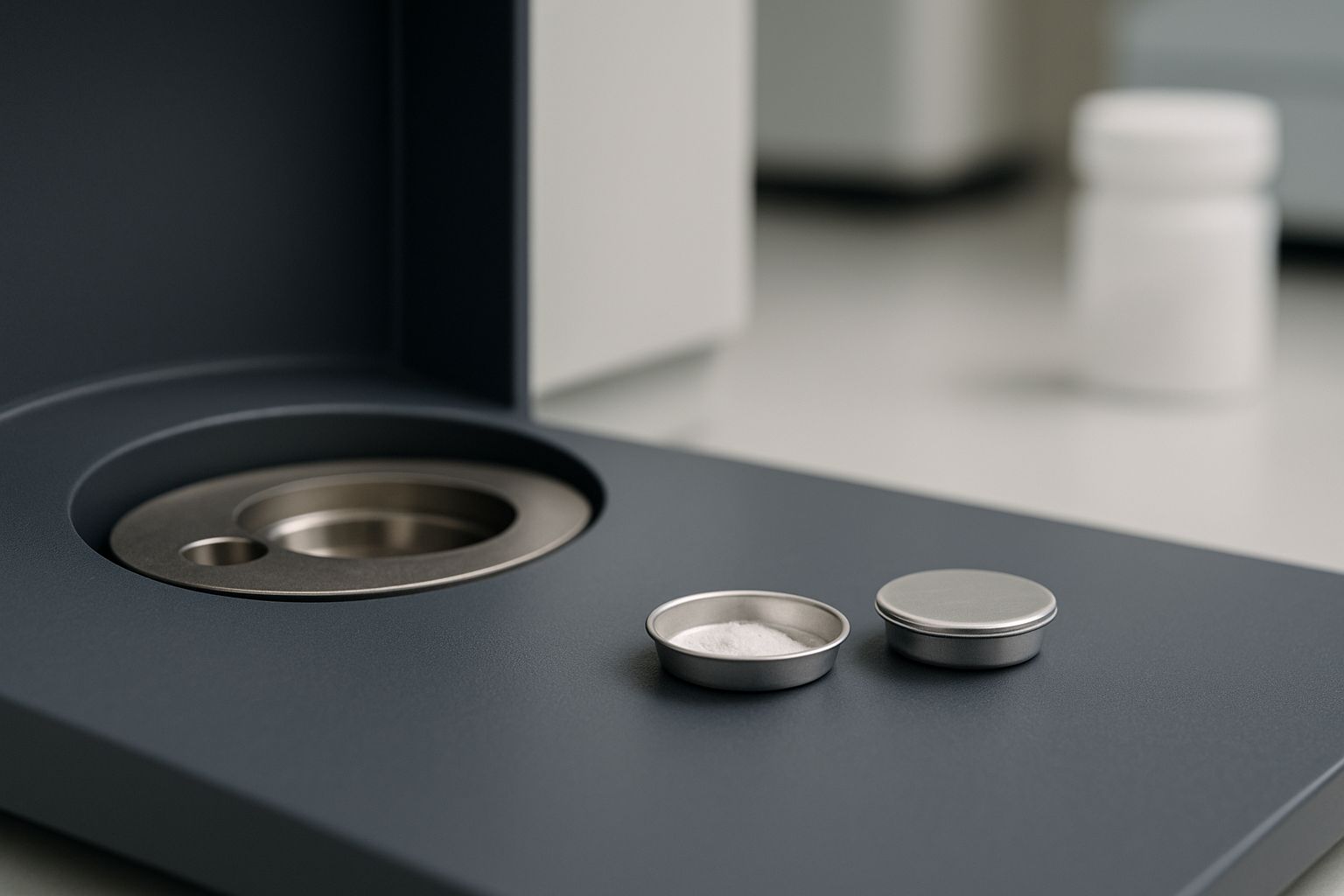
The right sealing method can be as important as the pan material. When I started, I rushed pan assembly and got unpredictable results. Now, I always give sealing careful attention. This step never takes more than a few minutes but makes all the difference.
Poorly sealed pans allow vapor or contaminants in, giving false readings and baseline shifts. This can lead to rejected results and wasted samples.
Proper sealing of DSC pans keeps samples intact, ensures consistent heat transfer, and defends against air or moisture intrusion during heating cycles.
| Sealing Issue | Measurement Risk | Lab Impact | Reference |
|---|---|---|---|
| Leaky seal | Sample mass loss, shifted peaks | Invalid test result | DSC |
| Incomplete closure | Entry of outside gases | Baseline drift, noise | Experimental error |
| Loose-fitting lid | Uncontrolled evaporation | Unrepeatable data | ASTM D3418 |
I saw a clear improvement in result stability after shifting to hermetic sealing methods for moisture-sensitive and volatile samples. Good sealing supports traceable, trusted data and helps pass audits easily.
Flawed sealing wastes samples and forces costly repeats. Simple changes in preparation can bring major improvements in DSC accuracy.
Inspect the pan and lid for defects before use. Use a calibrated crimper or tool for uniform pressure. Practice sealing on blanks to confirm technique before real tests.
| Step | Operation | Purpose | Reference |
|---|---|---|---|
| Visual inspection | Check for dents, dirt, or warps | Eliminate common sealing errors | Visual inspection |
| Tool selection | Choose proper crimping device | Apply steady and even seal pressure | Crimping |
| Test sealing | Seal with empty pan, check tightness | Teach hand feel and fit | Quality control |
After switching to a better crimper and practicing closes on blanks, my error rate dropped. Take care to keep all sealing areas clean—protecting against dust, oils, or tiny particles gives the best possible result.
I have seen irreproducible curves, ghost peaks, and empty sample pans—all linked to sealing mistakes in DSC work.
Poor sealing causes data loss from evaporation, noise in readings, and even dangerous spills inside the DSC chamber.
| Consequence | How It Happens | Preventive Step | Reference |
|---|---|---|---|
| Sample loss | Vapor escape through leaks | Check each seal with visual and gentle force | Sealing |
| Contamination | Entry of external gases or moisture | Use hermetic or O-ring pans | Hermetic seal |
| Instrument damage | Leaked sample corrodes cell or sensor | Inspect pans before every run | DSC |
Once I cleaned a DSC cell for hours after a seal failed mid-run. I always double-check my seals now and use only pans designed for my exact sample conditions.
Not every test needs heavy-duty crimping. Manual sealing works well for stable samples and quick tasks.
Use crimping for high-pressure, volatile, or moisture-sensitive samples. Apply manual sealing for simple, routine polymer or powder samples without strict sealing needs.
| Sealing Method | Best Sample Type | Advantages | Reference |
|---|---|---|---|
| Crimping | Liquids, volatiles, pharmaceuticals | Strong seal, withstands pressure, blocks gases | Crimping |
| Manual press-fit | Solid polymers, powders | Fast setup, easy for routine tests | Friction fit |
| O-ring/manual closure | Moisture sensitive, complex matrices | Easy repeat opening and closing | O-ring |
I keep both tools on hand and choose based on test risk and time available. High-value samples or regulatory runs get crimping. Routine checks and training work gets the manual approach.
Careful DSC pan sealing ensures reliable data, saves samples, and prevents costly cleanups. Choose and validate your sealing method for each analysis and always inspect pans before use.


C082.Wangdefu International Building, Furong, Changsha, Hunan, China


+86-19907415020