



SHOPPING CART
Your cart is empty.
shop now
Your cart is empty.
shop now
Choosing the wrong DSC crucibles for your lab tests can lead to ruined samples and wasted time. Lower-priced options are only helpful when you know what to look for in the details.
Budget-friendly DSC crucibles should be made of high-purity material, fit your DSC instrument, and withstand required temperature ranges to ensure your thermal measurements stay reliable and accurate.
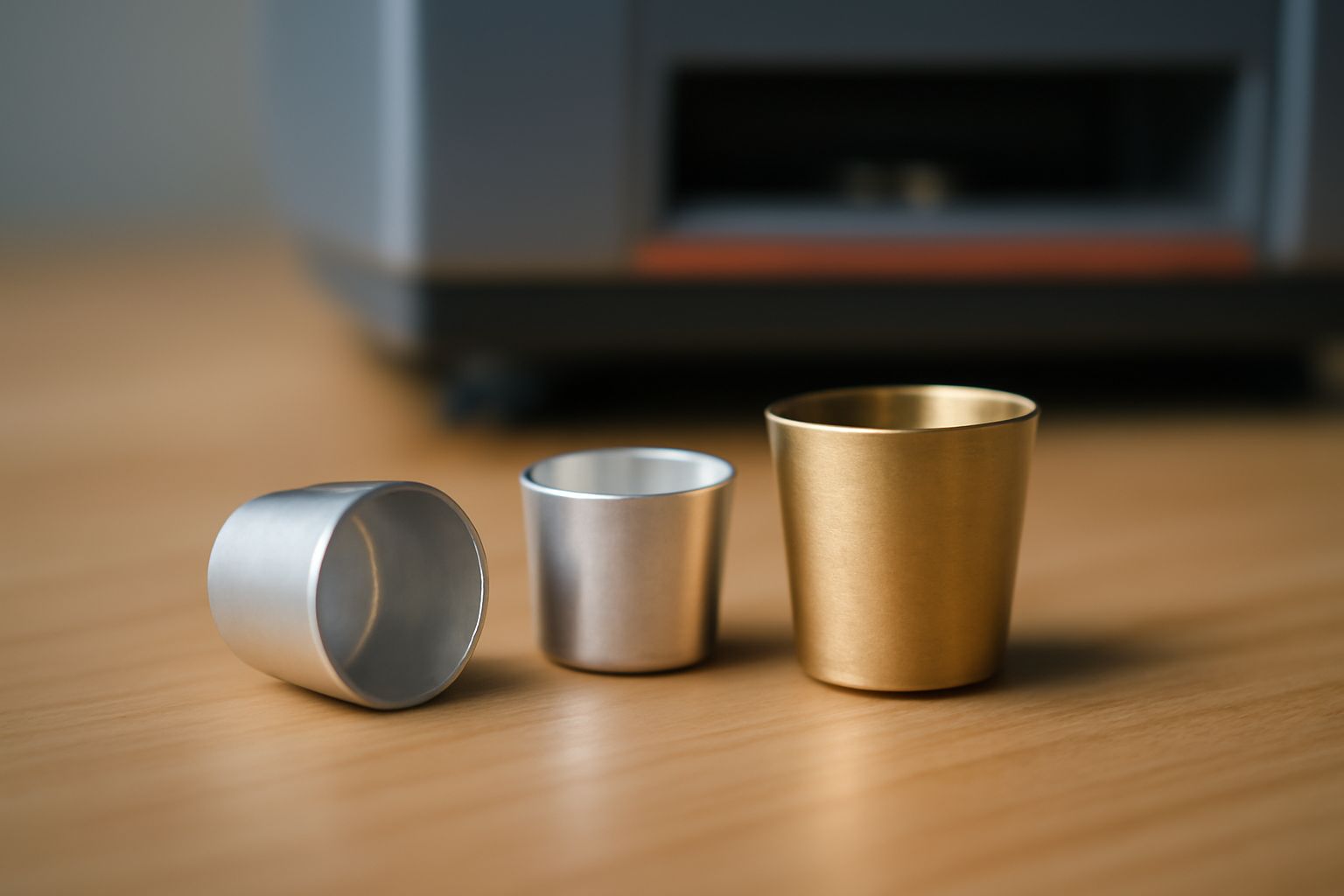
I learned to check every technical specification before ordering new crucibles. Getting material type, size, and heat limits right saved me money and kept my data trustworthy for every test.
Poor material selection can cause errors, sample sticking, or pan failure in thermal tests. Most budget crucibles use a few main materials chosen for performance and price.
Common materials for affordable DSC crucibles are high-purity aluminum, aluminum alloys, and, in some cases, ceramics or coated metals. Each type gives a balance between heat tolerance, cost, and chemical resistance.
| Material | Main Properties | Common Uses | Reference |
|---|---|---|---|
| High-purity Aluminum | Excellent heat transfer, low cost, easy to seal, single use | Most organic, polymer, and food samples | Aluminum |
| Aluminum Alloy | Higher durability, used for specialty testing, still cost-effective | Routine screening, teaching labs | Alloy |
| Ceramic/Coated Metal | Better chemical resistance, slightly higher price, reuse possible in some tests | Aggressive or reactive chemicals, research studies | Ceramic |
I always check for high aluminum content and avoid blends with low heat stability. Supplier datasheets and material certifications help verify quality.
Using a pan outside its safe range can warp the crucible or ruin the sample. Knowing the exact limit is vital for accurate and safe testing.
Check the stated safe range in the product datasheet, making sure it covers your experiment’s lowest and highest target temperatures. Most budget aluminum crucibles go from -150°C to 600°C; ceramics go higher.
| Material | Typical Safe Range (°C) | Examples of Use | Reference |
|---|---|---|---|
| Aluminum | -150 to 600 | Melting, DSC on polymers | Calorimeter |
| Aluminum Alloy | -150 to 650 | Routine or teaching labs | Manufacturer info |
| Ceramic | -190 to 1000+ | Research, chemical stability studies | Research articles |
I always compare the test’s maximum temperature with the pan’s spec before every order or run. Staying inside the safe range avoids costly mistakes.
Incorrect pan size or shape can give false readings or prevent samples from heating evenly. Labs should match size to both sample and equipment for the best data.
The most critical dimensions are base diameter, pan height, and sample volume. Choose pans that fit your DSC model and hold the right sample mass; most pans handle 5–30 mg.
| Dimension | Role in Testing | Typical Range | Standard Info |
|---|---|---|---|
| Base Diameter | Matches the instrument’s sample stand | 5–8 mm | Instrument catalog |
| Pan Height | Controls headspace and avoids overfilling | 1–2 mm | User manual |
| Sample Volume | Sets the amount of material tested | 20–50 μL | Sample size |
When I get my pans, I always measure the key dimensions and test-fit with my DSC tray before starting. Instrument makers and suppliers offer sizing guides for fit.
Poor heat transfer gives slow, noisy, or unreliable test results—the main risk with low-quality or mismatched DSC pans. Good conductivity brings sharp, accurate transitions and trust in your data.
High-purity aluminum crucibles have excellent thermal conductivity, allowing even sample heating and sharper peak detection. Ceramics have lower conductivity but boost chemical compatibility for special tests.
| Material Type | Thermal Conductivity (W/m·K) | Effect on Test Outcome | Reference |
|---|---|---|---|
| High-purity Aluminum | ~237 | Fast, even heating, most accurate phase change tests | Thermal conductivity |
| Aluminum Alloy | 120–180 | Good accuracy for basic or short-run studies | Materials guides |
| Ceramic | 5–50 | Slow heating, special applications, increased chemical resistance | Engineering tables |
By tracking the pan’s thermal specs, I ensure my results are repeatable and sharp, especially when comparing phase changes and melting points. Reference tables and Wikipedia help guide my buys and analysis.


C082.Wangdefu International Building, Furong, Changsha, Hunan, China


+86-19907415020