



SHOPPING CART
Your cart is empty.
shop now
Your cart is empty.
shop now
Labs lose data and time from inconsistent readings caused by faulty or overpriced DSC crucibles. Simple mistakes or wrong pan choice can disrupt entire research projects and add stress to test schedules.
Affordable DSC crucibles can match premium options for reliability if you choose trusted suppliers, confirm fit, and rely on technical support for solving errors or clarifying test results in thermal analysis.
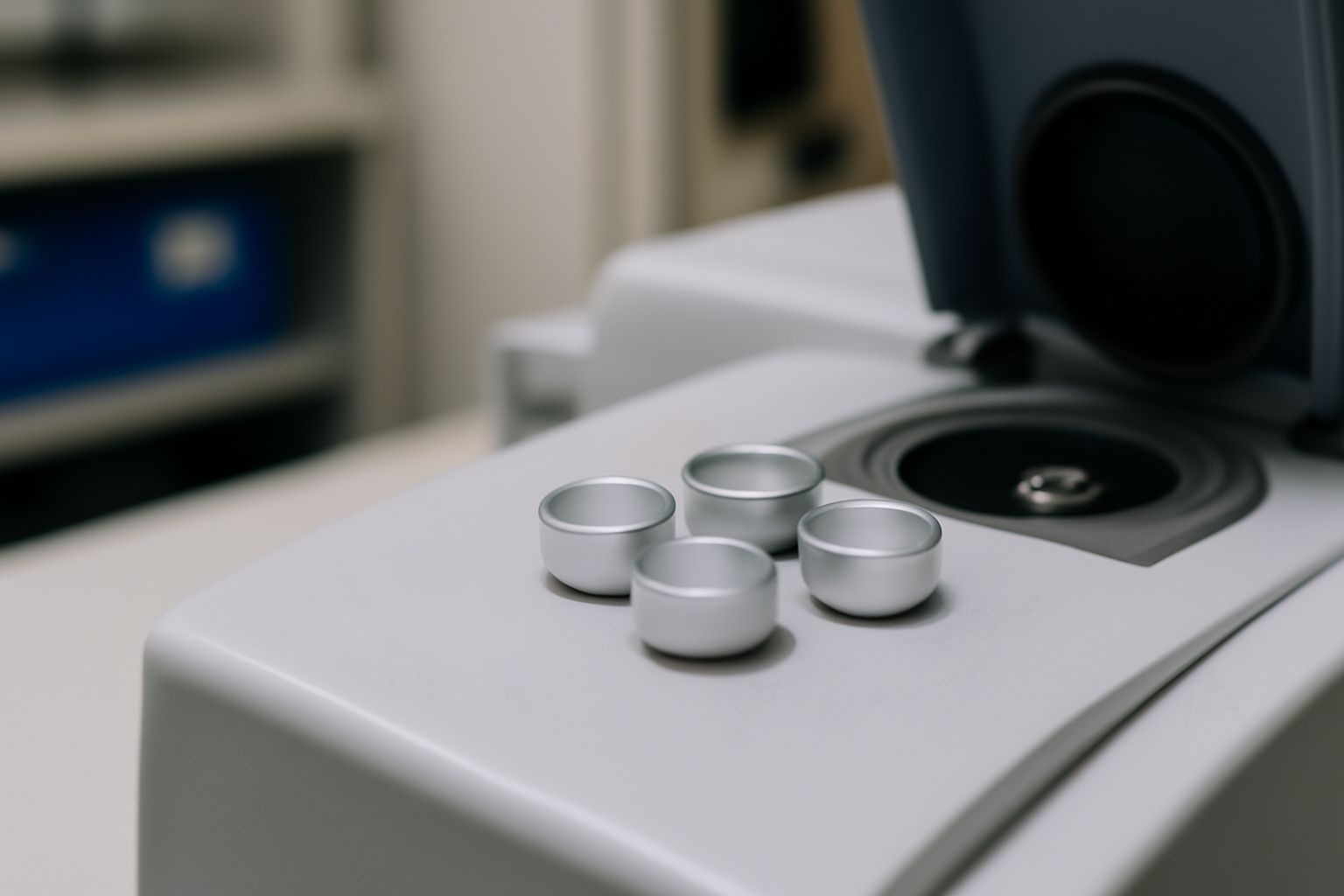
When I switched to well-made affordable crucibles, I saw a drop in spurious results and saved on research costs. Fixing faults early keeps my data clean and my project deadlines within reach.
Inconsistent DSC data frustrates researchers and leads to wasted samples. These variations have direct links to pan quality, handling, and setup technique.
Poor sealing, sample misplacement, wrong pan material, or manufacturing defects are main reasons for inconsistent results. Quality affordable pans, with strict factory checks, help reduce these sources of error.
| Problem Source | Effect on Results | Prevention/Correction |
|---|---|---|
| Poor Sealing | Leaky pans lead to mass loss or volatile escape | Check seals, use matched lids, inspect batch quality |
| Sample Misplacement | Offset heat flow, irregular peak shapes | Weigh and load samples evenly, follow SOPs |
| Incorrect Material | Baseline drift, pan warping, contamination | Use high-purity aluminum or fit-for-test ceramics |
| Bad Manufacturing | Bent shape or thin spots throw off heat conduction | Buy from certified suppliers, inspect pans before use |
I always measure and double-check both pan and lid prior to each test. Supplier data and satisfactory batch inspection keep inconsistency rare in my lab (source).
Many assume “cheap” equals error-prone. Labs can achieve high accuracy with affordable crucibles if quality checks and handling procedures are in place.
Affordable crucibles, when factory-tested and dimension-verified, lower the rate of data errors. Their cost advantage means more frequent quality control runs and faster replacement when faults are spotted.
| Error Source | How Affordable Crucibles Help | Extra Tip |
|---|---|---|
| Batch Variation | Lower cost means easy replacement for defective pans | Order in lots, discard by visual check |
| Dimension Mismatch | Standardization and frequent supplier updates keep sizes on target | Calibration upon receipt |
| Surface Defects | More frequent inspection cycles at low cost | Increase QC frequency over time |
| Poor Fit or Sealing | Test fit and sample batch before bulk runs | Supplier sample/trial policy |
I run extra calibration or baseline tests when getting new affordable pans. These steps, paired with responsive supplier support, keep my research error rates low.
Common DSC test errors include pan leaks, baseline noise, and mass change missed by the operator. Whether using expensive or affordable crucibles, routine checks fix most problems before they cost you data.
Careful sample weighing, pan inspection, and adherence to step-by-step methods prevent most faults. Reliable affordable crucibles let labs adopt strict rejection and early troubleshooting before every run.
| DSC Fault | Prevention Action | Further Reading |
|---|---|---|
| Pan Leak | Inspect seals, replace after any visible dent or warp | Maintenance manual, SOP |
| Baseline Noise | Use clean pans, run blanks before key samples | Noise in signal processing |
| Sample Mix-up | Label all pans and keep strict sample logs | Laboratory records, traceability |
| Overshoot/Temperature Error | Double-check pan's max rating and instrument calibration before heating | DSC pan datasheet |
Prevention in my lab always starts with the operator’s checklist and pan inspection. I rely on current lab standards for error control.
If unexpected results appear, don’t rush to blame samples or the instrument. A calm, structured approach often reveals minor pan faults that are easy to solve with support or replacement.
First, isolate the suspect pan, rerun reference tests, and contact your crucible supplier’s technical team for troubleshooting. Good vendors help with replacement, warranty, and quality documentation to resolve analytical doubts.
| Troubleshooting Step | Action Detail | Support Resource |
|---|---|---|
| Isolate Suspect Pan | Stop using, mark for review and future avoidance | Lab logs |
| Rerun Reference Standards | Run control samples to verify instrument/pan/signal | Instrument manual, standard test method |
| Contact Supplier Support | Report the batch, share results, request advice or return form | Supplier email, customer support |
| Request Replacement | Use supplier’s warranty or sample exchange policy | Supplier website |
I once caught a pan defect that explained months of confusing results. By quickly moving through these steps and getting help, my team avoided repeat errors and sample waste (source).


C082.Wangdefu International Building, Furong, Changsha, Hunan, China


+86-19907415020