


SHOPPING CART
Your cart is empty.
shop now
Your cart is empty.
shop now
Rising laboratory budgets and unpredictable supply chains force many buyers to rethink their approach to DSC pan purchasing. Each extra dollar spent impacts the bottom line for busy research and QC labs.
Cost-effective procurement of DSC pans is possible through bulk buying, long-term OEM relationships, and a clear analysis of custom versus standard solutions. Careful sourcing and negotiation help labs maximize value without cutting performance.
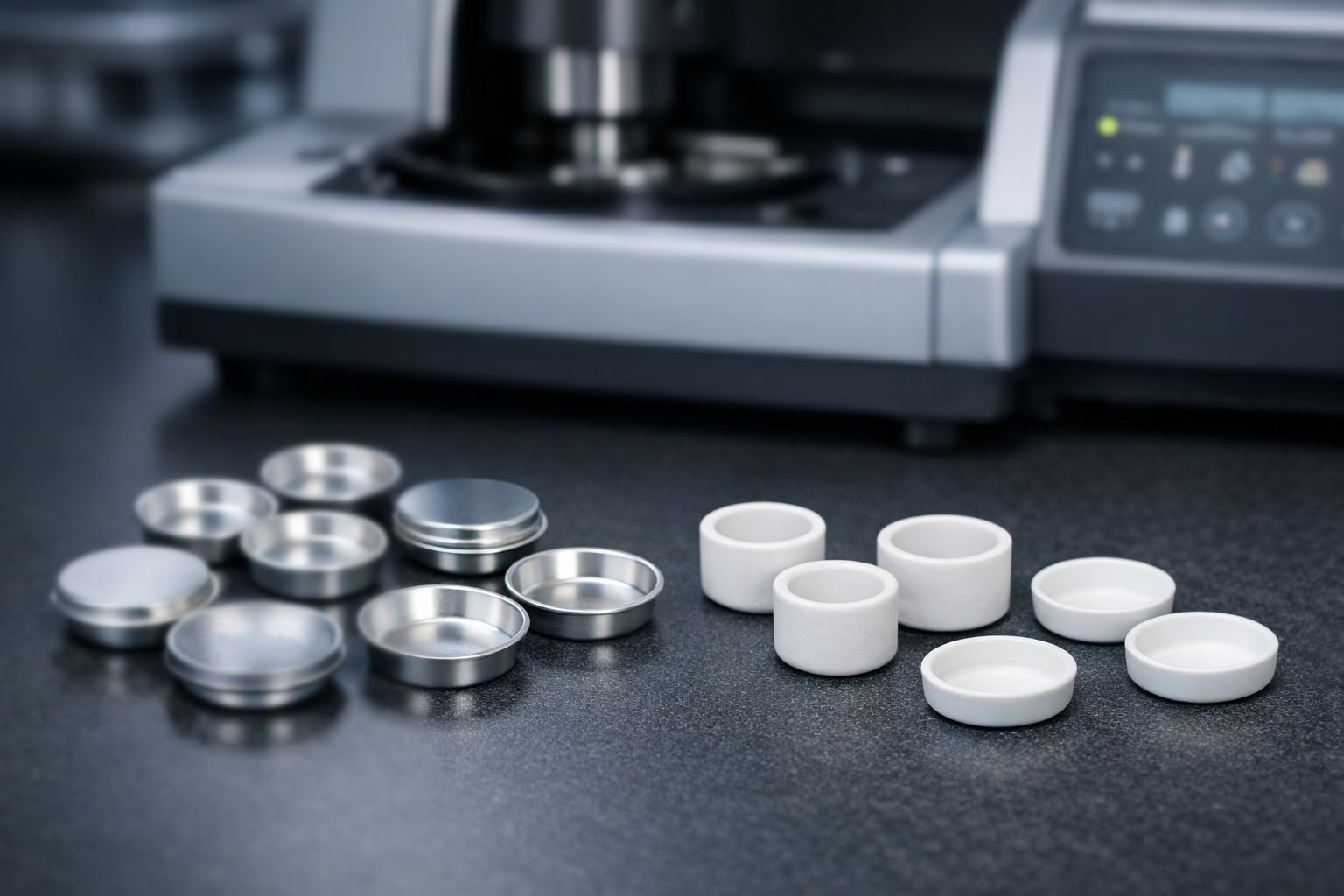
I have helped dozens of labs reduce costs while keeping analysis quality high. Strategic comparisons and partnership building pay off quickly in both short-term savings and long-term supply stability. Here are the best strategies for each step of procurement.
Pan costs can rise or fall based on several well-known and hidden factors in the production and supply process. Most buyers focus only on unit price, missing larger savings.
The main cost factors are raw material purity, production precision, batch size, brand premium, order location, and logistics. True value comes from understanding each variable and tracking market shifts.
| Cost Factor | Cost Impact | Control Strategy |
|---|---|---|
| Aluminum purity | Higher purity increases price | Match to analytical need (aluminum) |
| Precision/tolerance | Tight specs cost more, but reduce error | Negotiate only on needed precision |
| Order quantity | Bigger orders lower per-unit price | Group purchases, annual contracts |
| Shipping method | Express costs more than standard | Plan ahead, combine shipments |
| Brand/OEM markup | Brand names charge extra premium | Consider high-quality alternative/OEM |
I have saved clients up to 40% by shifting from branded to OEM direct pans, especially when purity specs matched actual application needs. Market tracking and regular supplier checks reduce the pain of price swings. More on material cost in Wikipedia.
Labs using hundreds or thousands of pans each year rapidly lose out on small-batch pricing. Unit cost drops significantly at each new volume tier with bulk orders.
Bulk purchasing leverages supplier incentives, optimizes shipping, and ensures steady stock, helping labs manage price volatility and avoid rush orders that drive up costs.
| Order Size | Estimated Unit Cost | Savings (vs. standard) | Procurement Tip |
|---|---|---|---|
| 50–100 pans | $10–$12 | Base case | Test OEM before big order |
| 250–500 pans | $7–$9 | 10–25% lower | Negotiate volume terms |
| 1000+ pans | $5–$7 | Up to 40% lower | Coordinate across labs, forecast use |
I helped a university lab secure a one-year supply with 35% savings over their standard quarterly order, simply by grouping requests with other departments. It takes planning, but group and annual deals always justify the effort. More on bulk purchase tactics in Wikipedia.
OEM sourcing removes extra markup and makes it easier to customize or control quality directly with the factory. OEM suppliers handle both standard and custom requests more flexibly than distributors or brands.
Benefits include lower price, faster delivery, direct technical support, and the option for private label or custom-format packaging.
| OEM Advantage | Impact on Buyer | Procurement Value |
|---|---|---|
| Factory-direct pricing | Eliminates middleman upcharge | Lowest cost per pan |
| Custom engineering | Fits any DSC device, sample, or protocol | Higher match, less troubleshooting |
| Volume flexibility | Accepts both small and large orders | Efficient inventory management |
| Direct support | Immediate access to factory engineers (OEM info) | Faster resolution of issues |
When I switched to REDTHERMO as my lab’s OEM, shipping went from 3 weeks to 5 days and service improved overnight. This direct-to-lab line is a game changer for price, speed, and support. For background on OEM business models, see Wikipedia.
Labs assume custom pans cost more due to nonstandard dimensions, runs, or tight tolerances. However, true cost efficiency depends on the application and overall procurement plan.
Custom pans prove more efficient when they lower test failures, cut analysis repeats, or solve fit issues for rare/legacy devices. Smart design can save more than initial cost uplift.
| Scenario | Custom Pan Result | Long-term Cost Impact | Strategic Tip |
|---|---|---|---|
| Rare device support | Enables continued device use | Avoids new capex on hardware | Share device specs with OEM early |
| Advanced materials | Right pan composition, precise baseline | Better data, less waste | Test small batch first |
| Large volume research | Batch-matched pans, less error | Improves repeatability, fewer re-runs | Negotiate matching service |
| Public/QA testing | Certification, lot tracking | No denied results/regulatory saves | Check reporting formats |
One client saved tens of thousands by ordering custom pans for a legacy device rather than replacing the analyzer. The up-front cost premium was offset by eliminating false runs and expensive capex. When custom means fewer failures or higher trust, it pays for itself. More on custom product economics: Wikipedia.
Cost-effective DSC pan procurement is achieved by tracking cost drivers, leveraging bulk buys, choosing OEM partnerships, and using custom designs when needed for total value.
Contact Technical Support – info@redthermo.com

C082.Wangdefu International Building, Furong, Changsha, Hunan, China


+86-19907415020