



SHOPPING CART
Your cart is empty.
shop now
Your cart is empty.
shop now
Thermal analysis remains at the heart of innovation, quality control, and regulation across today’s top industries. DSC pans are a crucial tool for these processes.
DSC pans are widely used in materials science, pharmaceuticals, electronics, and environmental labs for precise thermal analysis, helping to characterize and control advanced materials and processes.
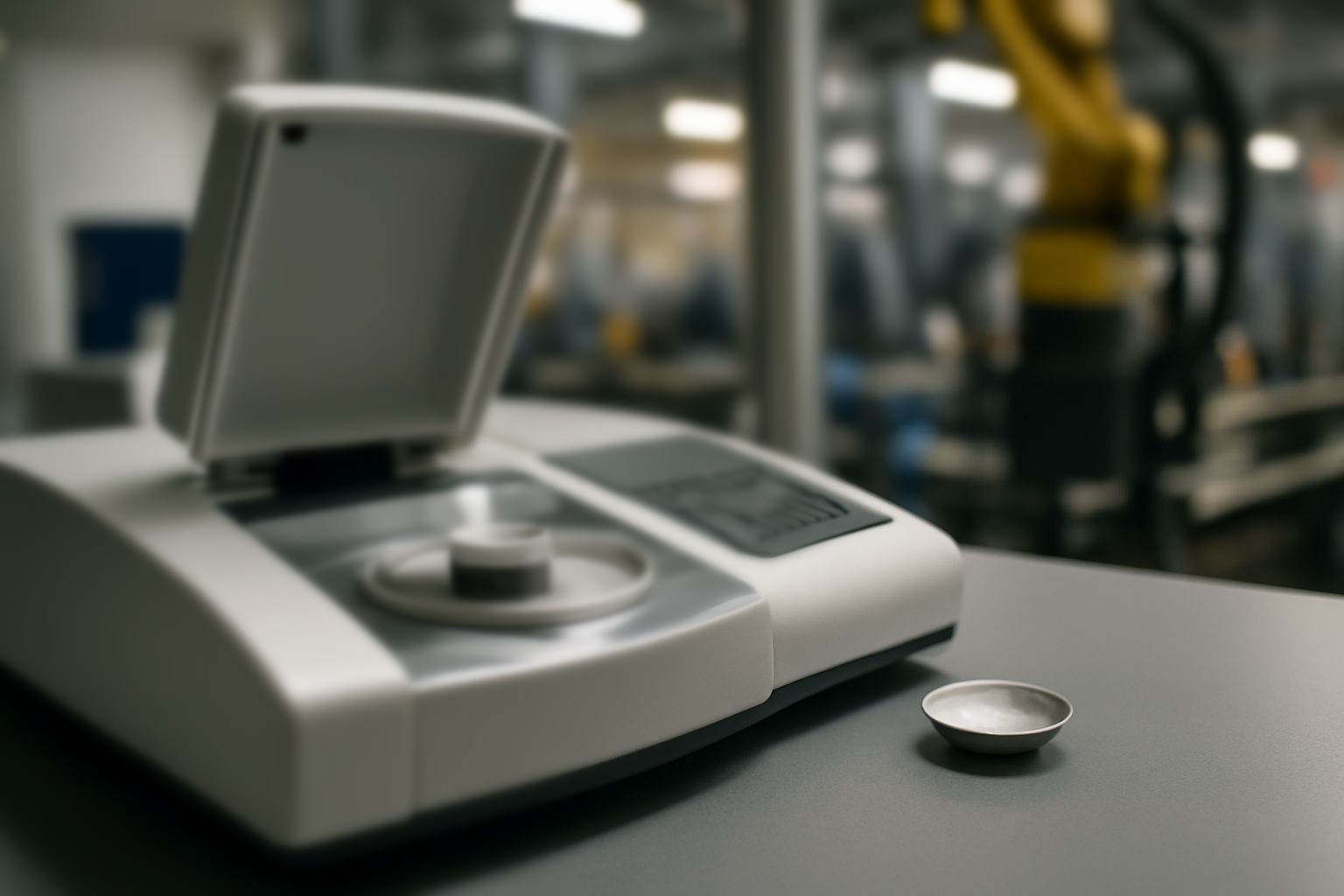
As testing standards get tougher and products more complex, labs demand more from their DSC pans. I have worked with organizations in every major industry as they adapt to new testing challenges with the right consumables.
Modern materials science relies on accurate measurement of phase changes and transitions in polymers, metals, and composites for new product development.
DSC pans are used in materials science for testing melting points, glass transitions, polymer crystallinity, and heat capacity, providing key data for quality and research.
| Test Type | Pans’ Role | Example Industry Use |
|---|---|---|
| Melting point | Holds and contains precise sample mass | Polymer synthesis, alloys (melting point reference) |
| Crystallinity measurement | Ensures even heat flow, no cross-reactivity | Food science, plastics QC |
| Heat capacity | Delivers consistent base readings | Composites research |
| Thermal stability | Tolerates repetitive cycling | High-performance adhesives, composites |
Once, I helped a lab with recurring QC failures by switching their pans to match their device and test regime, which brought more clarity to polymer melting-point analysis. For more on melting points, check Wikipedia.
Pharmaceutics often require confirmation that a drug substance remains stable under storage and use. DSC pans make these assessments detailed and repeatable.
DSC pans in pharmaceuticals are used for purity checks, polymorph screening, compatibility tests, and stability assessments—supporting compliance with regulations and safe drug delivery.
| Assessment | Pans’ Contribution | Outcome |
|---|---|---|
| Drug melting point | Isolated, sealed testing | Verifies processability and purity |
| Polymorph detection | Prevents cross-contamination | Ensures batch stability |
| Excipient compatibility | Controls interaction with actives | Confirms safe formulation (excipient) |
| Stability study | Documents thermal behavior | Meets ICH/EU/US regulatory rules |
I have seen pharma clients require full traceability—sealing, labeling, and documentation for every DSC pan used in GLP/GMP runs. These steps protect patient safety and speed up regulatory submissions. Read about excipients and compatibility at Wikipedia.
Electronics manufacturers test component stability in varying heat conditions, especially as chips and batteries become smaller and more complex.
DSC pans are used to analyze solder, adhesives, coatings, and board materials for correct melting, curing, and reliability in actual device conditions.
| Component/Test | Pans’ Usage | Industry Benefit |
|---|---|---|
| Solder alloys | Pinpoint melting/solidification point | Prevents PCB failure (solder) |
| Thermal interface materials | Check uniformity and transition temp | Improves device cooling |
| PCB base polymers | Assesses glass transition temp | Ensures routing stability |
| Die attach adhesives | Checks bonding success | Boosts yield and reliability |
An electronics client once solved a recurring solder connection issue by switching to REDTHERMO pans, which gave more precise melting profiles for a new lead-free alloy. The result—better device yield rates and lower warranty costs. For more background on solder, review Wikipedia.
Environmental analysis pushes labs to measure complex organic and inorganic samples for pollution and lifecycle insight. Thermal analysis is increasingly critical for new regulatory checks.
DSC pans help analyze material decomposition, combustion residue, and microplastics for pollution tracking, resource evaluation, and regulatory reviews in environment-focused labs.
| Environmental Task | DSC Pan’s Function | Measurement Value |
|---|---|---|
| Plastic decomposition | Records melting/decomposition curve | Identifies microplastics (microplastics) |
| Pollution analysis | Handles hazardous/e-waste | Assesses hazardous impact |
| Soil/ash combustion | Examines residual carbon | Environmental exposure data |
| Biomass burning | Reliably confines volatile samples | Defines energy value, emissions |
My experience with environmental labs confirms the trend—thermal analysis now goes hand in hand with chemical and spectroscopic methods for complete pollution insight. As tech and regulation mature, DSC pan use will only grow for these studies. Review microplastics data at Wikipedia.
DSC pans are indispensable for precise analysis in industries as diverse as materials science, pharma, electronics, and the environment. The right choice opens new doors to scientific discovery and industrial progress.
Contact Technical Support – info@redthermo.com

C082.Wangdefu International Building, Furong, Changsha, Hunan, China


+86-19907415020