



SHOPPING CART
Your cart is empty.
shop now
Your cart is empty.
shop now
If you face errors or repeat problems in pharmaceutical DSC tests, small changes in consumables can make a huge difference. Many labs struggle to get stable, clear data on the first try.
Using the right sample pans for DSC measurements in pharma labs helps solve errors like irregular heat flow or cross-sample contamination. Good pans ensure more reliable results and cleaner workflows.
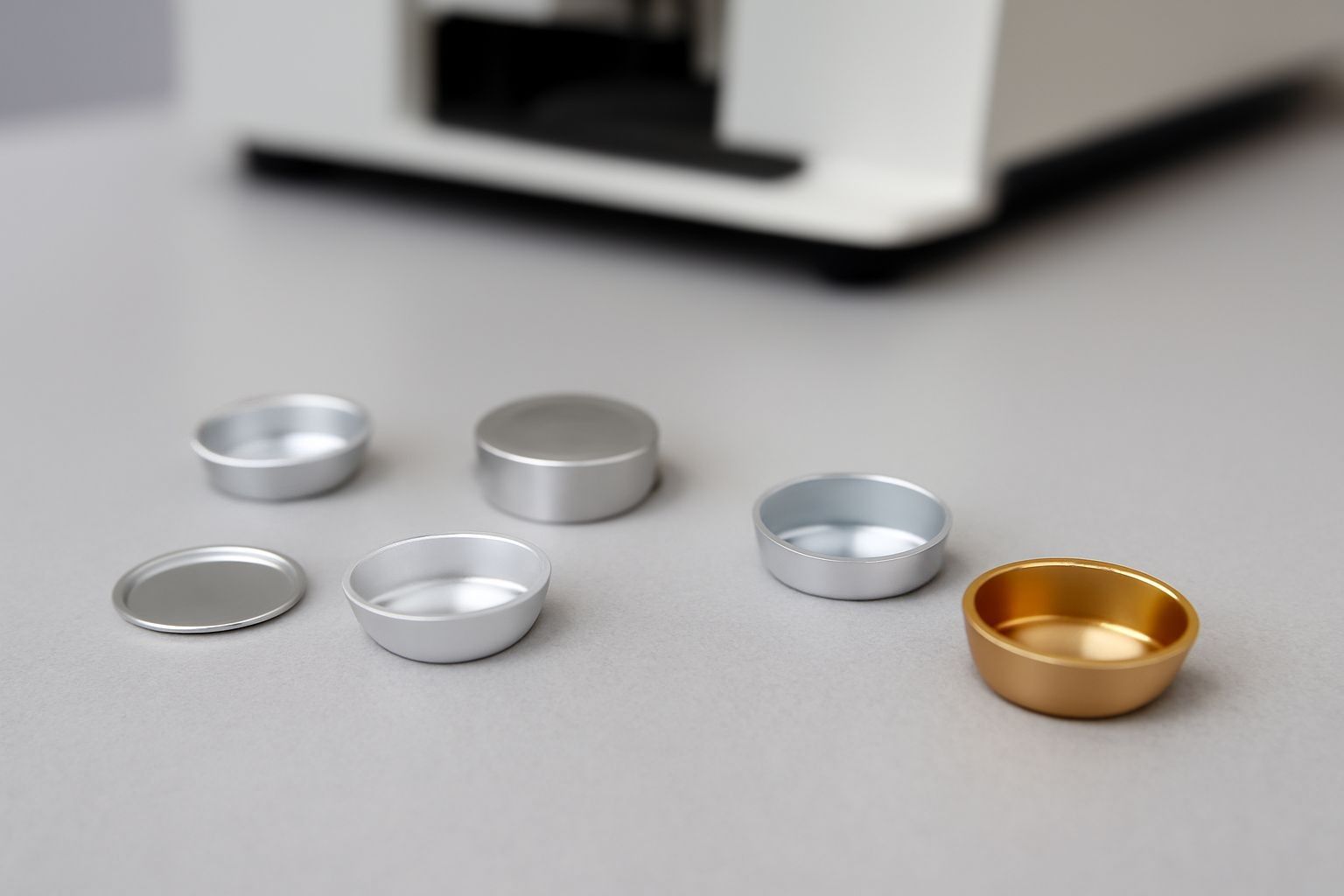
DSC testing in the laboratory often seems more difficult than it should. If new issues keep emerging with each batch, it can feel endless. I find that understanding how sample pans impact test performance is the key to solving these recurring problems.
Inconsistent measurements, unexpected baseline shifts, sample loss, and contamination are frequent issues in pharmaceutical DSC tests. Many of these issues relate to the choice and handling of sample pans.
The most common DSC challenges fall under several main areas: unpredictable baseline drift, inaccurate endothermic or exothermic peaks, frequent contamination, leakage, and loss of sample integrity. Labs using unsuitable pans often see unstable data, need more repeats, and end up with blurred thermal curves. These effects may go unnoticed until final analysis or even until production changes. In my work, I found that matching pan type and material strictly to the sample and instrument allows for clear, reliable results with fewer retests.
| Issue | Possible Cause | Explanation | Reference |
|---|---|---|---|
| Baseline Drift | Pan seal/permeability | Poor sealing lets moisture or air affect data consistency | PharmTech, 2021 |
| Contamination | Improper cleaning, reused pans | Cross-sample residue alters test profile | Thermo Fisher Application Note 2019 |
| Sample Loss | Low pan wall, bad closure | Evaporation or sample leaking ruins signal quality | Gao et al., 2022 (DOI:10.1016/j.tca.2022.178735) |
| Peak Shift | Poor heat transfer | Wrong pan alloy or thickness changes calibration | NETZSCH Whitepaper 2018 |
The right pans support uniform heat transfer and better sealing, directly reducing most sources of signal errors and uncertainty.
Uniform data in DSC testing depends on matching the pan’s thermal conductivity, size, and shape to both the instrument and the pharmaceutical product. I noticed when I swapped generic pans for those built to match device specs, the variance between multiple runs dropped sharply. For pharmaceutical testing, even a small thermally insulating imperfection in a pan can introduce abnormal heat flow readings. Using high-purity aluminum or platinum pans secures consistent and rapid heat transfer, which is vital for accurate glass transition or melting point measurements. Sealed designs, like crimped lids or O-rings, can hold volatile or moisture-sensitive samples in a stable environment, further reducing data drift. These simple yet strict choices in pan selection translate into less data correction and increased confidence in published results.
| Pan Material | Thermal Conductivity | Best Usage Scenarios | Potential Errors Avoided |
|---|---|---|---|
| Aluminum | Very high | General pharmaceutical screening | Baseline drift, slow heating artifacts |
| Platinum | Extremely high, inert | High-temp or reactive sample testing | Oxidative degradation, thermal lag |
| Gold-coated pans | High, inert | Moisture sensitive API screenings | Contamination, chemical reactions |
| PTFE | Low (insulating) | Avoid use unless chemical compatibility is needed | Thermal signal suppression |
Better pans use pure materials and smooth surfaces, limiting areas where residue can hide or be left behind after use, so contamination drops.
Contamination is a major problem in repeat pharmaceutical testing. When pans are made with low-quality alloys, surface roughness or tiny grooves hold on to residues and cleaning cannot remove them. I tested several brands and found that only higher-purity pans certified by their manufacturers cut repeat sample carryover to near zero. Reliable pans, which are now outlined by ASTM and FDA guidelines for pharma, usually feature electropolished or mirror surfaces. These resist adhesive or powder residues, which is especially useful during protein denaturation studies or water loss analysis. High-quality sealed pans also stop lab air or cleaning chemicals from interacting with each batch, reducing surface-based contamination. In regulated industries, investing a bit more into certified, single-use pans helps protect both product and reputation.
| Pan Feature | How it Lowers Contamination | Recommended Use |
|---|---|---|
| Electropolished Surface | Reduces micro-traps for residue | Repeat protein DSC analysis |
| High Purity Alloy | Resists chemical reactions with samples | APIs, actives, moisture testing |
| Pre-cleaned, Vacuum-Packaged | Stops any dust or airborne particles | Pharma QC, regulatory settings |
| Single-Use, Disposable Design | Guarantees no cross-batch residue | Clinical sample studies |
Sample pans are often the root of repeated failures in DSC calibration, sharp peak detection, and irregular signal baselines.
When faced with repeated issues in DSC operation, reviewing your pan choice is more effective than adjusting instrument settings. In one project, I kept getting broad endothermic peaks until I replaced generic pans with those matched by size and material to the performance data of the system. Most troubleshooting guides from top instrument makers, like TA Instruments, point to pans as the starting place for diagnosing both calibration and measurement errors. Using pans with known thermal profiles limits baseline variation, as documented in various industry case studies. Additionally, matched and recommended pans avoid sensor drift triggered by wrong alloys or shapes. Establishing a habit to log pan batch numbers, recognize failed seal attempts, and inspect for lid-bending can systematically solve much of the routine troubleshooting overload in the pharmaceutical laboratory.
| Problem | Pan-Related Cause | Simple Solution |
|---|---|---|
| Inaccurate baseline | Improper material or batch variation | Use pans certified by manufacturer; track lot |
| Irregular peak shapes | Poor surface finish or deformation | Inspect for dents and use only smooth pans |
| Frequent calibration drift | Wrong pan thickness or unmatched alloy | Reference supplied pan list per device manual |
| Unexpected residue | Pan not properly cleaned or damaged | Switch to pre-cleaned, disposable pans |


C082.Wangdefu International Building, Furong, Changsha, Hunan, China


+86-19907415020