



SHOPPING CART
Your cart is empty.
shop now
Your cart is empty.
shop now
Standard consumables can limit results when testing tough or rare materials. Project delays and flawed data happen when lab teams use “one-size-fits-all” accessories for demanding work.
Select DSC and TGA consumables based on your specific scenario—high temperature, sensitive samples, volatility, or high-pressure needs—to ensure reliability, safety, and high-quality data.
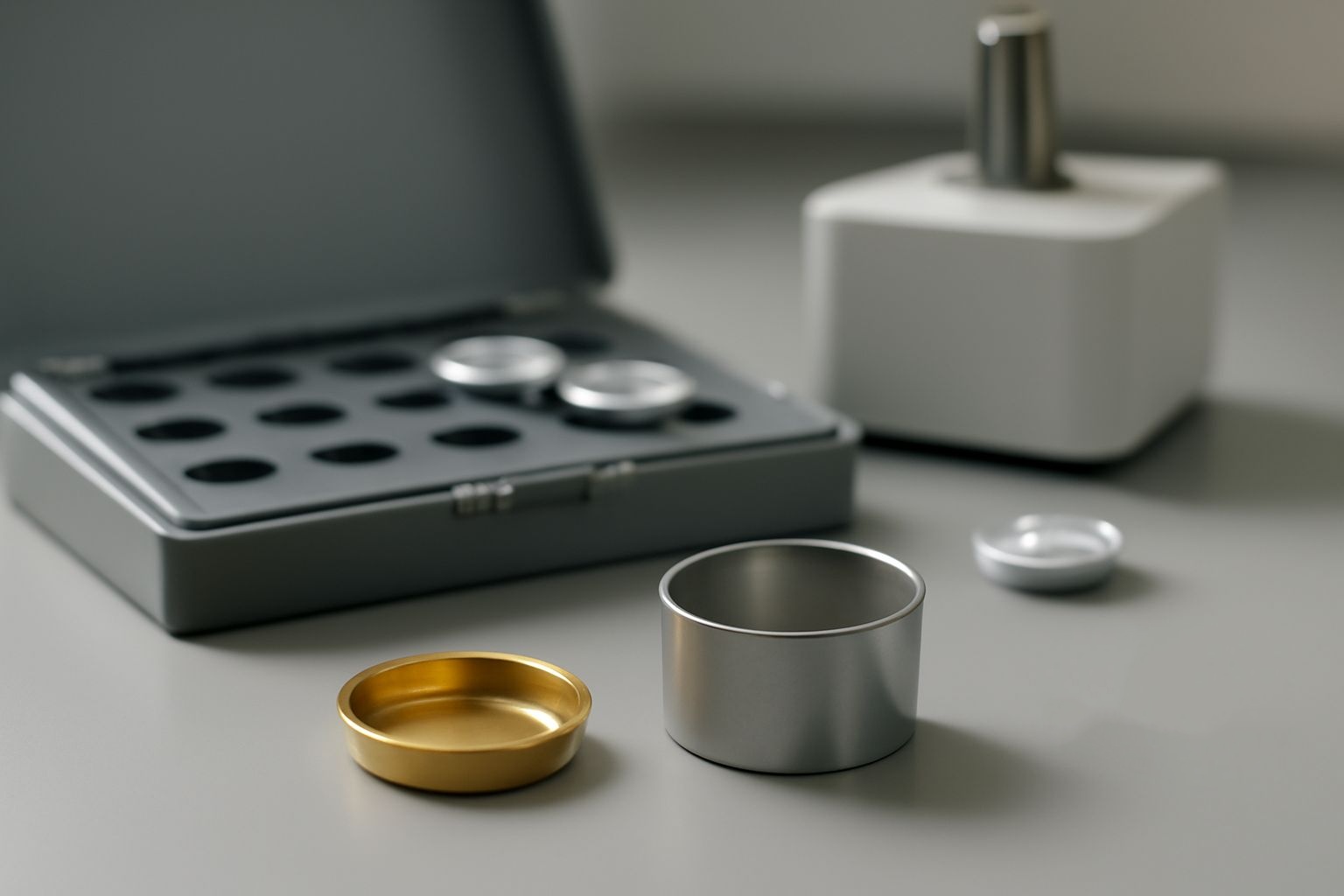
I have worked with research teams who wasted weeks troubleshooting pan failures or leaks only to discover an easy alternative existed. When I learned to evaluate consumables for each specific application, I reduced repeat runs, lowered costs, and boosted the repeatability of my data. Let’s look at which solutions fit each scenario best.
High-temperature tests can break pans or produce interference if the consumables can’t hold up. My team lost two days using standard aluminum in a ceramics trial above 600°C.
Choose crucibles made of platinum or ceramics with proven purity and wall thickness for reliable performance during high-heat exposures in DSC and TGA runs.
| Consumable Type | Max Operating Temp (°C) | Main Benefit | Reference |
|---|---|---|---|
| Platinum Crucible | 1600 | Chemical resistance, no contamination | Ceramics, alloys |
| Ceramic Pan | 1200 | Stable, cost-effective | Oxidative, environmental |
| High-Purity Alumina | 1400 | Reduces background noise | Metals, high-temp TGA |
| Gold-Coated Pan | 800 | Anti-adhesion for sticky samples | Sticky organics |
Always cross-check manufacturer limits in thermal analysis datasheets. I rely on internal tracking to monitor how higher wall thickness and clean finishing help maintain instrument life and test repeatability.
Even trace contamination ruins results when working on pharmaceuticals, food, or nanomaterials. My worst lab setback was due to a surface flaw in a supposedly clean pan.
For sensitive analyses, use single-use, high-purity containers, and consider gold or PTFE coatings which prevent adsorption and sample loss during DSC or TGA runs.
| Consumable Option | Contamination Control | Typical Use | Tip/Reference |
|---|---|---|---|
| PTFE-Coated Pan | Prevents sticky residue | Biologics, sticky samples | Disposable preferred |
| Gold-Coated Crucible | Inert, stops interaction | Pharma, volatile organics | Extra surface checks |
| Single-Use Aluminum | Reduces carryover, cheap | Routine food, pharma | Seal post-use |
| Calibrated Reference | Assures purity, corrects baseline | Every batch, calibration | Full QA log |
Industry guidance and GLP guidelines stress batch-level traceability for all pans in high-stakes work (Source: Journal of Pharmaceutical QA, 2023). Request explicit purity documentation from every supplier for these scenarios.
Volatile samples evaporate, leak, or react quickly in ordinary pans. My early attempts without sealed lids ruined key thermal stability studies for organic solvents.
Secure sample integrity by using hermetic pans with strong seals, O-ring gaskets, and, if required, vented lids to safely control vapor flow during analysis.
| Container | Sealing Strategy | Apply To | Reference |
|---|---|---|---|
| Hermetic Aluminum Pan | Crimped closing, no vent | Solvents, moisture tests | Thermo method |
| O-Ring Sealed Crucible | Compression fit, user changeable | High-value volatiles | User SOP |
| Vented Lid Pan | Pinhole, releases excess pressure | Thermal decomposition | GLP/QA guide |
| O-Ring Gasket | Flexible, reusable | DSC, TGA for pharma | Supplier doc |
Check for compatibility between pans and instrument trays before loading volatiles. Use O-rings approved for your testing temperature, as shown in detailed lab equipment manuals.
High-pressure DSC and TGA applications add risks of leaks or hardware damage. Once, a wrongly rated pan led to a dangerous pressure build-up in my thermal stress tests.
High-pressure testing requires reinforced pans with certified ratings, thickened walls, secure lid attachments, and full compatibility with instrument-specific pressurizing systems.
| Feature | Why Needed | What to Check | Key Reference |
|---|---|---|---|
| Pressure Rating | Guarantees no rupture at max load | Compare with test method and tray | User QA record |
| Wall Thickness | Prevents denting, fits tightly | Request mechanical drawings | Instrument spec |
| Lid Locking | Secure attachment, prevents ejection | Pan/lid pair certification | GLP checklist |
| Supplier Certification | Audit trail, safety in event review | Request batch proof & warranty | GLP/ISO doc |
Never use generic consumables for pressurized tests. Most incidents reported in pressure vessel studies originate from uncertified closures or missing wall thickness checks.
Choosing the right DSC and TGA consumables for each scenario improves test success, protects equipment, and prevents common reliability problems in any laboratory.


C082.Wangdefu International Building, Furong, Changsha, Hunan, China


+86-19907415020