



SHOPPING CART
Your cart is empty.
shop now
Your cart is empty.
shop now
Lab budgets are always tight, and every procurement choice seems risky. Choosing the right DSC crucibles makes a difference in cost and results.
Research-grade crucibles usually cost more up front than standard types, but they last longer and keep labs from wasting money on poor data and constant reordering. For many labs, they are the smart buy.
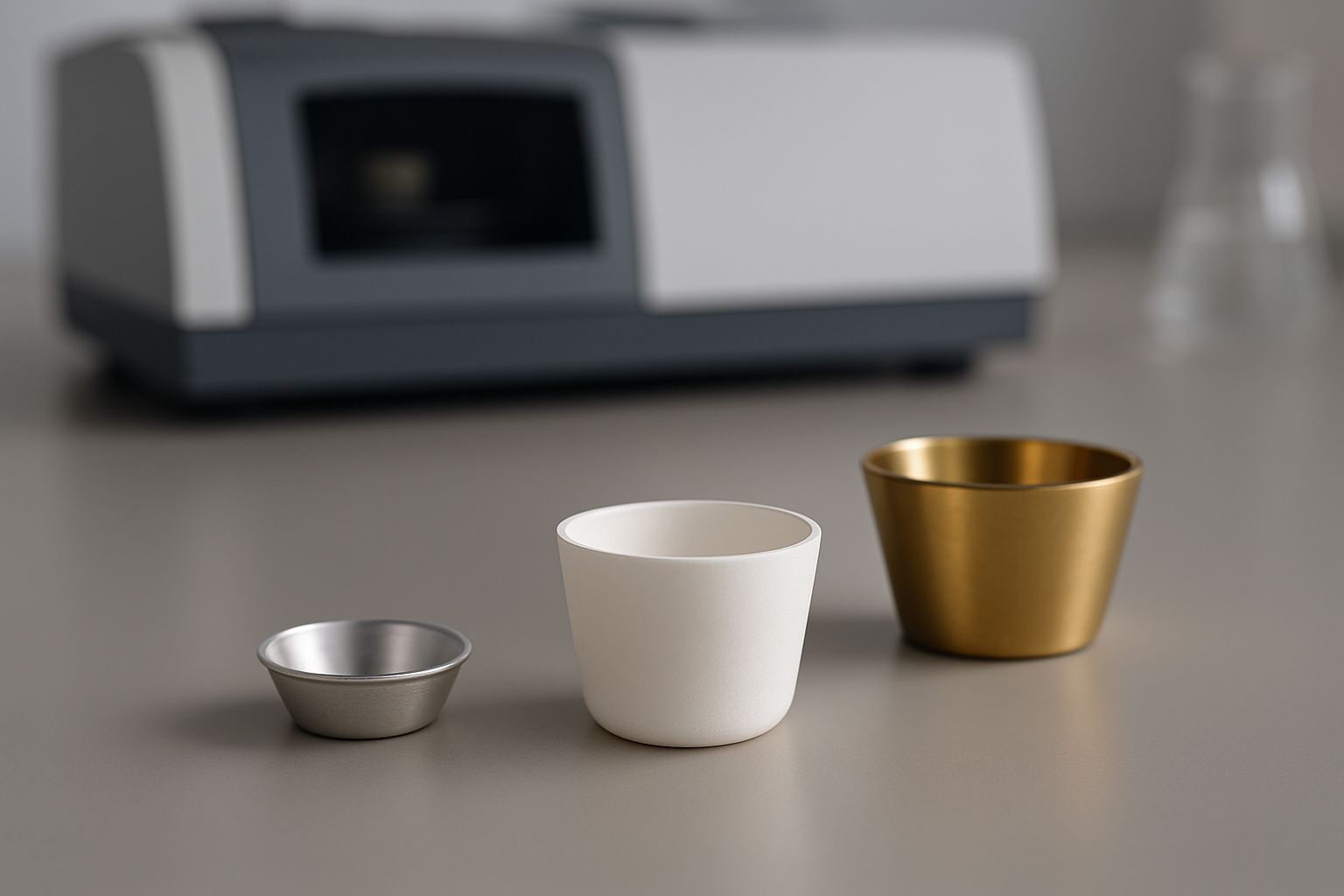
Some labs see higher prices for research-grade DSC crucibles and hesitate to buy. Yet, higher initial spending often pays off in time through reliability and fewer replacements. I have seen many labs struggle with inconsistent results because they chose lower-grade pans. Once a better grade was used, waste dropped, and staff could focus on experiments.
Many people worry about spending too much on consumables. It is important to know if pricey crucibles really give value.
Research-grade crucibles usually cost between two and five times more than standard types. Their cost is justified by better temperature resistance, longer lifespans, and more reliable data.
| Type | Average Unit Cost (USD) | Key Features | Data Quality | Replacement Rate |
|---|---|---|---|---|
| Standard-Grade (Aluminum) | $1–$2 | Basic alloy, moderate seal | Good for basic work | High (single use common) |
| Research-Grade (High Purity Alumina) | $4–$7 | High purity, tight specs | High, stable baselines | Low (multi-use possible) |
| Custom/Platinum | $30–$60 | Extreme thermal stability, corrosion proof | Best, for complex samples | Very low (reusable) |
Labs upgrading to research-grade crucibles often report lower downtime and fewer failed experiments. Published studies, such as in the Journal of Thermal Analysis and Calorimetry, have shown evidence that pure crucibles improve test repeatability and accuracy.
Prices seem random. Many new buyers wonder why certain crucibles cost much more than others that look similar.
Big price differences come from raw material purity, machining accuracy, brand, and compatibility with popular DSC systems. Platinum and custom shapes drive costs up the most.
| Factor | Impact on Cost | Why It Matters |
|---|---|---|
| Material Purity | High (Alumina > Aluminium Alloy) | Reduces sample contamination, helps with better signals |
| Precision Engineering | Medium–High | Essential for fit in DSC instruments |
| Brand/Source | Medium | Well-known brands often charge for quality assurance |
| Shape/Customization | Highest for unique orders | Needed for specific testing or sample sizes |
In my experience, even when labs use the same DSC model, some processes need custom shapes that major brands offer only at high minimum order quantities. Customization is key for rare applications but raises the final price sharply, as does any use of precious metals like platinum.
I get questions about whether it is smarter to buy crucibles a few at a time or to stock up for savings.
Bulk purchases lower the price per crucible and shipping fees. Many suppliers, including us, offer better rates, and batch orders keep delays down for busy labs.
| Order Size | Unit Price (USD) | Delivery Speed | Shipping Cost per Item | Flexibility |
|---|---|---|---|---|
| Single Piece | $2.00 (standard), $5.00 (research) | 1–5 days | High | Highest |
| Small Batch (10-20 pcs) | $1.10–$1.60 (standard), $4.20–$5.00 (research) | 24–72h | Lower | High |
| Bulk (50+ pcs) | $0.85–$1.30 (standard), $3.60–$4.40 (research) | Next-day possible | Lowest | Less (stock needed) |
For most labs, buying in batches saves time and money. This model works well especially for recurring needs in busy academic and industrial labs. A helpful guide to economies of scale in lab procurement is available on Wikipedia.
Budget holders want to know if a longer-lasting crucible really stretches funds. Replacing cheap pans all the time is frustrating and expensive.
Research-grade and precious metal crucibles can last dozens or even hundreds of tests, cutting the number of orders over the year by a wide margin.
| Crucible Type | Tests Supported | Annual Purchase Frequency* | Estimated Annual Spend (USD) |
|---|---|---|---|
| Standard-Grade | 1 (single-use) | 1200 (weekly, for busy lab) | $1,200–$2,400 |
| Research-Grade | 10–30 (multi-use) | 100–200 | $400–$1,400 |
| Platinum | 1000+ | 1–2 | $60–$120 |
*Estimates based on moderate-throughput labs. Reuse and care protocols will change real outcomes. Over a year, shifting to longer-life crucibles can cut total spend by over 30%, while improving reliability and reducing lost time from equipment cleaning and setup.
Some believe cheaper crucibles are always better for the bottom line. They overlook hidden losses from poor data or short service life.
Research-grade crucibles offer greater stability, less background noise, and longer use per unit. Over time, their total cost is often lower—especially if a lab uses expert procurement strategies and keeps low inventory risks.
| Criteria | Standard-Grade | Research-Grade | Platinum/Custom |
|---|---|---|---|
| First Cost | Lowest | Medium | Highest |
| Per-Test Cost | High | Low (with reuse) | Lowest (many reuses) |
| Signal Quality | Variable | Stable | Best (low artifact) |
| Annual Spend Estimate | Up to $2,400 | $400–$1,400 | $60–$120 |
In my own work, the switch to premium crucibles dropped error rates and boosted trust with project partners. For precise labs, quality costs less in the long run. For background on data accuracy, see the measurement uncertainty page.


C082.Wangdefu International Building, Furong, Changsha, Hunan, China


+86-19907415020