



SHOPPING CART
Your cart is empty.
shop now
Your cart is empty.
shop now
Scientists face mounting problems in battery safety as global demand for electric vehicles grows. Reliable test data and accurate results are needed more than ever.
Research-grade DSC crucibles enable precise thermal analysis, which helps labs improve EV battery stability and performance. Accurate and repeatable measurements build trust in new battery designs and safety efforts.
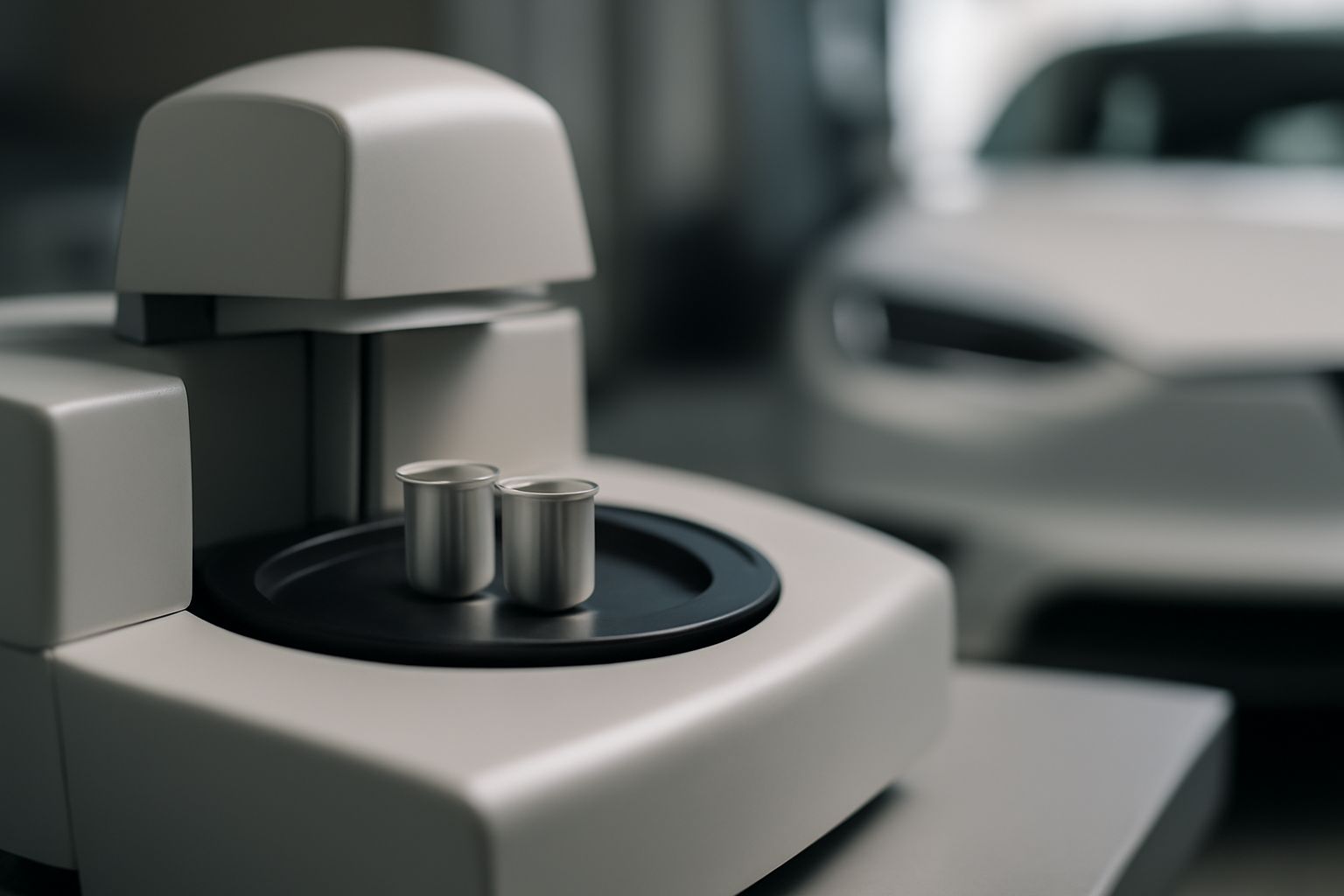
Today, battery research centers work to prevent failures that can lead to recalls or safety problems. The right crucible ensures that thermal analysis reflects real-world performance. From my own experience, engineers want solutions they can trust with minimal delays. High global demand also makes it important to have a stable source for critical lab consumables.
Labs often struggle with safety and performance in battery materials. They use thermal analysis and DSC to catch early warning signs before problems reach the road.
Differential Scanning Calorimetry (DSC) finds hidden risks by measuring how batteries respond to heat. It helps engineers and scientists understand how materials behave in real driving conditions, lowering the chance of defects and making new battery technology reliable.
| Function | DSC Application | Practical Lab Benefit |
|---|---|---|
| Detect phase changes | DSC tracks melting, crystallization, and phase transitions in cathode/anode materials | Predicts battery stability and cycling life |
| Profile thermal events | Measures exothermic or endothermic reactions in cell components | Helps prevent overheating or thermal runaway |
| Evaluate separator performance | Assesses shrinkage and breakdown temperatures | Supports safer battery designs and better material selection |
| Investigate electrolyte stability | Analyzes decomposition temperatures and reactions under stress | Explains failure modes and guides chemical improvements |
Researchers need consistent, uncontaminated lab results. High-purity crucibles prevent unwanted side reactions and data drift during battery analysis.
Only crucibles made from ultra-pure materials like 99.99% aluminum, platinum, or ceramic can withstand harsh thermal tests without affecting samples. This ensures test results reflect true battery behavior, reducing costly mistakes and wasted R&D time.
| Material Type | Key Property | Testing Outcome |
|---|---|---|
| Aluminum (99.99% pure) | Non-reactive, stable at experimental temperature | Prevents sample contamination, stable baseline signals |
| Platinum crucibles | Handles high heat, robust for repeated cycles | Trusted for precise thermogravimetric analysis in advanced battery labs |
| Ceramics (Alumina, sapphire) | Neutral chemistry, strong for special tests | Useful for tracking reactions in solid-state or prototype batteries |
Delays in global shipments hurt testing schedules. Labs in the US and Germany are taking steps to strengthen their supply of research-grade consumables.
Institutions now partner with local distributors, source directly from trusted Chinese makers, and maintain buffer stock to avoid downtime. They also keep strict inventory control and share supplier lists, building redundancy against market disruptions.
| Method | Main Practice | Supply Chain Benefit |
|---|---|---|
| Direct sourcing | Contracts with OEMs and Chinese exporters for regular shipment | Lower cost and more reliable lead time |
| Inventory buffer | Labs hold extra packs of critical crucibles | Prevents project delays from unplanned shortages |
| Supplier diversification | Dual or triple-vendor policies | Limits risk of regional supply problems |
| Transparency tools | Using smart ERP or inventory tracking | Helps labs monitor usage and reorder early |
Several lithium-ion battery recalls uncovered issues missed at the R&D stage. Poor testing signals, often traced to faulty or contaminated crucibles, led to expensive safety lapses.
Recalls prove that using the right labware prevents false confidence in unsafe cells. By investing in quality crucibles and more robust lab protocols, battery makers can avoid failures like those seen in the 2021 GM Bolt recall, which stemmed from overlooked material risks during earlier cell validation.
| Recall Example | Underlying R&D Issue | Crucible Impact |
|---|---|---|
| 2021 GM Bolt recall | Improper detection of thermal instability in cells | Irregular DSC readings due to contaminated pans |
| Samsung Note 7 recall | Missed separator shrinkage at high temperatures | Poor sealing in test crucibles led to inaccurate risk analysis |
| European EV model pullbacks | Failure to spot unwanted reactions in test batches | Incorrect test data from reused labware |
Experts stress the need for solid lab process and trusted supplies when global expansion is at stake. Every step in battery R&D must deliver reliable results to keep safety first and protect a brand’s reputation.
With so much riding on each experiment, even small errors risk major costs. Experienced labs double down on quality. They choose vendors with proven compatibility, demand traceable materials, and confirm that crucibles meet GLP standards. As EV adoption moves faster, strong alliances between tech hubs and top consumable makers are more valuable than ever. Reliable supply chains now define scientific success and power the global battery revolution.
| Action | Why it Matters | Expected Result |
|---|---|---|
| Pick certified, known suppliers | Ensures each crucible meets what the instrument needs | Stable thermal data and repeatable analysis |
| Follow strict cleaning and storage | Avoids data drift from residue or cross-sample effects | Fewer failed runs, better battery safety insights |
| Keep training current | Technicians know how to spot wear, replace at right times | Less downtime, better ROI on consumable budgets |
| Audit supply chain regularly | Stops fake or low-grade labware from entering stock | Protects lab’s reputation and long-term project quality |


C082.Wangdefu International Building, Furong, Changsha, Hunan, China


+86-19907415020