



SHOPPING CART
Your cart is empty.
shop now
Your cart is empty.
shop now
Selection mistakes in lab consumables can lead to wrong results, wasted samples, and delayed projects. Finding the correct DSC pan saves time, money, and upholds trustworthy data quality.
To buy the right DSC pan, assess your sample needs, pan size, pan sealing method, and device compatibility. The proper fit ensures precise thermal analysis results and consistent laboratory operations.
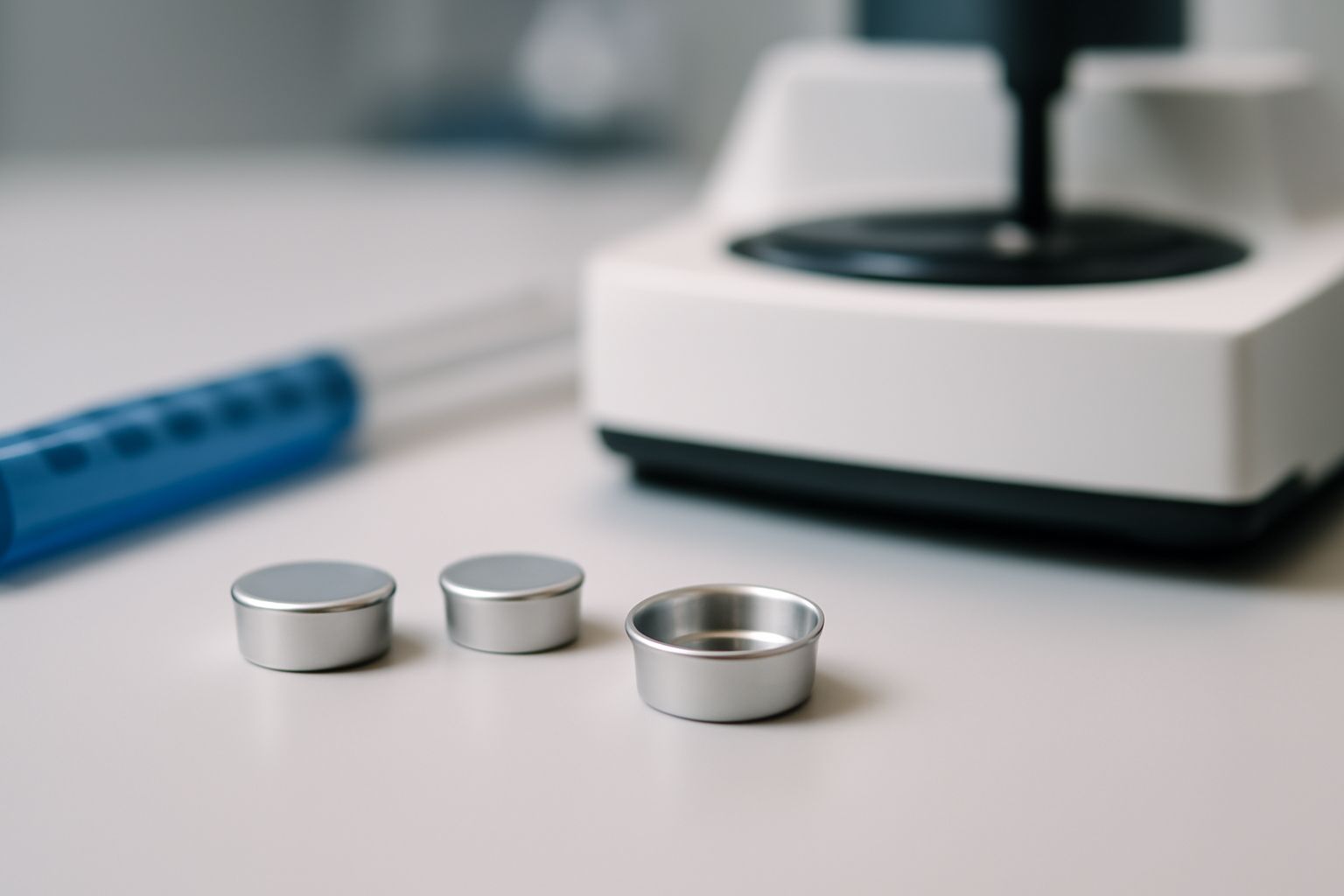
I noticed smoother project delivery after standardizing DSC pan selection and checking compatibility at each procurement. Now, my lab minimizes rework and avoids costly errors. Here are the important considerations every lab should apply.
Labs can run into measurement errors if critical buying factors are overlooked. Pan material, sealing type, and quantity have the largest impact on both results and costs.
You should look at thermal stability, reactivity, volume accuracy, supplier certification, and the need for hermetic or standard sealing. List sample properties and experiment aims before you start sourcing.
| Factor | Importance | Example Application |
|---|---|---|
| Material Compatibility | Avoids sample reactions, supports baseline stability (DSC basics) | Aluminum pans for organics, platinum for harsh chemicals |
| Sealing Requirements | Prevents evaporation, sample loss, or air contamination | Hermetic pans for volatile/oxidation-prone samples |
| Batch Consistency | Reduces baseline drift, enables reliable repeat experiments | Same-lot pans for all project runs |
| Certification | Proves manufacturing quality for regulated labs | ISO certified or lot-documented suppliers |
Listing what matters first helped me streamline both purchasing and method validation across new project starts.
Mismatched pan sizes result in uneven heating or accidental spillage during thermal tests. Accurate sizing is key to good data and safe lab work.
Match the pan size to your expected sample mass, volume, and instrument recommendation. Always check pan volume and allowable sample fill range during procurement.
| Pan Size | Recommended Sample Mass (mg) | Typical Use Case |
|---|---|---|
| Micro | 0.1–3 | Trace analysis, small-volume testing |
| Standard | 2–12 | Routine lab measurements, polymer QC |
| Large | 10–25 | Composite, high-energy samples |
| Custom | Project-dependent | Unique or special configuration, pilot studies |
I use a quick calibration sample with each new pan size to check for uniform response and correct any loading errors before running the main batch.
Volatile and reactive samples can quickly lose accuracy if exposed to air or moisture. Hermetic pans address this by sealing the sample inside the pan.
They help prevent sample evaporation, isolate material from oxidation, and contain reactive substances under controlled conditions. Hermetic pans often need a crimping tool for proper sealing.
| Benefit | Description | Example Scenario |
|---|---|---|
| Prevents Evaporation | Keeps volatiles or water in sample | Solvent screening, APIs with moisture |
| Protects from Oxidation | Reduces air exposure | Oxidation studies, shelf-life research |
| Contains Reactions | Sealed system for exothermic or dangerous tests | Energetic materials, pharma development |
| Needs Extra Tool | Sealer/crimper needed for proper closure | Small investment for high-precision work |
After introducing hermetic sealing, I noticed fewer sample losses and better precision in repeat moisture content studies.
Not every DSC pan fits all thermal analyzers. Compatibility errors can lead to pan misalignment, bad readings, or even instrument damage.
Check the equipment brand, model, and pan type list for each experiment. Confirm fit and compatibility by trial loading or with a vendor-provided lookup table.
| Verification Step | Why It Matters | Practical Example |
|---|---|---|
| Check OEM Reference | Confirms approved types by manufacturer | DSC from TA Instruments, use TA-approved pans only |
| Trial Fit | Physical check for correct seat and closure | Trial tests before major batch |
| Supplier Cross Table | Cross-reference for compatible SKUs | Check for DSC instrument SKU mapping |
| Record Results | Log compatibility for reorder and training | Create lab SOP checklist |
My team started using a compatibility logbook, which sped up purchasing and prevented fit errors with each new lot of pans.
Careful DSC pan selection supports high-quality lab data and efficient processes. Material, fit, sealing, and compatibility checks together build a foundation for dependable thermal measurements.
Contact Technical Support

C082.Wangdefu International Building, Furong, Changsha, Hunan, China


+86-19907415020