



SHOPPING CART
Your cart is empty.
shop now
Your cart is empty.
shop now
Struggling with inconsistent DSC results? The right choice of pan makes all the difference in precise thermal analysis.
The technical parameters of DSC pans—thermal conductivity, pan size, and material purity—directly affect measurement accuracy. Matching pan features to your sample and method ensures reliable data in thermal analysis research.
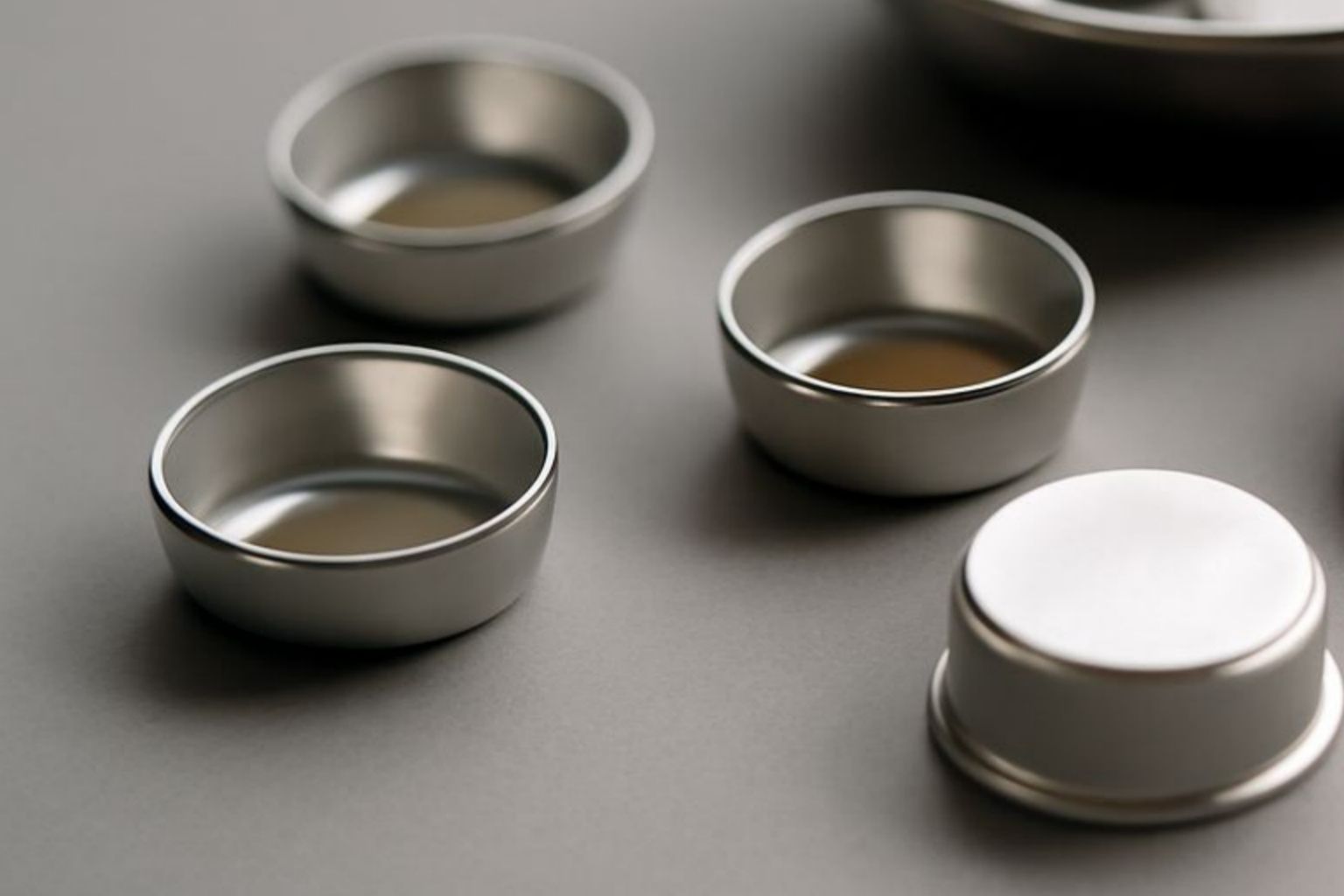
Understanding what makes DSC pans different helps me avoid unnecessary errors in thermal analysis. Every parameter has a real impact. This article explains the core technical criteria I focus on to guarantee dependable results in my work.
Not all DSC pans pass heat as evenly or quickly as others. This can cause small shifts in temperature readings or missed transition peaks.
DSC pans must have suitable thermal conductivity to transfer heat uniformly between the sample and furnace. High conductivity ensures accurate detection of heat flows and makes subtle transitions visible in the data.
| Material Type | Typical Conductivity (W/m·K) | Usage Scenario |
|---|---|---|
| Aluminum | 235 | General thermal analysis, fast response |
| Ceramic (Al₂O₃) | 20–35 | High temp, slower heat transfer, prevents sample contamination |
| Platinum | 71 | Precise, inert environment, high cost applications |
| Graphite | 80–200 | High temperature, unique sample needs |
I often choose aluminum pans for most experiments thanks to their high conductivity, but I use ceramic for measurements above 600°C or when sample reactivity is a concern. Knowing a material’s thermal conductivity ensures I can select the optimal pan for all types of heat flow sensitivity.
I once ran two tests with pans of different heights. One showed broader, less sharp peaks, just because the sample layer was too thick.
Pan size impacts heat transfer, sample contact area, and baseline stability. Selecting a pan with the correct diameter and height supports even heating and accurate measurement of small thermal events.
| Pan Diameter (mm) | Typical Sample Mass (mg) | Suitable For |
|---|---|---|
| 6.7–7.0 | 2–10 | Standard organic/inorganic samples |
| 5.0–6.0 | 1–6 | Small samples, pharmaceuticals, expensive materials |
| 8.0–10.0 | 8–30 | Polymer testing, multiple-phase blends |
The difference in sample mass and layer thickness means heat sometimes struggles to reach the whole sample. Correct size selection helps avoid underestimating or broadening events like melting or crystallization. I check my instrument’s manual and follow sample preparation guidelines to reduce artifacts.
I once had a batch of pans that left small residues after heating. Those impurities changed my heat flow baseline and caused confusion in my results.
Pans with high material purity reduce unwanted reactions, baseline drift, and contamination. Over 99.9% purity is required for most labs to guarantee accurate sample measurement and data consistency.
| Material | Purity Requirement (%) | Impact If Lower Purity |
|---|---|---|
| Aluminum | >99.9 | Contaminant peaks, higher background signals |
| Ceramic | >99.7 | Porosity, moisture release, false exotherms |
| Platinum | >99.95 | Catalytic effects, baseline instability |
When I use high-purity substances, I see fewer surprises in my thermograms. All REDTHERMO pans, meet global purity requirements for reliable research work.
I struggled to interpret an endothermic peak until I realized my pan wasn’t sealed well enough, causing volatile loss during heating.
Hermetic pans keep volatile components inside, prevent sample oxidation, and stop moisture exchange. Non-hermetic pans work for stable samples and higher gas flow experiments.
| Pan Type | Seal Quality | Key Applications | Trade-Offs |
|---|---|---|---|
| Hermetic | Gas-tight, moisture-proof | Volatile samples, pharmaceutical, food, hydrated salts | May increase pressure, limited pressure venting |
| Non-Hermetic | Loose/crimped closure | Stable solids, polymers, materials needing open system | Possible mass loss, exposure to atmosphere |
My choice of pan enclosure relates to the intended measurement technique, sample volatility, and seal integrity demands. This lets me avoid data accuracy issues or unpredictable pressure effects during a test.

C082.Wangdefu International Building, Furong, Changsha, Hunan, China


+86-19907415020