



SHOPPING CART
Your cart is empty.
shop now
Your cart is empty.
shop now
DSC testing failures waste resources and can ruin experiments, leaving you frustrated and confused about the source of error in your thermal analysis workflow.
Common DSC problems like unstable baselines, sample contamination, or leaks often stem from using poorly fitting or unclean research-grade crucibles; selecting the right crucible and following best practices will restore reliable results fast.
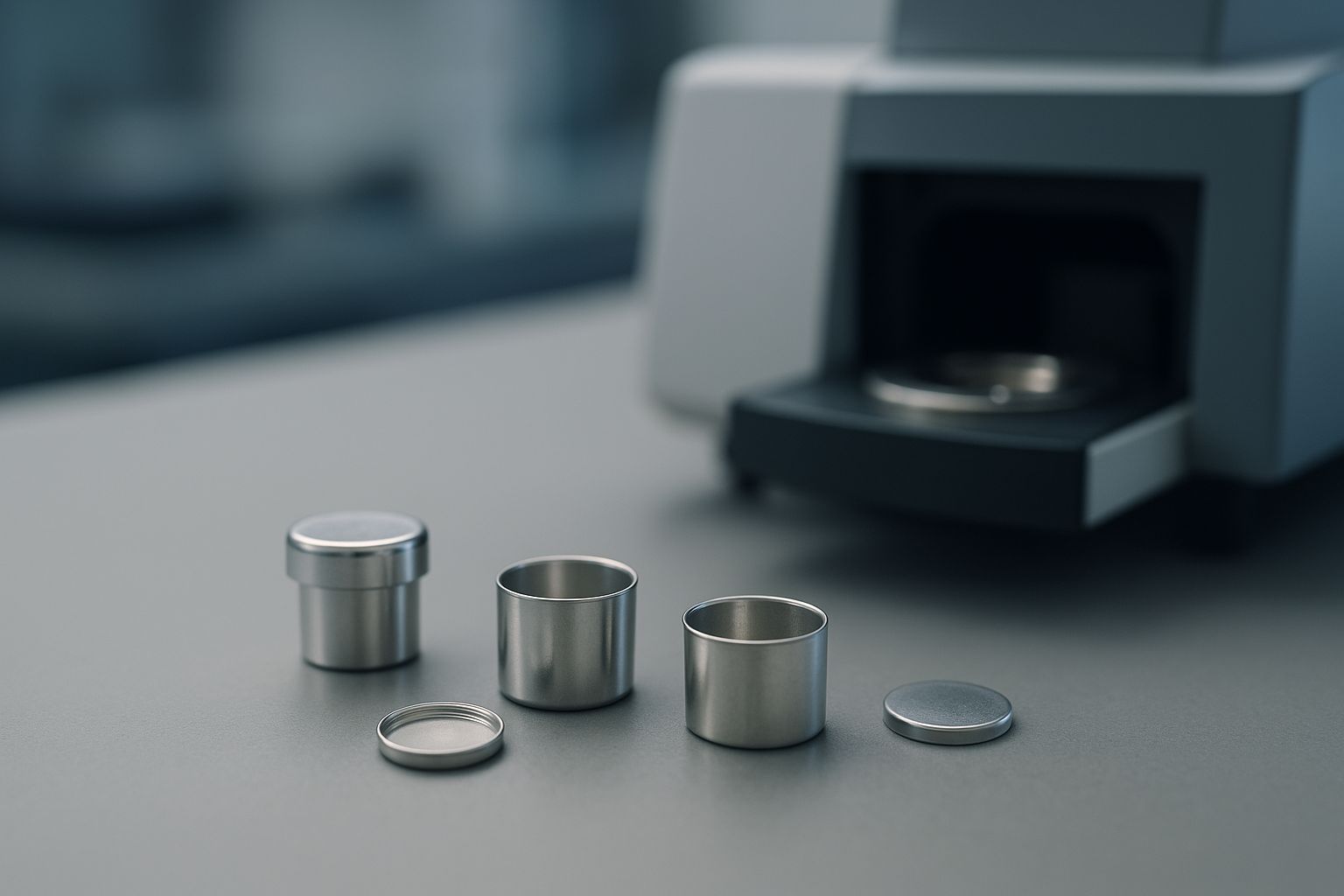
In my experience, testing with DSC feels rewarding—except when erratic data points or mysterious sample loss occur. With the right approach, you can prevent these issues with careful crucible selection and handling. Let me walk you through the main pain points and effective fixes that work in real-world laboratory settings, especially if you use alternative crucible brands.
We all know how frustrating unexpected baseline shifts or sporadic noise can be, especially during a time-sensitive DSC test when accuracy matters most.
Baseline drift and noise in DSC commonly happen due to poor crucible contact, surface contamination, or using incompatible crucible alloys; always clean and match pans to the instrument for a stable baseline.
| Factor | Impact on Baseline | Prevention Tips |
|---|---|---|
| Instrumental Noise | Unexpected data spikes or drift | Let system warm-up, calibrate regularly |
| Crucible Contact | Unstable heat flow, shifting baseline | Check for proper seating, use matching pan and lid |
| Material Purity | Noise due to impurities or corrosion | Pick crucibles of >99.9% purity |
| Surface Cleanliness | Interference, especially at low signals | Clean pans with ethanol or ultrasonic bath |
| Device-Crucible Incompatibility | Bad contact, heat transfer loss | Use designated consumables for your model |
Regular cleaning removes contaminants that can affect signal quality. Selecting the correct crucible shape and alloy type makes sure heat transfer stays even, which is crucial for trustworthy DSC. Real laboratory reports back the highest success rates with high-purity, well-cleaned pans.
I have watched perfect samples suddenly diminish or degrade due to undetected contamination—a mistake that wastes costly materials and lab time.
To prevent contamination or sample loss in DSC, always use clean, dedicated tools, handle pans with gloves, and properly seal the sample to keep moisture and dust out during heating cycles.
| Task | Role in Contamination | Pro Lab Best Practice |
|---|---|---|
| Storage of Crucibles | Open storage attracts dust and airborne chemicals | Store in sealed containers; label each type clearly |
| Sample Loading | Powder shedding or spills can mix with next run | Use fine tweezers or spatulas; load on clean sheet |
| Personal Protective Equipment (PPE) | Direct contact fats/oils can cause spectral noise | Wear gloves; avoid touching inside pan/lid |
| Sealing | Poorly sealed pans cause evaporation or oxidation | Use compatible sealing press; double-check before measurement |
| Cleaning Before Use | Residual solvent or grease can alter readings | Wipe thoroughly, dry fully after any cleaning step |
Even a small contaminant can disturb your test. Organization and patient preparation help. In my workflow, labeling each pan and using only fresh, single-use spatulas for loading has sharply reduced data noise and repeated runs.
Few things waste more time than troubleshooting setup errors only to find a crucible that “almost fits” but causes poor data or physical jams in the DSC loader.
If your crucible or sample pan does not fit your DSC holder, double-check both product dimensions and device compatibility lists, and use dedicated or certified alternatives with the correct shape and tolerance.
| Cruicible Brand | Holder Type | Common Fit Issue | Solution |
|---|---|---|---|
| METTLER | Flat-bottom, Snap-fit | Too tight/loose, mismatched rim | Use REDTHERMO’s high-precision options |
| PerkinElmer | Cylindrical, Push-in | Height mismatch, rotating in holder | Order pans within ±0.01 mm size spec |
| TA Instruments | Crimp, Planar | Lid does not settle flat, unsteady baseline | Choose designated “TA” model pans for snug closure |
| Shimadzu | Flat, Recessed | Deep dish mismatch, sample waste | Reference holder spec here |
Each DSC instrument has a calorimeter with precisely sized holders to ensure uniform heat flow. Deviating from specified pan heights, diameters, or lid shapes creates leaks or heat loss. I now always verify numbers down to the micron and audit new batches with a micrometer. Check all details before each order or test.
Leaking or loosely sealed crucibles can destroy hours of work—if left unsolved, they can alter melting points, cause sample burns, or even damage the DSC sensor plate.
Leaking or poorly sealed DSC crucibles often result from mismatched lids or improper crimping; verify pan and lid shape, use compatible sealing tools, and check for visible gaps before running a test.
| Root Cause | How to Check | Preventive Fix |
|---|---|---|
| Pan-Lid Mismatch | Visual edge gaps, loose fit | Use matched sets, order together by model |
| Poor Crimp or Sealing | Irregular seam, pops open under heat | Apply even pressure with certified tools |
| Damaged Crucible Rim | Dents, out-of-round after storage/handling | Inspect before use, discard any deformed piece |
| High Pressure/Volatile Samples | Visible residues, lost mass post-run | Switch to high-strength or gold/sapphire pans |
| Incorrect Temperature Ramp | Sudden pressure rise, pan ruptures | Follow material ramp-rate specs for each test |
If you see pan discoloration or residue after use, you may be dealing with sample leaks. For volatile or reactive samples, consider hermetically sealed crucibles, or switch to gold, platinum, or sapphire variants for higher heat resistance. I inspect both pans and lids at every step. Care now saves hours later.
After helping hundreds of labs troubleshoot DSC problems, I see most errors come from over-relying on “almost fits” or skipping essential cleaning steps—especially with alternative or generic pans.
Sub-optimal fit or finish in DSC crucibles almost always leads to sudden baseline shifts, increased noise, or repeat leaks; double-checking every dimension and strict decontamination keeps your data solid every time.
| Checkpoint | Why It Matters |
|---|---|
| Dimension Accuracy (±0.01mm) | Prevents heat transfer losses and misfit leaks |
| Material Purity (>99.9%) | Reduces baseline noise |
| Surface Cleanliness | Minimizes contamination, improves repeatability |
| Instrument Compatibility | Ensures direct, fuss-free fit for your DSC model |
| Proper Sealing Technique | Stops evaporative losses and leaking |
| Stock Availability | Keeps your lab running without delay |
Solid baseline, no leaks and accurate readings are all rooted in careful choices at the pan selection and cleaning stage. After every batch switch or new supplier, I run trial blanks to confirm no noise or drift. Data from independent labs supports this hands-on approach.
Careful crucible selection, perfect fit, and strict cleaning solve most DSC test errors, giving you stable baselines and reliable analysis every time, no matter the instrument.


C082.Wangdefu International Building, Furong, Changsha, Hunan, China


+86-19907415020