



SHOPPING CART
Your cart is empty.
shop now
Your cart is empty.
shop now
Testing advanced materials needs results with zero compromise. Many labs trust research-grade crucibles for this reason.
Research-grade crucibles are crucial for Differential Scanning Calorimetry (DSC) in material science, ensuring accurate thermal measurements and preventing contamination. Their consistent quality gives reproducible results for polymers, chemicals, pharmaceuticals, and advanced materials testing.
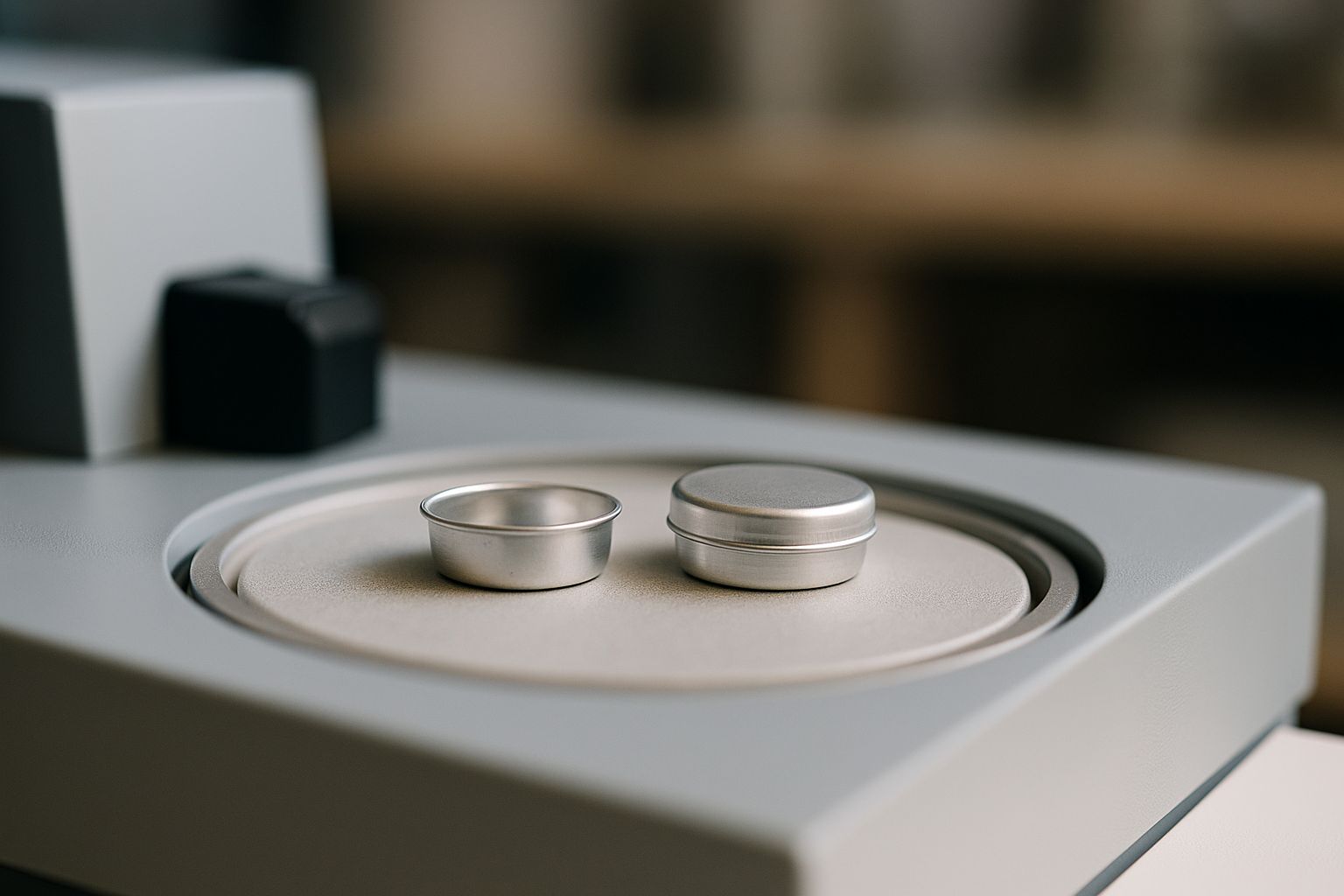
Research-grade crucibles keep thermal analysis reliable in every industry lab. Each field depends on these specially crafted pans for their highest standard of results. Their influence shapes the way scientists trust data.
Many different industries need precise thermal testing of samples. Each industry requires special crucibles that suit its unique tests.
Material science, polymers, chemicals, pharmaceuticals, electronics, aerospace, and food science all use research-grade DSC crucibles for accurate thermal analysis. Their compatibility and purity suit both research and quality control labs.
| Industry | Main Crucible Use | Sample Types | Reason for DSC Testing |
|---|---|---|---|
| Material Science | Thermal transition studies | Metals, ceramics, composites | Monitor melting, crystallization, and phase change |
| Polymers & Chemicals | Curing and glass transition testing | Plastics, rubbers, adhesives | Control quality and process development |
| Pharmaceuticals | Purity & stability assessment | Active ingredients, excipients | Ensure safety and meet compliance |
| Electronics & Semiconductors | Reliability testing at temperature | Encapsulants, wafers, dielectric materials | Test heat resistance and failure points |
| Aerospace | Advanced composite analysis | Resins, fibers, coatings | Guarantee safety in extreme conditions |
| Food Science | Fat melting and water content | Oils, chocolate, gelatin | Analyze processing and shelf life |
Material science labs, as shown above, prioritize crucible compatibility for high-temperature transitions.
Some DSC tests show flaws if the crucible does not match the polymer or chemical properties. The wrong crucible can cause bias or errors.
Research-grade crucibles with high-purity aluminum or platinum provide stable heat transfer, prevent reactions, and minimize contamination, ensuring trustworthy DSC results for polymer curing, glass transition, or thermal degradation analysis.
| Crucible Feature | Impact on Polymer Testing | Impact on Chemical Testing |
|---|---|---|
| High-Purity Aluminum | Reduces background signals Ensures sharp transitions |
Limits catalyst effects Makes heat flow data cleaner |
| Platinum Crucibles | Prevents oxidation in sensitive samples | Endures strong acids or bases |
| Consistent Geometry | Makes sample size easy to repeat | Improves test repeatability |
| Sealed Design | Stops volatile loss during heating | Ensures reliable evaporation studies |
Testing polymer curing needs glass transition accuracy, which is sensitive to crucible purity and sealing. This ensures that heat flows only through the intended sample.
Not every crucible delivers the same test results. Only research-grade types match top technical demands in industrial settings.
Research-grade crucibles stand out with tighter tolerances, ultra-clean surfaces, certified materials, and detailed batch traceability, unlike standard crucibles that may allow inconsistencies and contamination, resulting in unreliable DSC measurements.
| Feature | Research-Grade Crucibles | Standard Crucibles |
|---|---|---|
| Precision Tolerance | ±0.01 mm or better | ±0.05 mm or wider |
| Material Purity | ≥99.99% (Al, Pt) | <95% (more impurities) |
| Surface Finish | Deburred, polished, residue-free | May have rough or oxidized spots |
| Batch Certification | Documented and traceable | Often unavailable |
| Custom Options | Offered (by drawing/sample) | Usually not available |
Precision tolerance (+/-0.01 mm) removes instrument mismatch risk in automated DSC units, enabling high-throughput labs to generate consistent, published data.
Pharmaceutical DSC tests demand exact results. Any issue with crucible material risks both compliance and patient safety.
Material compatibility prevents sample interaction, ensures chemical inertness, and maintains sample purity. This is central to pharmaceutical DSC for stability testing, purity checks, and regulatory approval of drugs for market.
| Crucible Material | Drug Testing Application | Reason for Compatibility |
|---|---|---|
| High-Purity Aluminum | DSC of organic compounds | Does not react, keeps sample chemistry stable |
| Platinum | DSC of corrosive APIs | Withstands acids/bases, avoids breakdown |
| Special Coated Pans | Volatile or sticky drug forms | Improves release, supports cleaning |
| Custom-Shape Crucibles | Unusual dose forms or microsamples | Fits exact size and test needs |
The pharmaceutical field heavily regulates DSC sample analysis; improper pan choice can violate industry standards or endanger patients. Regulatory bodies such as the FDA require detailed documentation for all materials in contact with drugs.
Research-grade crucibles are essential in DSC for accurate, repeatable results across industrial labs. Material choice and compatibility build trust in every analysis step.


C082.Wangdefu International Building, Furong, Changsha, Hunan, China


+86-19907415020