



SHOPPING CART
Your cart is empty.
shop now
Your cart is empty.
shop now
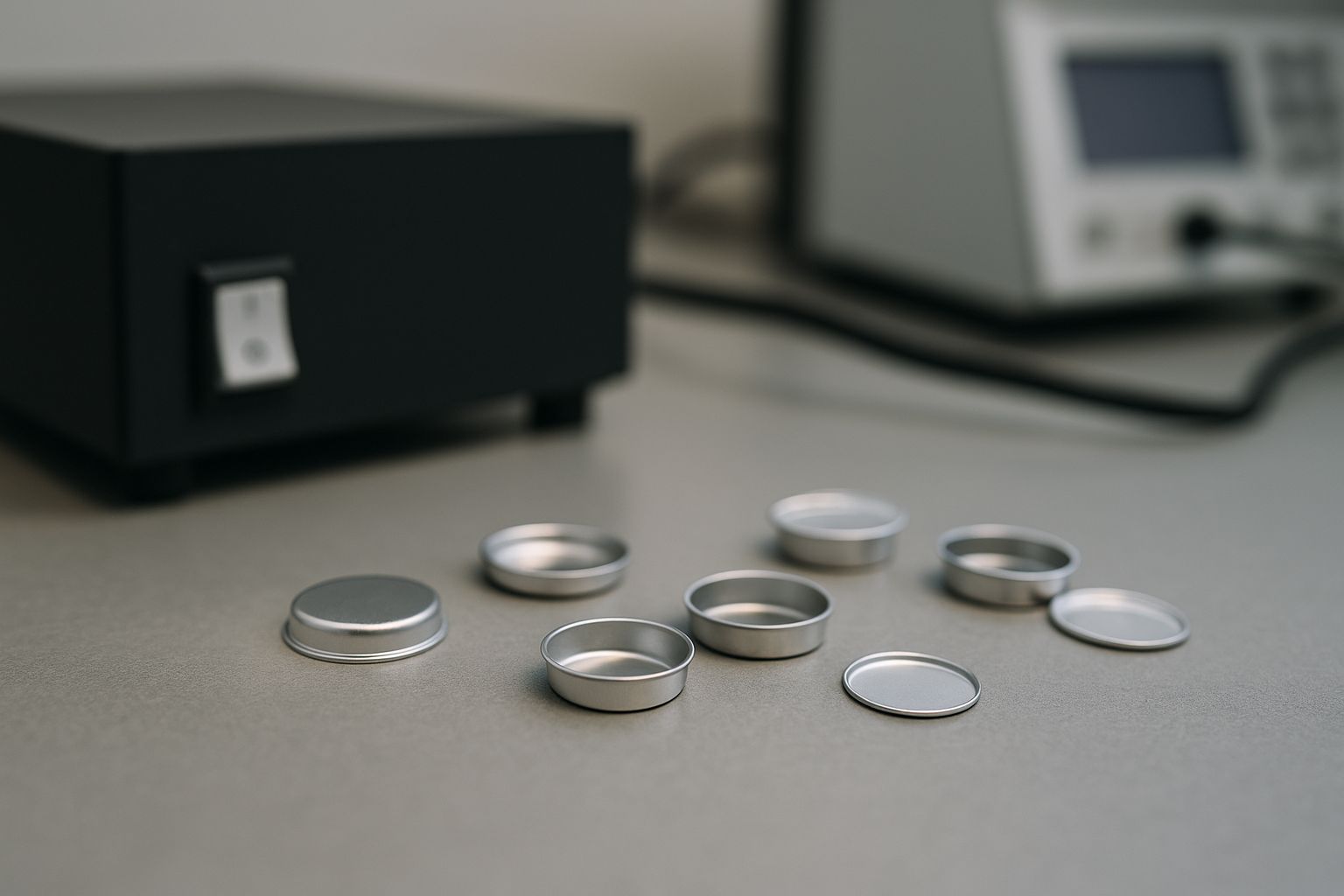
Anyone running a home materials analysis setup wonders about the real function of DSC sample pans.
DSC sample pans hold tiny materials for heating during analysis. They keep the test sample safe, stop contamination, and provide data for correct temperature readings in home labs.
| Aspect | Details | Key Value for Home Labs |
|---|---|---|
| Material Compatibility | Aluminum is the most used. Other types include gold and platinum (DSC basics). | Allows most material types to be analyzed safely. |
| Sealing Quality | Sealed pans prevent leaks and oxidation in air-sensitive samples. | Protects sensitive and volatile materials. |
| Reproducibility | Consistent pan mass and shape reduce fluctuating thermal signals. | Improves day-to-day measurement reliability at home. |
Sample pans are not just holders. They influence thermal signal strength, reproducibility, and keep unwanted reactions out of your experiment. Many home researchers underestimate this, which leads to confusing results or wasted samples.
Reliable heat testing in a home lab means you want to trust your generic or replacement pans, not just expensive branded ones.
Yes, you can achieve quality results with generic DSC pans. Match pan material, seal, and fit to your instrument. High-purity and precise pans bring results close to branded pans.
| Feature | Generic Pans | Branded Pans | Reliability Factor |
|---|---|---|---|
| Material Purity | 99.99% aluminum or similar | Guaranteed by brand | Purity impacts accuracy (see purity) |
| Dimensional Accuracy | ±0.01 mm with quality products | Strictly controlled | Better fit results in better data |
| Seal Integrity | Good if properly formed | Consistent seal every batch | Airtight seals stop sample change |
| Price | 30-50% less | Higher due to brand markup | Cost savings help home labs scale up |
If you pick high-purity generic pans and test with standards, you see results almost the same as branded consumables. Expert forums and published scientific studies confirm that reliability mostly depends on precise fit, purity, and quality sealing, not just the brand name. Home labs can trust well-made generic pans to save cost and keep reproducibility high.
Some believe DSC at home is limited. In fact, the range of test materials grows every year for both amateur and professional researchers.
You can use home DSC pans to test polymers, metals, alloys, pharmaceuticals, food samples, and even fine chemicals, if your setup safely handles the thermal range and sample type.
| Material Type | Common Analysis | Example Use Case | Special Pan Need |
|---|---|---|---|
| Polymers | Melting & crystallization temp | Study new plastic for 3D printing | Aluminum pan, tight seal needed |
| Metals & Alloys | Heat treatment transitions | Test solder alloy composition | High-temp pan, sometimes platinum needed |
| Drugs & Pharmaceuticals | Purity, melting point | Check substance quality at home lab | Sealed pan to stop evaporation |
| Foods | Fat/oil melting, water loss | Chocolate or milk powder analysis | Vent hole or sealed pan required |
Today, home-based labs often use commercial DSC pans to test diverse items. The only limit is the device range and pan choice. As long as your pan matches max temperature, chemical safety, and is well sealed, almost any small sample from polymers to metals can be researched in your home setup. Keep good safety practices for chemicals and heat sources at all times.
Many new home lab users ignore how well their pans match their instruments. This mistake leads to wasted samples and frustration.
Sample pan compatibility with mainstream DSC brands is critical. If pan dimensions, material, or seals mismatch, you will get weak, noisy, or wrong data.
| DSC Brand | Required Pan Specs | What Happens with Wrong Pan | Why Compatibility Matters |
|---|---|---|---|
| TA INSTRUMENTS | Specific diameter, 99.99% Al, standard cap | Pan may not fit holder, poor thermal contact | Good fit ensures valid signal |
| PERKINELMER | Unique height, flatness, pure aluminum | Sample may leak or burn uncontrolled | Equipment safety and signal accuracy |
| NETZSCH | Thick-walled, matching seal design | Seal breaks or produces gas escape | Seal keeps volatile samples safe |
| METTLER | Precision tolerance, tight seal | Data drift, pan stuck in robot tray | Automatic labs need trusted matching |
Most mainstream brands design pans with concrete specs. Even small mistakes with pan height or wall thickness ruin experiments. Always check pan specs in the instrument handbook or use official references. It took me a few wasted afternoons to learn just how much correct fit cuts errors and stops lab downtime.
Home laboratory DSC sample pans have made it easy for anyone to test, analyze, and improve materials at home. Pick the right pan, check your fit, and you are ready to reach high research standards.


C082.Wangdefu International Building, Furong, Changsha, Hunan, China


+86-19907415020