



SHOPPING CART
Your cart is empty.
shop now
Your cart is empty.
shop now
Thermal analysis labs often lose time when they choose the wrong DSC crucible. I have seen research delayed by mismatched or low-quality consumables.
Essential technical specifications for DSC sample crucibles include material purity, volume, precision, and compatibility with target instruments. Knowing these details brings better results and avoids delays in analysis.
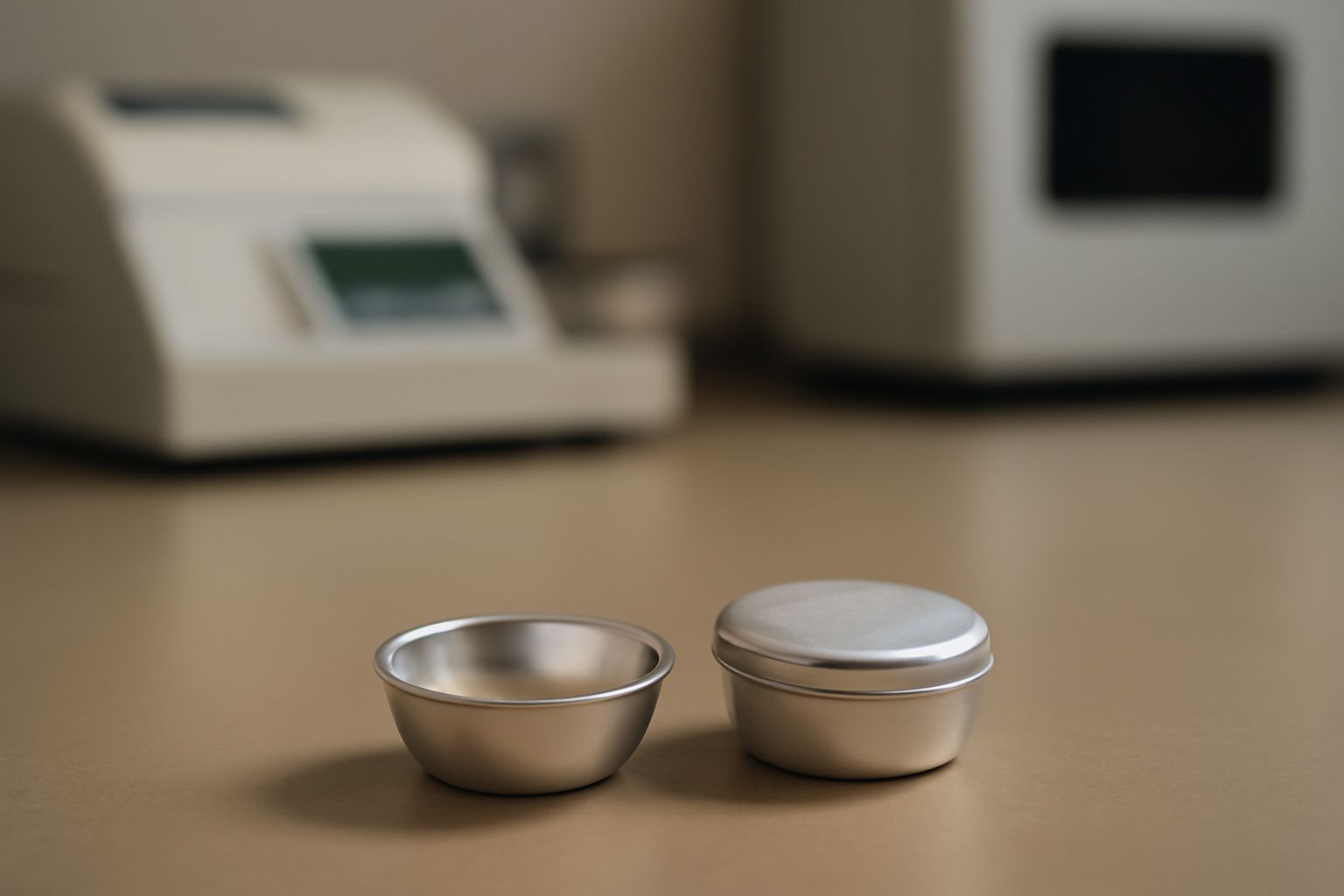
Understanding DSC crucibles starts with careful study of product specifications. Once I learned how to check these specs, my testing work always ran smoother. Next, I will explain what features matter most for labs that value quality and speed.
Every detail in a DSC crucible affects the results. Labs cannot ignore the link between crucible design and data quality in each test.
The main specifications are material purity, geometry, wall thickness, maximum working temperature, and seal type. Labs need to check the volume and ensure tight tolerances for consistent results. Only products with clear material certificates and technical datasheets should be used for scientific work.
| Specification | Typical Range | Why It Matters | Check Point |
|---|---|---|---|
| Material Purity | 99.99% Aluminum, Pt, Au | No interference, clean baseline | Supplier certificate |
| Volume | 20–50 μL | Accurate dosing, avoids overflow | Product datasheet |
| Thickness | 0.12–0.25 mm walls | Uniform heat flow | Micrometer testing |
| Max. Temperature | 600–1600°C | Prevents deformation | Test report |
| Seal Type | Standard, hermetic, vented | Prevents leaks or pressure buildup | Seal inspection |
These benchmark parameters are widely suggested by sources like ASTM E2008, a standard for thermal analysis containers.
Lab work slows down when a sample pan does not fit the machine. I have seen labs lose valuable time this way.
Compatibility depends on the pan geometry, lid shape, and size match to the DSC instrument model. Many brands list direct compatibility tables. Labs should always verify key dimensions and consult with manufacturers for guidance before purchase. Using a proper compatibility chart ensures that the DSC crucible fits and works with the required measurement system.
| Compatibility Factor | How to Measure | Instrument Example | Extra Resource |
|---|---|---|---|
| Pan Diameter | Caliper, datasheet | TA Q2000, Mettler DSC 3+ | DSC device |
| Lid Style | Visual, test fit | TA crimp, PerkinElmer hermetic | User manual |
| Height | Micrometer, datasheet | Netzsch 204 F1 | Dimension chart |
| Position Pin/Notch | Reference photo | Shimadzu DSC-60A | Compatibility table |
I rely on digital catalogs and Labcompare to confirm cross-brand compatibility before ordering for my lab.
Crucibles made with different materials do not perform the same under heat. I test both standard and high-temperature models for new sample types.
Thermal resistance is defined by the crucible's material type and build quality. Aluminum pans handle up to 600°C, platinum and gold up to 1600°C, and specialty ceramics for even higher. Labs need to select the right material based on sample decomposition temperature and test protocols. Checking the melting point, maximum temperature, and stability for each product helps avoid costly sample loss or equipment damage.
| Material Type | Max. Temperature | Best Use Case | Thermal Resistance Source |
|---|---|---|---|
| Aluminum | 600°C | Polymers, standard organics | Aluminum data |
| Platinum | 1600°C | Inorganics, metals | Platinum properties |
| Ceramic | 1700–2000°C | Ashing, extreme heat | Ceramic overview |
Industry sources, such as Sigma-Aldrich, provide more detail about maximum temperatures and best applications for each material type.
Precision in crucible manufacturing means fewer failed tests. I avoid products with rough edges or uneven thickness for quality control projects.
High-precision manufacturing assures each DSC crucible has exact dimensions and smooth surfaces. This consistency gives reproducible heating rates and prevents heat leaks. It also reduces the risk of sample contamination. Automated production and quality checks lead to better fitting lids, uniform walls, and predictable weight. Labs using precision-built crucibles enjoy more stable baselines and sharper thermal events in each test.
| Manufacturing Feature | Why It Matters | Result in Lab | Related Quality Term |
|---|---|---|---|
| Smooth Surface | Reduces error from uneven heating | Improved baseline, repeatable results | Surface finish |
| Exact Dimensions | Fit machine, avoid leaks | Better test integrity | Tolerance |
| Automated Inspection | Each batch is checked | Consistent supply quality | Quality control |
Automated and precision manufacturing is recommended for all scientific consumables by resources such as ISO 9001 and independent lab audits.


C082.Wangdefu International Building, Furong, Changsha, Hunan, China


+86-19907415020