



SHOPPING CART
Your cart is empty.
shop now
Your cart is empty.
shop now
Lab projects suffer every time a crucible issue pops up without warning. I have watched deadlines slip because a sample pan did not fit or was out of stock.
The most common issues with DSC crucibles are incorrect fit, shipment delays, differences in weight, and bad sealing. I always check each shipment to avoid test failures in the lab.
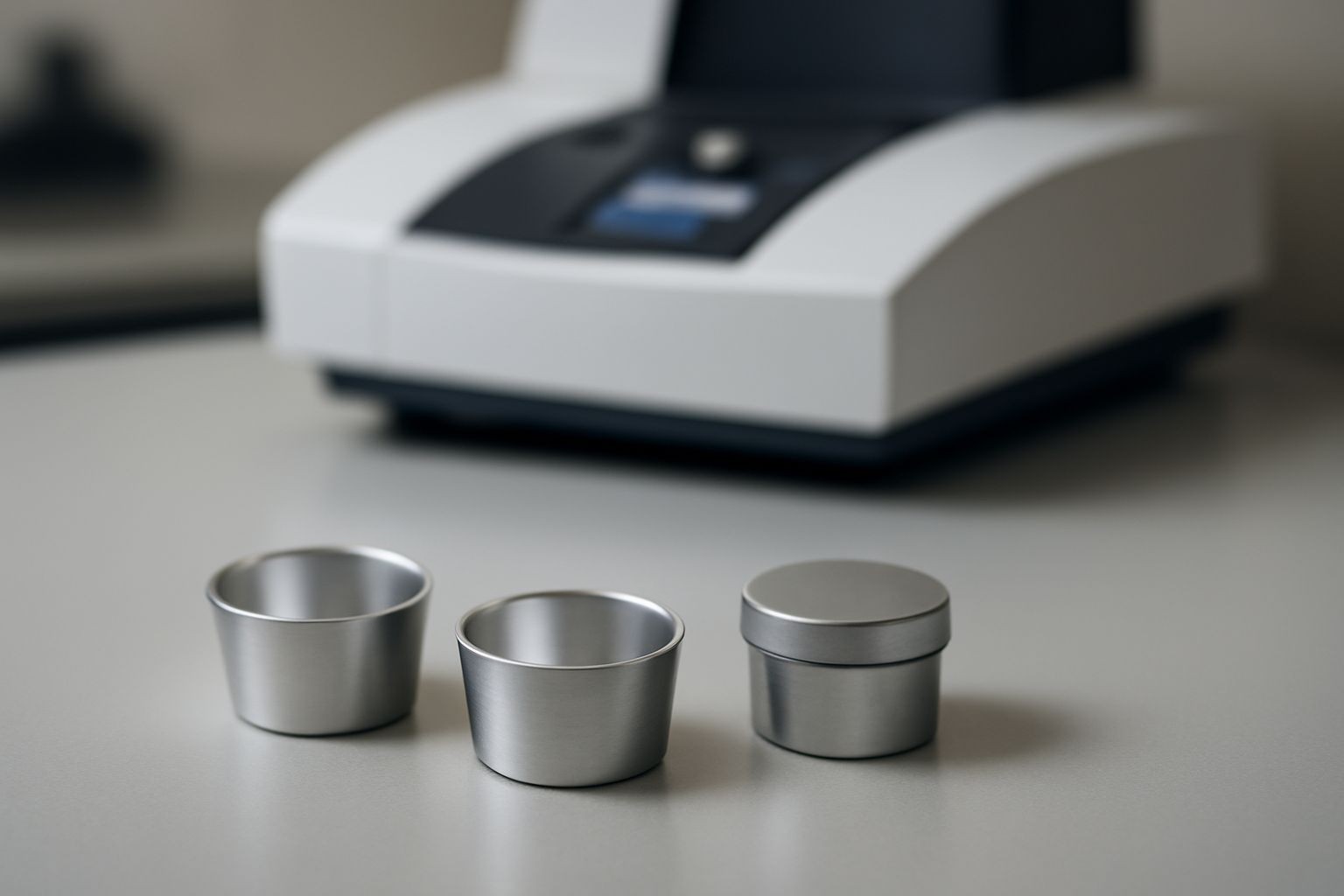
Once I learned how to quickly troubleshoot crucible problems, my workflow became smoother. Choosing a reliable supplier with fast shipping helps labs avoid most interruptions. In the next sections, I will walk through how to deal with these problems step by step.
I see the same problems happen in labs around the world. It always affects both testing time and data quality.
The main issues include improper fit inside the DSC holder, variation in weight or thickness, uneven sealing, contamination, and slow delivery. Each problem can cause incomplete tests or false results. Regular quality checks and working with trusted suppliers can prevent most issues. I keep a checklist fixed near my DSC so I do not miss anything important during inspection.
| Issue | How It Appears | Main Cause | Lab Impact |
|---|---|---|---|
| Improper Fit | Crucible won’t close or sits loose | Wrong size or rough finish | Loss of test data |
| Weight Variance | Readings do not match specification | Inconsistent manufacturing | Skewed calibration |
| Bad Seal | Lid comes off, leaks | Wrong crimp or design | Sample lost, result useless |
| Contamination | Unexpected signals in baseline | Poor packaging at source | Unreliable data |
| Delayed Shipping | Supplier fails to deliver on time | No stock or slow logistics | Downtime, test queue grows |
Quality control and regular supplier evaluation remain the simplest ways to prevent frequent DSC crucible problems in most labs.
I have experienced the pain of a supply gap on a Friday afternoon. I see that fast shipping is often the difference between a pause and test completion.
Fast shipping allows labs to recover quickly from low stock or emergency projects. Reliable suppliers with express delivery and strong inventory can supply popular DSC crucibles in under a week. This speed reduces testing downtime and allows labs to answer urgent customer or production requests. I now always keep a trusted supplier on file for express shipments if needed.
| Shipping Solution | Delivery Time | Action Needed | Lab Benefit |
|---|---|---|---|
| Express Courier (DHL/UPS) | 24–72 hours | Order before cutoff | Immediate stock-up |
| Supplier Stock Guarantee | 1–5 days | Check available SKUs | Zero test interruption |
| Partner Lab Networks | Same day/next day | Share local stock | Emergency back-up |
Based on McKinsey’s studies, labs with reliable fast shipping recover 20% faster from stock problems than those with long lead times.
I have noticed fitting problems can show up, even when the product claims 100% compatibility. This happens more with generic brands or rushed production.
Poor fit often comes from slight differences in pan diameter, height, or lid design. DSC machines from different makers use their own sizing, and most require tight tolerances. If a sample pan deviates even 0.1 mm, it might not close or seat correctly. I always check the technical drawing or try a test fit before running important measurements. Reliable suppliers publish exact dimensions and model compatibility tables to help their customers get it right.
| Fit Issue | Instrument Type | Likely Cause | Prevention Step |
|---|---|---|---|
| Loose Fit | TA Instruments DSC | Small diameter/flat base | Measure with caliper, use specs |
| Tight Fit | Mettler DSC | Oversized rim, thick wall | Test with demo sample |
| Lid Won’t Seal | Shimadzu DSC | Wrong lid contour | Cross-check with model guide |
| Pan Won’t Seat | NETZSCH DSC | Height ±0.1mm error | Check tolerance |
Tight tolerances and thorough documentation are critical for solving these pan fit issues, as confirmed by ASTM E2008 standards for thermal analysis.
Inconsistent weight or dimension often leads to bad results. I take extra time to verify weights and measure pans before running calibration curves.
Labs should use calibrated balances and micrometers to check the received pans. If any batch is out of tolerance, notify the supplier for a replacement. Data sheets should always list standard values and permitted deviation. Using a controlled QC process and documenting all new shipments helps me spot any issue early. Suppliers that provide batch-specific certificates or test sheets give me more confidence in long-term work.
| Discrepancy Type | How to Detect | Standard Limit | Remedy |
|---|---|---|---|
| Weight Out of Range | Analytical balance | ±0.2 mg typical | Return/replace batch |
| Height Error | Micrometer | ±0.02 mm | Reject batch |
| Diameter Error | Caliper | ±0.03 mm | Flag for review |
| Surface Defect | Visual inspection | Smooth, shiny, no pits | Document, reject |
More on metrology and tolerance checks at NPL metrology resources and ISO guides for laboratory equipment.


C082.Wangdefu International Building, Furong, Changsha, Hunan, China


+86-19907415020