



SHOPPING CART
Your cart is empty.
shop now
Your cart is empty.
shop now
Research teams often face setbacks from inconsistent results in thermal analysis. Disposable pans offer an effective way to reduce contamination and errors in daily material science testing.
TA Instruments disposable sample pans enable precise, repeatable thermal analysis by minimizing contamination risks, supporting critical material science, polymer, and quality control workflows.
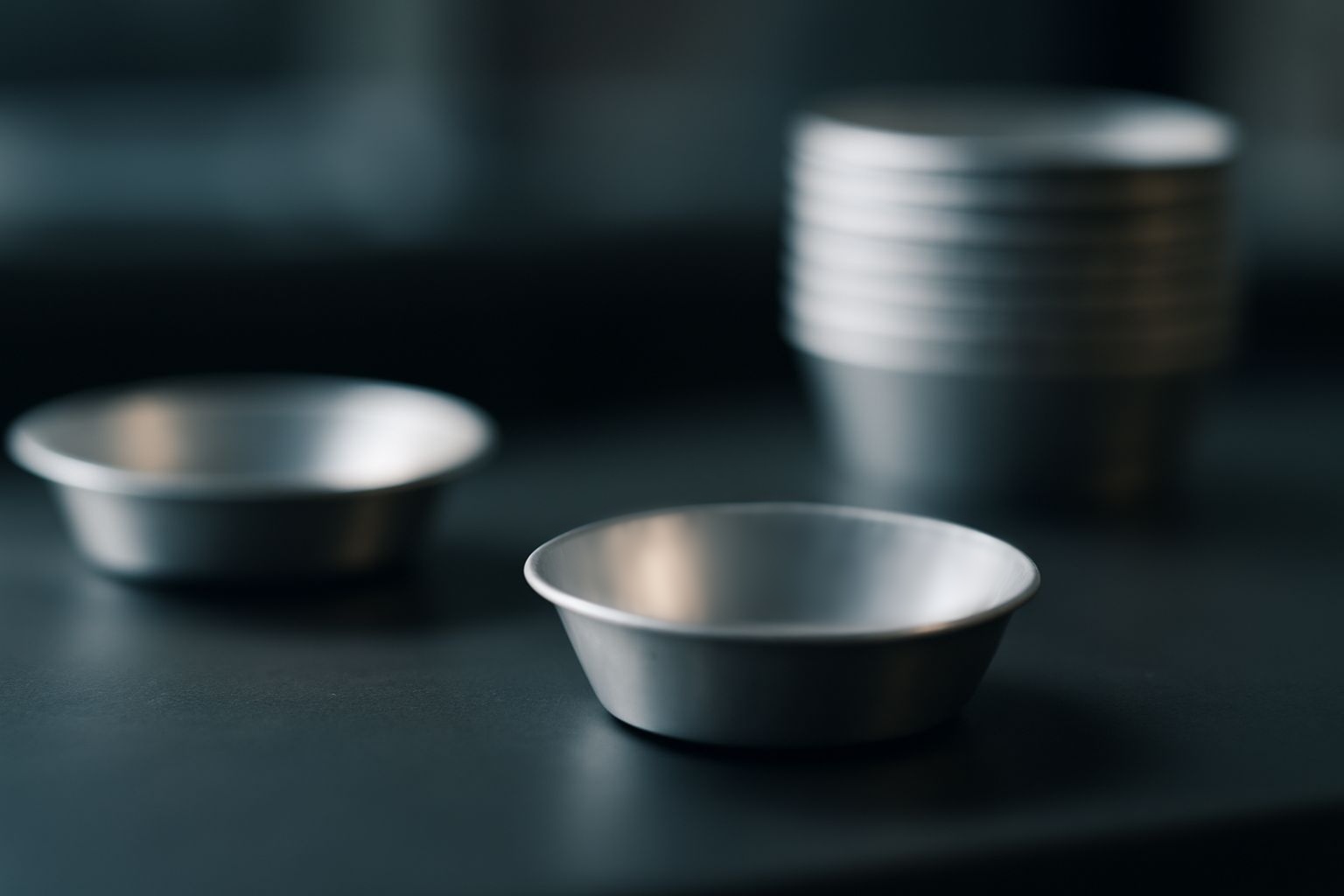
I have watched material science projects move faster and with fewer complications once switching from reusable to disposable pans. Labs quickly saw a reduction in failed runs and smoother workflows, especially in busy research or QA settings that juggle many sample types daily.
Incomplete cleaning or residual contaminants can skew results. Disposable pans provide a new surface for every sample, maximizing reliability and reproducibility in differential scanning calorimetry.
Using disposable pans prevents sample carryover, reduces background noise, and supports mandatory QA processes, making accurate comparison possible between runs and batches.
| Impact Area | Disposable Pan Advantage | Reference |
|---|---|---|
| Reproducibility | No residue, consistent pan surface each assay | DSC basics |
| Contamination Risk | Eliminated; single-use eliminates carryover | Lab QA/GLP protocols |
| Cleanup Time | Zero; discard after use, more samples per shift | Lab operational standards |
| Background Baseline | Stable, comparable between users and teams | Multi-lab published studies |
My switch to disposables meant I could adopt more rapid screening cycles. The number of failed or “unknown error” runs dropped, and post-test cleanup became a non-issue, freeing hours each week for data review and planning.
The demand for dependable sample pans stretches across sectors. Busy, regulated, or high-stakes industries see the biggest value from certified, single-use consumables.
Material science, polymers, pharmaceuticals, food, electronics, and automotive all benefit from faster results, tighter baselines, and improved reproducibility provided by TA Instruments disposable pans.
| Industry | Pan Use Case | Entity/Reference |
|---|---|---|
| Material Science | Phase transition, composite R&D, alloy studies | Material science |
| Polymers | Polymer blends, batch QA, curing optimization | Polymer chemistry |
| Pharmaceuticals | Drug stability, shelf life/PQA, regulatory submission | FDA, pharma QA |
| Electronics & Auto | Adhesive QA, component qualification, performance | Industry methods, quality journals |
| Food Science | Fat melting, water migration, texture innovation | Food science |
Each time I joined a new research team, the shift to disposables made projects move faster and built stronger confidence in cross-lab results. Labs reporting critical data to customers or regulatory boards gained the greatest efficiency boost.
There are cases where the simple solution does not fit every project. Not every experiment benefits from single-use, and cost or performance must be weighed.
Disposable pans have material, temperature, or size limits. Long or high-temperature cycles, aggressive solvents, or ultra-high-purity needs may require specialty or reusable pans.
| Limitation | Effect | Advice/Tip |
|---|---|---|
| Temperature Range | Standard pans may warp or fail above 600°C | Switch to platinum or alumina for extremes |
| Chemical Compatibility | May react with strong acids/bases | Pre-test with reference, use inert pans as needed |
| Batch Costs | Single-use increases consumable budget | Weigh time saved vs. additional pan purchase |
| Limited Reusability | Cannot use for multi-stage or resource-constrained projects | Mix disposable and specialty pans in protocol |
When a high-temp composite run failed to deliver, switching to a specialty platinum pan remedied the issue. Budget planning should always weigh both disposable and reusable options for research with diverse needs.
With tight demands for reproducibility, some labs see a difference between pan brands in daily workflow and audit outcomes.
TA Instruments pans lead in compatibility, certification, and support. Competitors may offer cheaper alternatives, but often lack detailed QA, documentation, or proven OEM support for regulated industries.
| Comparison Area | TA Instruments | Competitors | Reference/Tip |
|---|---|---|---|
| Fit & Performance | Designed for TA DSC/QA standards | May require adapters, less batch certification | OEM datasheets |
| Batch Traceability | Full batch and lot records supported | Not always tracked, hard to audit | Lab compliance logs |
| Documentation/Support | Ready for GMP/QA and method validation | Documentation often generic/request only | GMP |
| Price vs. Value | Higher initial price, lower retest and troubleshooting | Lower upfront, more repeat, more oversight | Lab purchasing case studies |
My reviews of cross-brand results showed that TA’s pans consistently gave fewer outliers and unplanned reruns than competitors, even when operators and equipment changed between tests.
In material science and across multiple sectors, TA Instruments disposable sample pans set the bar for accuracy and repeatability. Choosing the right pan type and supplier brings lasting improvements to modern lab practice.
Contact Us: info@redthermo.com

C082.Wangdefu International Building, Furong, Changsha, Hunan, China


+86-19907415020