



SHOPPING CART
Your cart is empty.
shop now
Your cart is empty.
shop now
If the technical details of a sample pan are wrong, the whole DSC test fails. There is risk of wasted time, wrong data, and missed product breakthroughs.
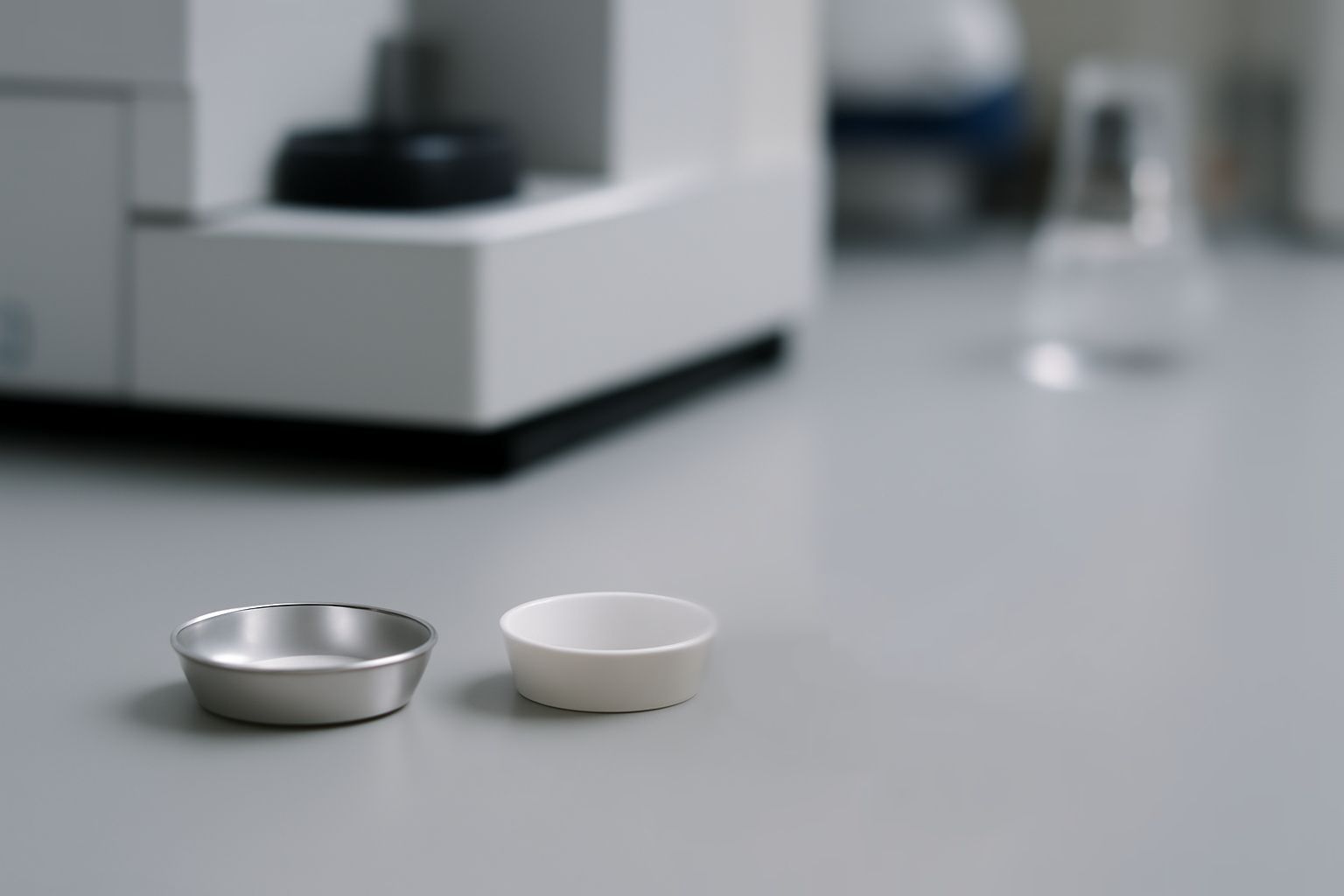
Material choice can mean all the difference. Using the wrong metal or coating brings unexpected chemical reactions or false peaks in DSC results.
| Property | Why It Matters | Common Values/Materials |
|---|---|---|
| Thermal Conductivity | Ensures fast and even heat flow into the sample, preventing lag or uneven melting. | Aluminum (~237 W/mK), Platinum (~72 W/mK) |
| Chemical Inertness | Reduces risk of sample reaction with pan, which can skew thermal events. | PFA, Platinum, high-purity Aluminum |
| Mechanical Strength | Holds shape during crimping, heating or mechanical stress; avoids leakage or cracks. | Aluminum alloys, High-grade stainless steel, PTFE |
| Surface Finish | Affects sample release, sealing, or evaporation rate. Impacts repeatability. | Smooth, mirror-finish, anodized |
Understanding each property helps me match the pan to my sample—especially with compounds sensitive to trace reactions. Using a pan with the right Aluminum or Platinum base lets me trust my peaks come from the sample, not from unwanted side effects.
If a pan reaches its temperature limit before the sample, the result is distorted readings, pan damage, or even sample loss.
| Material | Typical Max Operating Temperature (°C) | Application Example |
|---|---|---|
| Aluminum | ~600 | Regular DSC analysis, melting point studies |
| Platinum | ~1600 | High-temp DSC, STA, or TGA for inorganic samples |
| PTFE | ~300 | Analysis of water or solvents, volatile samples |
| Gold-coated Aluminum | ~600 | Reduces sample sticking, better inertness for sticky pharmaceutical compounds |
In my daily work, I always check the sample’s expected thermal profile and pick a pan from the table above. If the compound decomposes above 400°C but the pan limit is only 300°C, I know I need to switch to a platinum pan, even if it costs more. This prevents false endothermic or exothermic events caused by pan breakdown, making scientific results robust and reproducible. Reference: "Principles of Thermal Analysis and Calorimetry," Royal Society of Chemistry, 2008.
Trying to use a pan that doesn’t fit the instrument tray leads to poor thermal contact, bad seals, and wrong results. Tiny size changes make a big difference.
| Parameter | Common Range | Usage Notes |
|---|---|---|
| Internal Diameter | 5.1 mm – 6.8 mm | Must match DSC holder. Wrong size may block tray rotation or lid closing. |
| Height | 2.0 mm – 4.0 mm | Affects sample thickness. Too thick reduces even heating; too thin reduces sample amount. |
| Volume | 20 µL – 60 µL | Pick based on sample weight. Too large leads to excess void; too small may not seal properly. |
| Custom Sizing | On request | For special projects, custom pans solve rare instrument fit or special test needs. |
I keep a DSC-pans compatibility chart at hand so I always grab the right pan for my machine. Precise sizing guarantees heat transfer, allows proper crimping, and ensures consistent pharmaceutical testing results batch after batch.
Small impurities in the pan metal can introduce unwanted peaks. They can also contaminate pharma samples when tested at high temperature. This risk is often missed by beginners.
| Material Purity | Effect on Test | Typical Use Case |
|---|---|---|
| 99.99% Aluminum | Limits thermal noise, fake peaks, and leaks of trace metals | All-purpose DSC for sensitive substances |
| 99.95% Platinum | Zero interference even above 1000°C, best for new compound research | High-temp, high-sensitivity pharmaceutical R&D |
| Lower Purity Alloys | May introduce signal noise, reduce repeatability | Basic training or non-critical, low-cost testing |
| Gold-Coated Aluminum | Extra barrier avoids sticking and unwanted ion migration | Fatty drugs, sticky excipients, or water-sensitive compounds |
From hard experience, I always make sure the supplier provides purity certificates for high-purity metals. For pharma samples, even a trace of iron or silicon means possible drug product failures or rejected results. The best suppliers publish purity levels and test their pans with real pharmaceutical products. Reference: "Aluminum Materials in Pharmaceutical Analysis," PharmTech Europe, 2022.


C082.Wangdefu International Building, Furong, Changsha, Hunan, China


+86-19907415020