



SHOPPING CART
Your cart is empty.
shop now
Your cart is empty.
shop now
Struggling to get consistent thermal analysis results in your personal lab? Accessory choice impacts your data, cost, and lab workflow, especially for polymers and pharmaceuticals.
For reliable polymer and pharmaceutical DSC analysis, select sample pans and lids matched to your compound's chemistry. Customized accessories prevent errors, improve sensitivity, and help control sample integrity during tests.
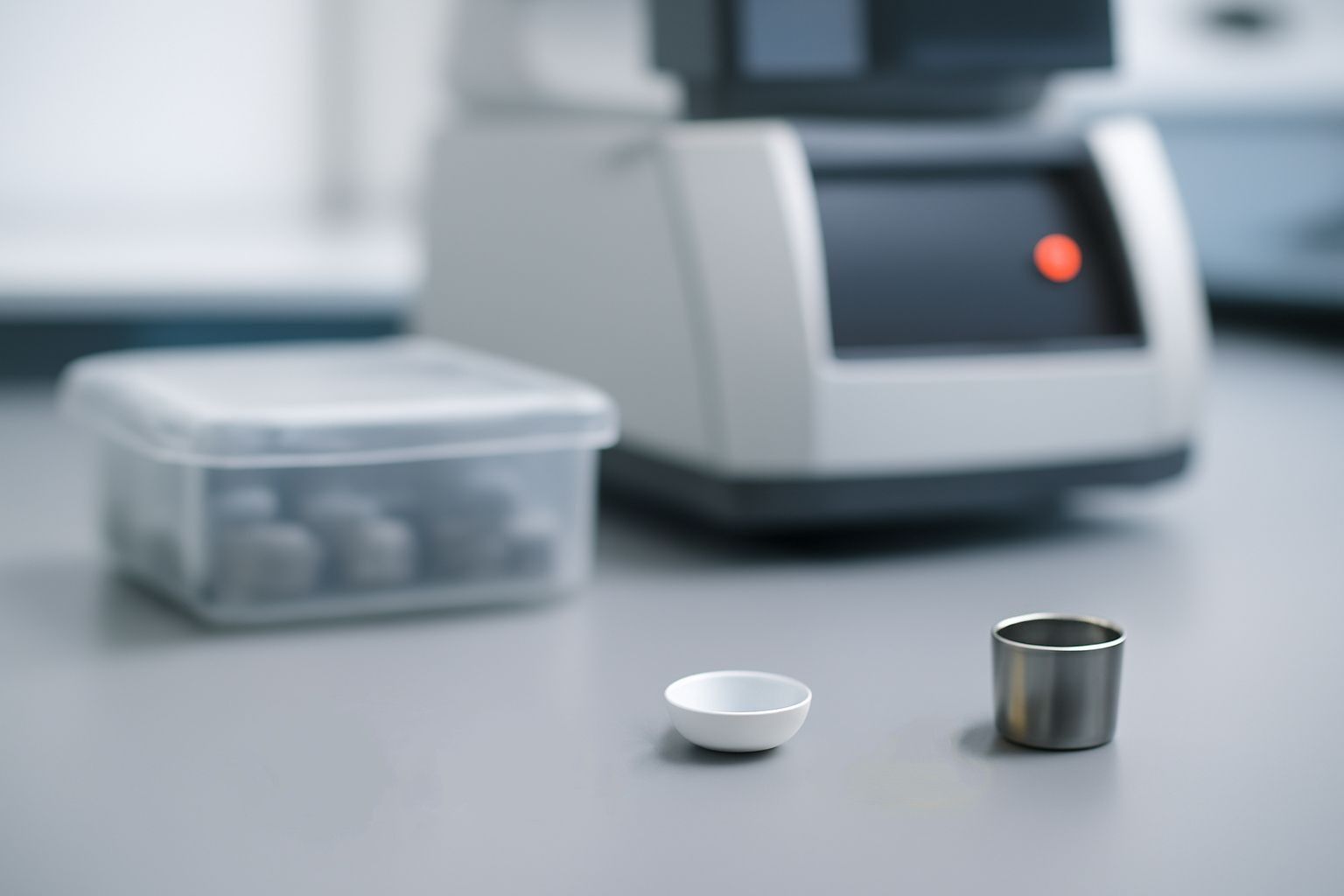
If you want to avoid sample loss and data errors in your lab, keep reading. I will show real selection steps for pans and lids. I also share my systems for labeling and storing accessories in busier personal labs.
Choosing the wrong pan wastes sample and creates bad data, especially for sensitive materials. Each sample type needs specific pans for clear, reliable results.
For polymers, strong aluminum or platinum pans handle high temperatures and viscous melts. Pharmaceuticals, especially volatiles, need hermetic or crimped pans to prevent loss or degradation.
| Sample Type | Pan Material | Lid Type | Recommended Design | Why It Works |
|---|---|---|---|---|
| Polymers | Aluminum, Platinum | Pierced/Standard | Deep-well/Heavy-duty | Withstands high heat; easy handling of sticky samples |
| Pharmaceuticals (stable) | Aluminum | Standard/Crimped | Shallow, moderate volume | Prevents contamination, easy sealing |
| Pharmaceuticals (volatile) | Aluminum, Gold | Hermetic/Crimped | Pressure-sealed | Minimizes evaporation and loss during tests |
| Highly reactive | Platinum | Pierced or custom | Inert metal; small, sealed | Prevents reactions; withstands repeated heating |
Matching the right combination of material and lid helps avoid loss, cross-contamination, and repeat errors. Some labs use gold-plated pans for extreme cases, but most personal labs find aluminum covers standard needs if paired with proper seal.
If you select the wrong lid or pan, volatile drugs or soft polymers can leak, evaporate, or degrade. Your result becomes useless or inconsistent.
Accessory choice locks in your sample’s integrity. Hermetic sealing blocks evaporation and protects sensitive drugs. Robust pans handle aggressive polymers at high temperature without leaking or warping.
| Accessory | Main Function | Best For | Sample Issues Prevented | Tips |
|---|---|---|---|---|
| Hermetic Lid | Seals pan airtight | Volatile drugs, moisture-sensitive | Evaporation, oxidation | Check for perfect crimp after closure |
| Pierced Lid | Allows venting of gases | Polymers, decomposition samples | Pressure buildup | Pierce with tool for reproducibility |
| Gold-Coated Pan | Inert to strong acids | Acidic/reactive pharmaceuticals | Chemical corrosion | Use for specialty applications |
| High Volume Crucible | Handles bigger or viscous samples | Polymer blends, adhesives | Overflow, incomplete melting | Fill only up to rated volume |
I recommend confirming hermeticity with a quick leak check for each run. Getting this step right, even for a small batch, makes sure results are reproducible and clean.
Personal labs lack dedicated staff and large workspaces. Mistakes in volatile sample testing—like lid errors or mix-ups—lead to wasted material or failed analysis.
Each setup must handle limited space, equipment, and fewer backup samples. Proper accessory management prevents cross-contamination and ensures reliable, repeatable data every time.
| Challenge | Impact | Accessory Solution | Lab Practice Fix |
|---|---|---|---|
| Mix-up of pans and lids | False readings, confusion | Use coded, labeled pans | Color code and keep a log book |
| Evaporation before test | Sample loss, shifted data | Prepare pans just-in-time | Seal and test right after loading |
| Insufficient sealing | Partial decomposition | Crimp-check after closure | Double-check lid fit every use |
| Lack of refill inventory | Rushed substitutes, inconsistency | Stock correct pans and lids | Keep a running usage log |
I have found that keeping detailed records and marking accessories directly avoids most mismatches—even when switching rapidly between tests or samples with varied volatility.
Without smart storage, it’s easy to mix up pan types, use the wrong lid, or lose track of high-value accessories in busy labs.
Efficient accessory management means dedicated drawers, clear labeling, and container boxes. This increases working speed and cuts risk of error during analysis and restocking.
| Storage Method | Best For | How It Helps | Extra Tip |
|---|---|---|---|
| Compartment box with labels | All pan/lid types | Stops mix-ups, easy inventory | Use waterproof pen; update after each use |
| Stackable trays | Bulk packs, heavy use labs | Keeps sorted by size/model | Reserve a tray for incoming shipments |
| Magnetic mat holder | Lightweight pans | Pan cannot roll or get lost | Store mat in drawer to protect surface |
| Itemized spreadsheet | Advanced tracking | Records use and re-order needs | Share via cloud for team updates |
For quick look-up, I print a table of pan compatibility with main DSC brands and tape it into my storage drawer. I suggest all personal labs set a regular update routine for their storage and inventory documents.
Choosing, handling, and storing the right DSC pans and accessories helps prevent costly mistakes. This way, personal labs can deliver clear results for polymers and pharmaceuticals while working efficiently and safely.
Contact Technical Support – REDTHERMO

C082.Wangdefu International Building, Furong, Changsha, Hunan, China


+86-19907415020