



SHOPPING CART
Your cart is empty.
shop now
Your cart is empty.
shop now
Advanced material research often involves extreme heat and aggressive chemicals, making routine sample handling risky and unreliable without the right consumables.
The best test consumables for high-temperature and harsh environments are platinum crucibles, high-purity alumina components, and specialty pans designed to resist corrosion and thermal stress, ensuring accurate and repeatable results.
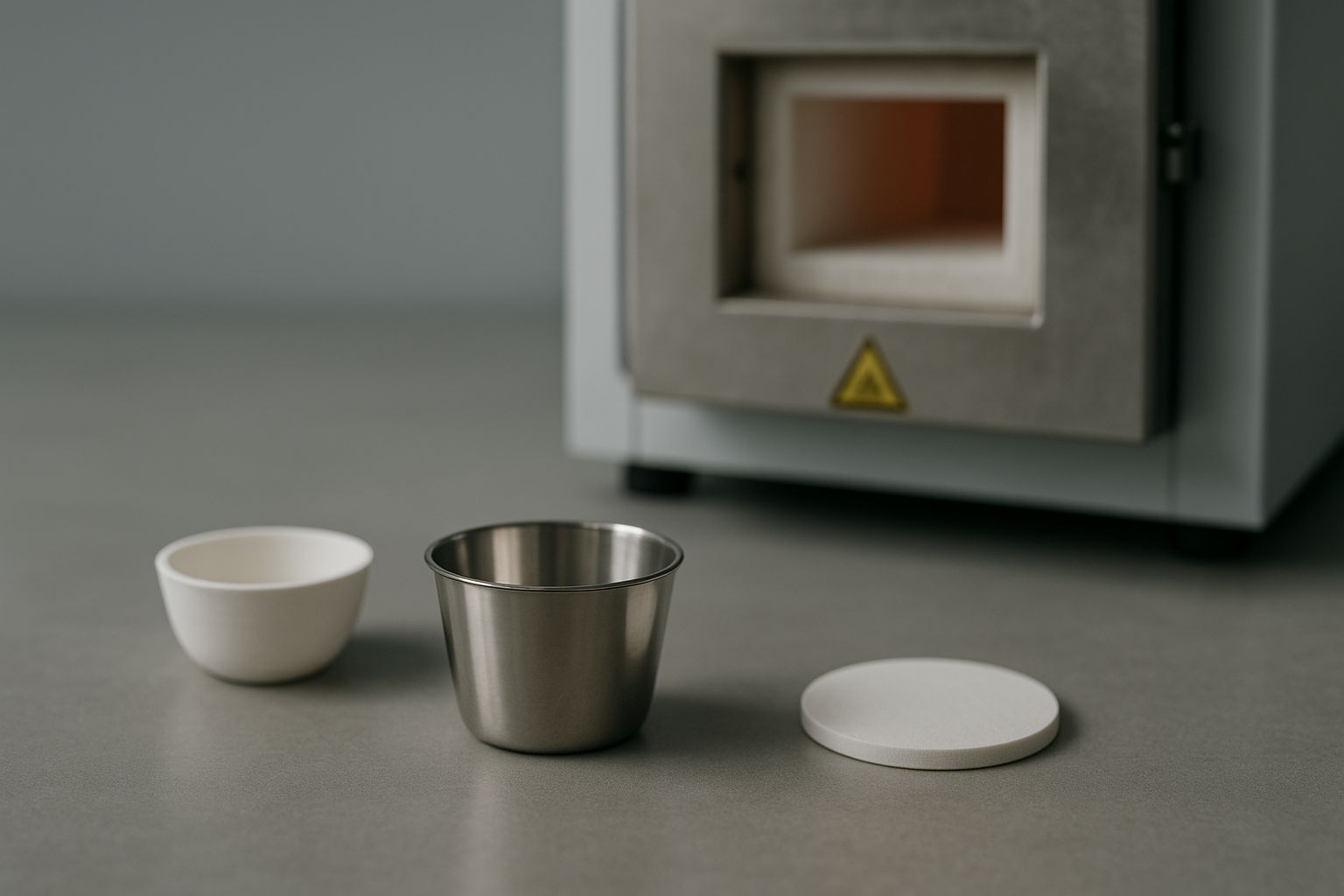
Choosing the wrong consumables can risk sample integrity, slow down projects, and put equipment at risk. I learned this early on in my career, when a mismatched crucible caused sample contamination that set back weeks of testing. Now, after years of working closely with thermal analysis labs in demanding fields, I see how essential it is to get consumable selection right. In this post, I’ll break down the major challenges of extreme condition testing and offer practical guidance for other scientists facing these environments. Let's look at what matters most for choosing the right consumables in tough lab settings.
High-temperature materials research exposes consumables to stress, distortion, and contamination risks, making routine equipment and basic pans unreliable for precision measurement.
When advanced materials are tested at extreme temperatures, sample pans, crucibles, and accessories face risks like warping, chemical attack, and contamination. Using mismatched or low-grade consumables leads to inaccurate results and wasted lab time, especially in research settings demanding accuracy.
| Challenge | Impact on Consumables | Consequence in Labs |
|---|---|---|
| High Temperature | Material softening, oxidation, loss of shape | Leakage, poor sample recovery, lower data accuracy |
| Thermal Cycling | Expansion, contraction, fatigue cracks | Consumable failure mid-test or after limited cycles |
| Chemical Corrosion | Surface pitting, reaction byproducts | Contaminated samples, unsafe for certain compounds |
| Atmosphere Effects (e.g., vacuum, inert gas) | Material outgassing, residual buildup | Instrument drift, repeated cleaning required |
For instance, when testing high-strength alloys, even small composition changes from corroded crucibles can impact interpretation of DSC or TGA data. According to recent research, labs that switch to robust pans reduce error and improve reproducibility over time.
Few consumables reliably survive both high heat and chemical attack. Platinum crucibles and high-purity alumina pans handle demanding environments without introducing contaminants.
For challenging material analysis, consumables made of platinum, high-purity alumina, and sometimes synthetic sapphire are the go-to choices, thanks to their exceptional stability, resistance to most lab acids and bases, and maintained dimensions under high stress.
| Consumable | Max Temp (°C) | Chemical Stability | Typical Use | Main Limitation |
|---|---|---|---|---|
| Platinum crucible | 1600+ | Excellent for acids & bases, does not corrode easily | STA, TGA, ashing, strong oxidizers | Cost, needs frequent cleaning |
| High-purity Alumina pan | 1700+ | Stable for most reactions, inert for most metals & ceramics | DSC, rapid heating/cooling, volatile samples | Brittle, some acids/base attack |
| Sapphire pan | 1900+ | Ultra-inert, can handle HF, strong acids | Specialty analysis (rare, expensive) | Very high cost, hard to machine |
| Nickel alloy pan | 1000 | Good with specific chemicals, moderate cost | Organics, redox reactions | Limited max temp, reacts with some acids |
| Standard aluminum pan | 600 | Oxidizes above 600°C, not chemically resistant | General DSC, TGA (thermal analysis) | Not suited for extremes |
Over time, I have observed that switching to platinum or alumina not only increases experiment reliability but also helps protect expensive testing equipment. Their higher upfront cost pays back quickly through reduced downtime and fewer failed runs.
Maintaining consumable performance under repeated temperature changes requires flawless sealing, low thermal expansion, and careful handling to prevent microcracks.
To keep consumables intact during thermal cycling, it is important to select materials with low thermal expansion, ensure tight seals or lids, and inspect for surface faults regularly. Using designated test pans designed for thermal cycling improves long-term data consistency.
| Property | Why it Matters | Practical Tips |
|---|---|---|
| Thermal Expansion Coefficient | Lowers risk of cracking and fit problems between runs | Choose platinum, alumina (see thermal expansion), avoid glass for extreme cycling |
| Surface Smoothness | Minimizes stress concentration points, avoids early fatigue | Check for chips/pits before each use |
| Sealing Mechanism | Prevents leaks and sample loss at phase changes | Use fit-matched lids from trusted brands |
| Regular Inspection | Spots cracks, oxidation before failure | Follow a quick pre-test checklist for cracks and discoloration |
Testing teams using strong pre-cycle inspection routines and premium consumables have reduced unexpected failures in long-term research projects, as also noted in published case studies.
Selecting the right consumable comes down to matching it with your method, temperature range, and sample chemistry, plus buying from suppliers that guarantee compatibility and quick delivery.
Scientists should review test method needs, review equipment guidelines, and always consult compatibility tables before purchase. It makes sense to favor platinum or alumina for extremes and to order from trusted brands offering fast stock delivery and clear return policies.
| Practice | Details | Suggested Actions |
|---|---|---|
| Check Compatibility | Verify consumable model fits your test device and sample form | Use brand cross-reference tables, contact technical reps if uncertain |
| Material Fit | Match consumable to test temp. and chemical reactivity | Refer to lab SOPs and chemical resistance charts |
| Speed of Delivery | Quick restocking avoids lab downtime | Opt for suppliers with strong logistics and same-day shipping |
| Batch Documentation | Full traceability to ensure quality (e.g., purity, manufacturing lot) | Request certificates, check for clear batch numbers on packages |
My experience tells me that buying from trusted manufacturers with clear documentation and strong inventory management lets labs achieve stable results and quick iteration—especially important in fast-paced or high-stakes research. Labs that skip these steps often struggle with delays and unreliable data.


C082.Wangdefu International Building, Furong, Changsha, Hunan, China


+86-19907415020