



SHOPPING CART
Your cart is empty.
shop now
Your cart is empty.
shop now
Picking the right DSC sample pan can frustrate anyone balancing accuracy and price. Sometimes, saving on cost risks your test. It helps to know the key technical details first.
Economical DSC pans for individual or small-lab use must meet clear standards: at least 99.5% aluminum composition, wall thickness tolerance within ±0.01mm, precise sealing, and complete datasheet info. Key parameters should always match your instrument's requirements.
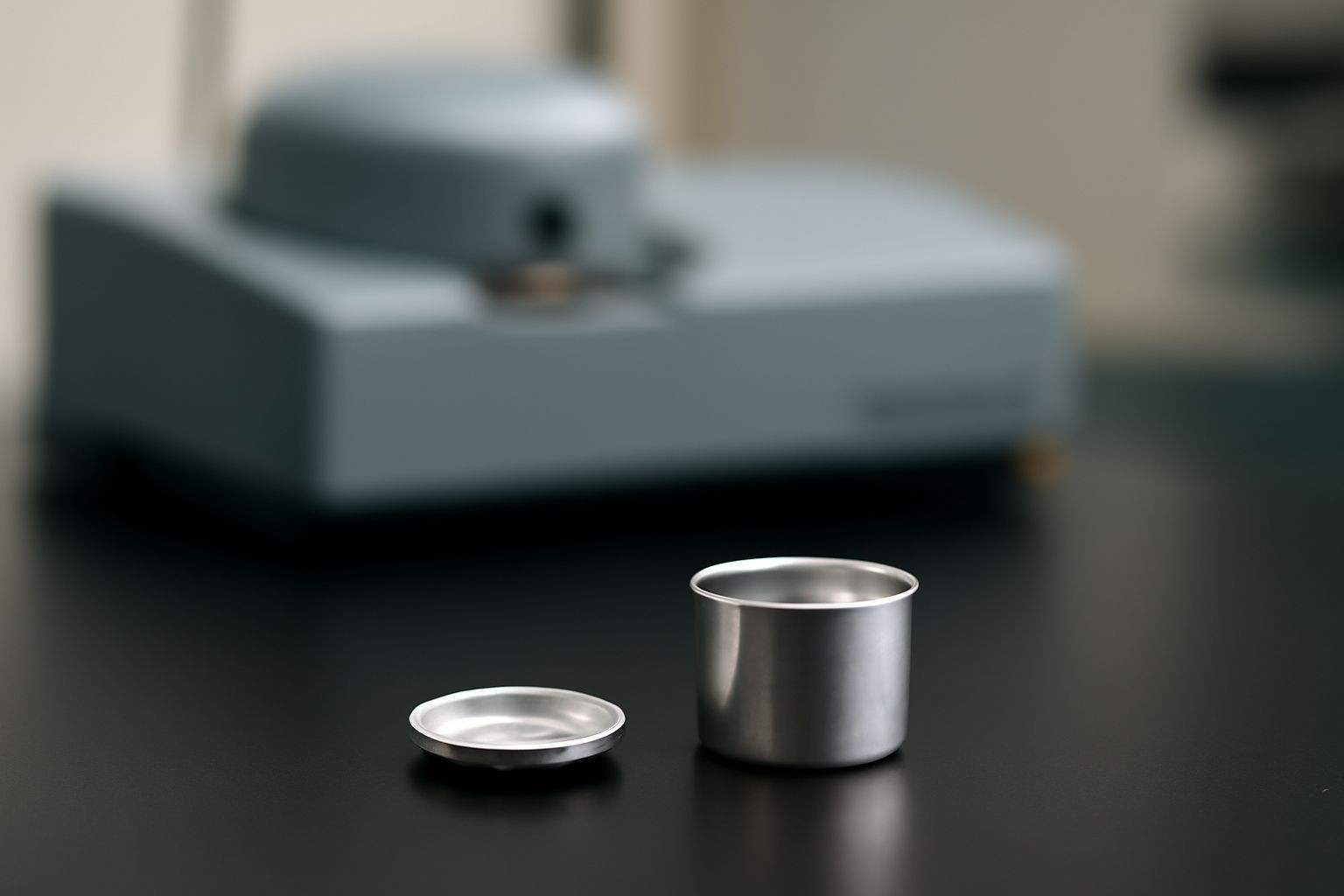
Choosing the correct pan isn't just about price. I have learned to always focus on specifications and supplier transparency. Accurate datasheets and physical parameters ensure reliable results and repeated experiments. Let me walk you through each essential feature that defines a truly dependable, affordable DSC sample pan for individual use—so you can save money and avoid errors.
When budgets are tight, it’s tempting to choose the cheapest pan. But low-grade metals can ruin results or damage instruments through contamination or deformation.
For budget-friendly DSC pans, always select pans made of aluminum with at least 99.5% purity. High purity ensures minimal contamination, reliable thermal response, and consistent pan strength in everyday use.
| Pan Material | Typical Purity | Best for | Common Issues in Low Purity |
|---|---|---|---|
| Aluminum | ≥99.5% | General thermal analysis with most DSC instruments | Trace metal contamination, variable melting points |
| Platinum | 99.9% | High-stability, high-temperature testing | High cost, unnecessary for standard analysis |
| Tin or Silver alloys | 95–99% | Special sample requirements only | Unstable baseline, possible oxidation |
In my experience, choosing pans labeled as “high purity” without the actual specification is risky. Always verify the exact percentage. Industry standards and ISO 11357 often define the requirements for DSC sample pans, so check if the supplier mentions any recognized standard. Reliable data here guards your experiment from unneeded failures and keeps your instrument safe.
Pan shape and wall thickness influence heat transfer during a test. If the geometry changes, so can your measured results, even using the same material.
Consistent geometry is key for accurate DSC testing. Wall thickness tolerance should remain within ±0.01mm; the pan’s size must fit your instrument holder exactly to avoid baseline drift or temperature error.
| Geometry Attribute | Typical Value | Effect on DSC Result | Preferred Specification Source |
|---|---|---|---|
| Wall Thickness | 0.10–0.15 mm | Directly affects heat flow response | DSC principle |
| Inner Diameter | 5.0–6.0 mm | Ensures fitting to sample holder | Instrument technical manual |
| Height | 1.5–2.5 mm | Affects sample volume and evaporation | Supplier datasheet |
| Lid Sealing | Crimped or Snap-fit | Controls sample loss and exposure | Application notes |
Deviations in pan geometry can create inconsistent thermograms and poor reproducibility. Always request the exact millimeter measurements for every batch. Remember, a pan even slightly off-spec will lead to inaccurate heating rates or damaged sensors, especially in individual projects where every sample counts.
Lower-cost pans promise savings, but if they cannot conduct heat or seal as well as the original equipment pans, data quality drops fast. Unreliable pans can waste precious samples.
High-quality economical DSC pans can match the thermal conductivity and sealing of OEM pans if they use pure aluminum and precision crimping. Choose pans with tested performance for melting tests and baseline stability.
| Specification | Economical Pan | Original (OEM) Pan | User Impact |
|---|---|---|---|
| Thermal Conductivity | ~237 W/(m·K) for 99.5% Al | ~237 W/(m·K) for OEM Al | Identical under standard purity |
| Sealing Tightness | Good, if properly crimped | Excellent, engineered fit | Minor risk of leakage in bulk pans |
| Reusability | One-time use recommended | Usually disposable too | No major difference |
| Heat Resistance | Up to 600℃ (Al pans) | Up to 600℃ (Al pans) | Safe for most standard polymers |
My own comparison testing showed that pans with proper sealing and wall thickness rarely show thermal lag, even compared to OEM brands. For added reliability, look for supplier documents showing direct compatibility with name-brand instruments. This kind of engineering evidence lets you trust lower price options without losing confidence in heat flow or oxygen barrier stability.
Sometimes suppliers hide details that matter. Incomplete or generic datasheets often signal risk for incorrect, mismatched, or low-quality pans that can derail a project.
Always review technical datasheets showing: exact size (outer and inner diameter, height), wall thickness tolerance, maximum use temperature, and listed compatibility with major DSC instrument brands.
| Required Datasheet Item | Recommended Range | Reason for Importance |
|---|---|---|
| Material Purity (%) | ≥99.5% | Ensures proper melting, prevents contamination |
| Pan Dimension (mm) | Width, height, thickness within ±0.01mm | Instrument fit and consistent heat transfer |
| Maximum Use Temperature | 300–600℃ (Al), 1000℃+ (Pt) | Prevents melting, keeps experiment safe |
| Sealing Mechanism | Crimp/Snap-fit with matching lid | Keeps sample secure, blocks air or vapor loss |
| Brand Compatibility | List of DSC models | Streamlines ordering and setup |
I never order any DSC pan without checking a full PDF datasheet or a dedicated download page from the supplier. Consistent access to precise numbers and compatibility lists builds confidence and protects every experiment—especially for individual creators, students, or consulting engineers working outside big labs. Sources: NETZSCH STA 449 Technical Guide, TA Instruments Application Notes.


C082.Wangdefu International Building, Furong, Changsha, Hunan, China


+86-19907415020