

SHOPPING CART
Your cart is empty.
shop now
Your cart is empty.
shop now
If the wrong DSC pan is chosen, results can be unreliable and precious research wasted. The right pan guarantees dependable data for your experiments.
The best DSC sample pans have strict material quality, precise capacity, broad temperature range, and sealing options to match each test type, ensuring accuracy and sample stability.
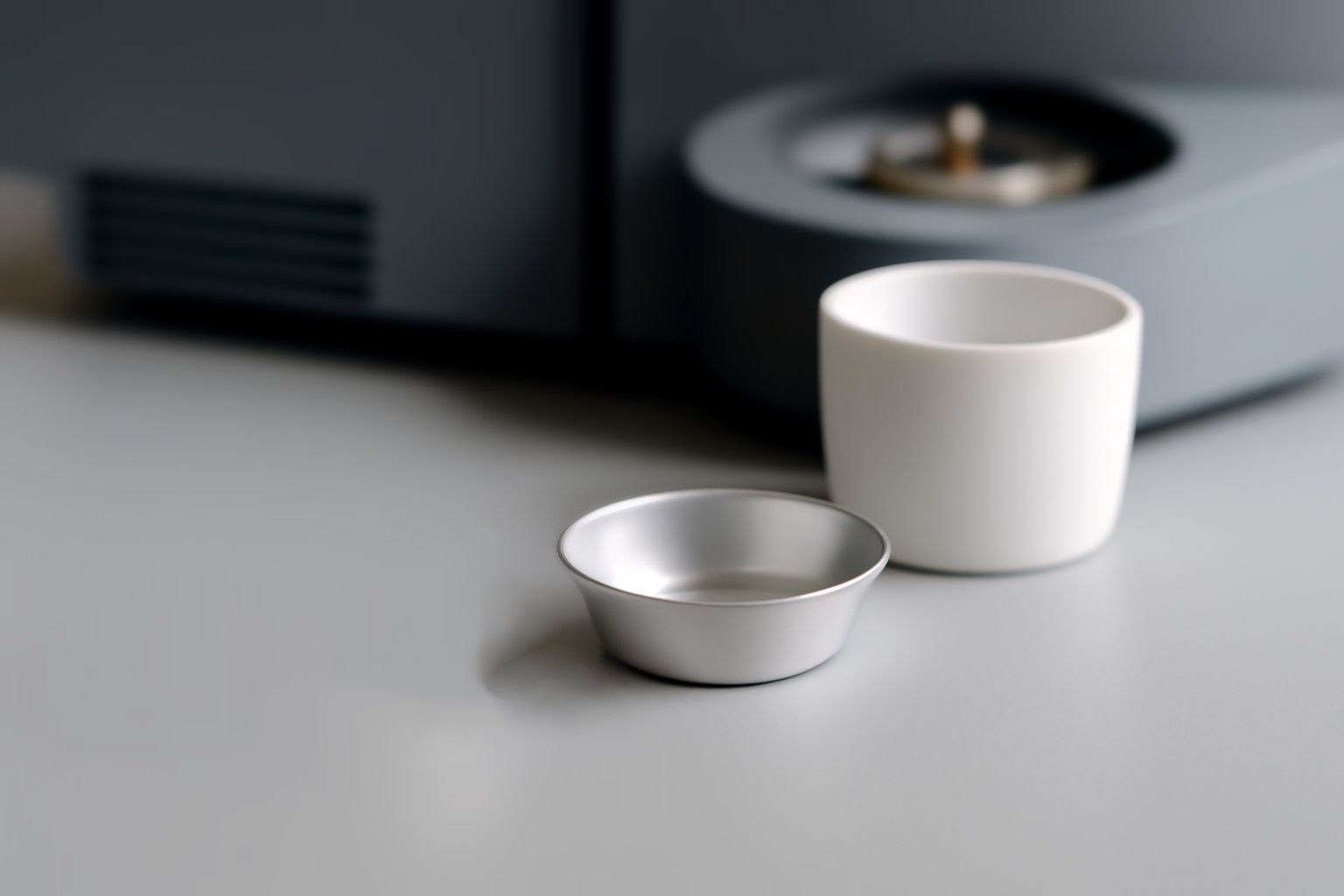
In my lab work, pan selection always affected the test. I want to share the specific features that make some pans stand out in actual DSC experiments. By understanding the top specs, it's possible to avoid common problems—like leaks or contamination—and make the right purchase for precise research.
DSC analysis depends on the pan's ability to resist heat, avoid contamination, and hold just enough sample. Neglecting material and capacity specs reduces accuracy and repeatability.
The highest-quality DSC pans are made of pure aluminum, platinum, or ceramic, and are manufactured for micro-scale sample loads—usually 20-50mg—for reliable, reproducible results in thermal experiments.
| Material | Purity (%) | Recommended Sample Load (mg) | Key Property | Best Applications |
|---|---|---|---|---|
| Aluminum | ≥99.9 | 10-40 | Low cost, good heat transfer | General organics, polymers |
| Platinum | ≥99.95 | 10-50 | Excellent chemical stability | Oxidative and corrosive samples |
| Ceramic | >99.5 | 20-50 | High temp resistance | Inorganics, melting studies |
Choosing a pan with the right material purity ensures no interference with delicate samples. Small pans reduce thermal lag and improve baseline stability, while different materials allow compatibility with different chemistries or temperature needs.
Your results will always be limited by the pan's stability at selected test temperatures. Picking pans beyond their resistance range can lead to deformation or data shifts.
The ideal pan is rated for a higher maximum temperature than any sample you plan to test, supporting accuracy and protecting equipment.
| Material | Max Operating Temp (°C) | Typical Thermal Application | Comment |
|---|---|---|---|
| Aluminum | ~660 | DSC melting of common polymers | Softens if used close to limit |
| Ceramic | >1600 | High-melting inorganics, ceramics | Ideal for extended high-temp runs |
| Platinum | >1700 | Oxidation-resistant applications | For advanced and high purity work |
For example, I learned the hard way that using standard aluminum pans for samples above 600°C caused pans to collapse, ruining the run. Always verify the manufacturer's thermal specs before your experiment to prevent waste.
The sealing style of a pan decides if volatile samples escape and if pressure builds up, impacting both data quality and lab safety.
Sealed pans stop mass loss but can build pressure, while vented pans allow gas release but risk evaporation. Each is best for a specific sample type.
| Pan Type | Sealing Method | Use Case | Advantages | Limitations |
|---|---|---|---|---|
| Sealed | Crimped or gasket | Volatile, air-sensitive | No sample loss, prevents oxidation | Pressure can build up, risk of rupture |
| Vented | Pinhole or loose lid | Decomposition or evolved gas | Prevents overpressure, detects gas events | Possible sample evaporation or loss |
I always check my test profile before picking sealing type. For samples like hydrated salts or polymers, sealed pans always helped retain mass and give accurate endotherm readings, but with risky samples I preferred vented options for safety.
Processing volatile or moisture-sensitive compounds with the wrong pan risks sample loss, poor thermal curves, or dangerous ruptures during heating.
Pans with high-integrity seals and pure materials deliver best results for these cases, especially when paired with precise crimping tools and recommended loading limits.
| Sample Type | Recommended Pan Material | Sealing Type | Performance Benefit | Common Brand Example |
|---|---|---|---|---|
| Volatile organics | Aluminum | Hermetic crimped | Prevents evaporation, accurate mass | Mettler / TA Instruments |
| Air/moisture sensitive | Platinum | Sealed or gold gasket | No contact with air, no corrosion | PerkinElmer / Netzsch |
| Decomposition studies | Ceramic | Vented lid | Releases evolving gases safely | RedThermo / Hitachi |
Choose pans with clear material specs and use a matching sealing kit for best results. In my experience, using an advanced hermetic seal stopped all mass loss when running volatile drugs, while a vented ceramic pan was perfect for slow decomposition of oxides.

C082.Wangdefu International Building, Furong, Changsha, Hunan, China


+86-19907415020