



SHOPPING CART
Your cart is empty.
shop now
Your cart is empty.
shop now
When data does not match your expectations, frustration builds quickly in material science labs. Unreliable results can waste time and damage trust in your analysis.
If test consumables are the suspected cause of inconsistent or noisy data, start by isolating and checking for contamination, compatibility, or batch defects. Compare results across batches and document every change for faster troubleshooting and reliable outcomes.
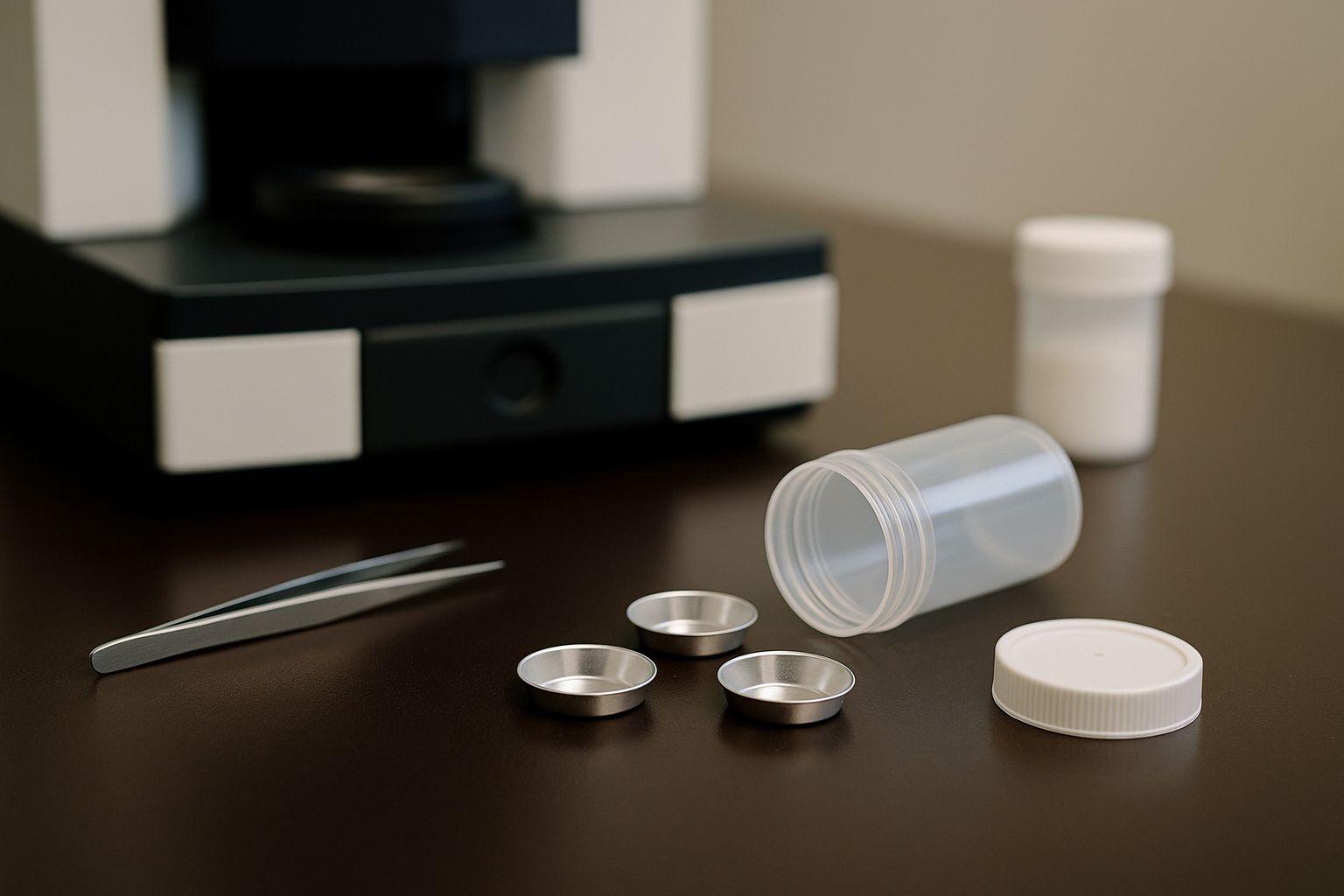
Identifying root causes behind unreliable analysis can take time, but resolving it leads to better confidence in your material science work. I have spent long nights searching for the sources of unexplained spikes and shifted baselines. This experience has taught me that methodical documentation and systematic testing save time in the long run. Let’s look at what can go wrong, and how careful checks and records can prevent waste and restore trust in your results.
Unreliable data due to failing consumables can leave you doubting your equipment and even your samples. It leads to confusion and wasted resources.
Consumable failure introduces variables such as contamination, improper sealing, or deformation that may result in drifted baselines, false peaks, or reduced test sensitivity. These problems undermine your material evaluation.
| Failure Mode | Data Problem | Common Example |
|---|---|---|
| Contamination | Noisy signals, false endotherms/exotherms | Impurity residues inside sample pan |
| Warped/Deformed Pan | Baseline drift, misalignment errors | Sample pan not sitting flat in crucible holder |
| Poor Sealing | Signal loss, mass change in moisture or volatile test | O-ring or crimp not holding, pan leaks in TGA/DSC |
| Incompatible Materials Thermal analysis compatibility |
Artefacts, thermal degradation of pan itself | Aluminum pans used above design temp limit |
The range of possible issues from poor consumables is wide, including chemical interactions with the sample. Many times, these errors are hard to detect without a structured process.
Results that do not make sense, like double peaks or drifting baselines, are frustrating. These hints often trace back to your sample pans, crucibles or seals.
Look for unexpected signals, unusual residue, or melting/decomposition under conditions that should not cause them. Compare to control runs and review any batch changes for your consumables.
| Symptom | Possible Cause | Recommended Check |
|---|---|---|
| Sudden baseline jumps | Residual oil or cleaning agent left on pan surface | Inspect pan for film, review cleaning protocol |
| Unexplained peaks at same temperature Differential Scanning Calorimetry (DSC) |
Contaminant in pan reacts at analysis temp | Run blank pan under same conditions |
| Mass not balancing/reduced | Poor lid seal, pan leakage | Test pan seal integrity, check crimp/closure |
| Unusual color or deposits after run | Material incompatibility breakdown | Match with correct material for temperature range |
Physical inspection under a microscope and blank runs without samples both help confirm if your consumables are introducing problems. Using standard reference pans as a baseline check is a proven strategy.
Unexpected noise or invalid data can break a whole series of tests. I have also faced the confusion of repeating work with no clear solution in sight.
To troubleshoot, isolate each testing variable one by one: switch to a new batch of consumables, run blanks, compare to controls, and keep detailed records. Never overlook batch numbers or packaging notes.
| Troubleshooting Step | Action | Result |
|---|---|---|
| 1. Use fresh consumables | Open new pack, record lot/batch | Removes question of storage or age defects |
| 2. Run instrument blank | Analyze with empty or unused pan | Identifies instrument versus consumable source |
| 3. Compare batches | Test same material with different consumable batches | Batch-specific problems become obvious |
| 4. Check references | Use certified reference sample as control | Sets a baseline to judge new results against |
| 5. Document everything | Log date, time, operator, and consumable details | Saves hours during future troubleshooting |
By splitting the process into single-variable changes, you do not let guesswork guide your actions. Over time, keeping logs and labeling all consumables will help build up a useful troubleshooting record for your lab.
Waiting too long to replace consumables can cost far more than the price of a new box of pans. Old or suspect lots are a hidden risk to data quality.
Replace pans, lids, and sample holders with any sign of warping, residue, or irregular baseline shifts. Always record batch and lot numbers in a logbook or database—this allows fast diagnosis if issues later appear in your test results.
| When to Replace | What to Track | Why it Matters |
|---|---|---|
| If visually dirty, bent, or mismatched fit | Lot/batch number, packaging date | Prevents using damaged pans in automated cycles |
| Following test with abnormal data ISO 17025 good lab practice |
Batch, test method, operator code | Speeds up tracking root cause to batch or method |
| Start of critical project | Link batch to project ID | Protects valuable or unique sample work |
| Scheduled lab audits or instrument service | Consumable usage log, supplier warranty | Meets quality and traceability standards |
Documenting each replacement, with batch references, is a habit every high-performance lab should develop. Over time, the speed of solving new problems increases, and both internal staff and external auditors trust your workflow more.


C082.Wangdefu International Building, Furong, Changsha, Hunan, China


+86-19907415020