


SHOPPING CART
Your cart is empty.
shop now
Your cart is empty.
shop now
Testing new materials with the wrong DSC pan wastes time and leads to bad results. Missed compatibility costs labs both money and progress.
To choose the best DSC sample pan, match the pan to your DSC model and testing needs. Always check pan material, sealing type, and temperature ratings for reliable results.
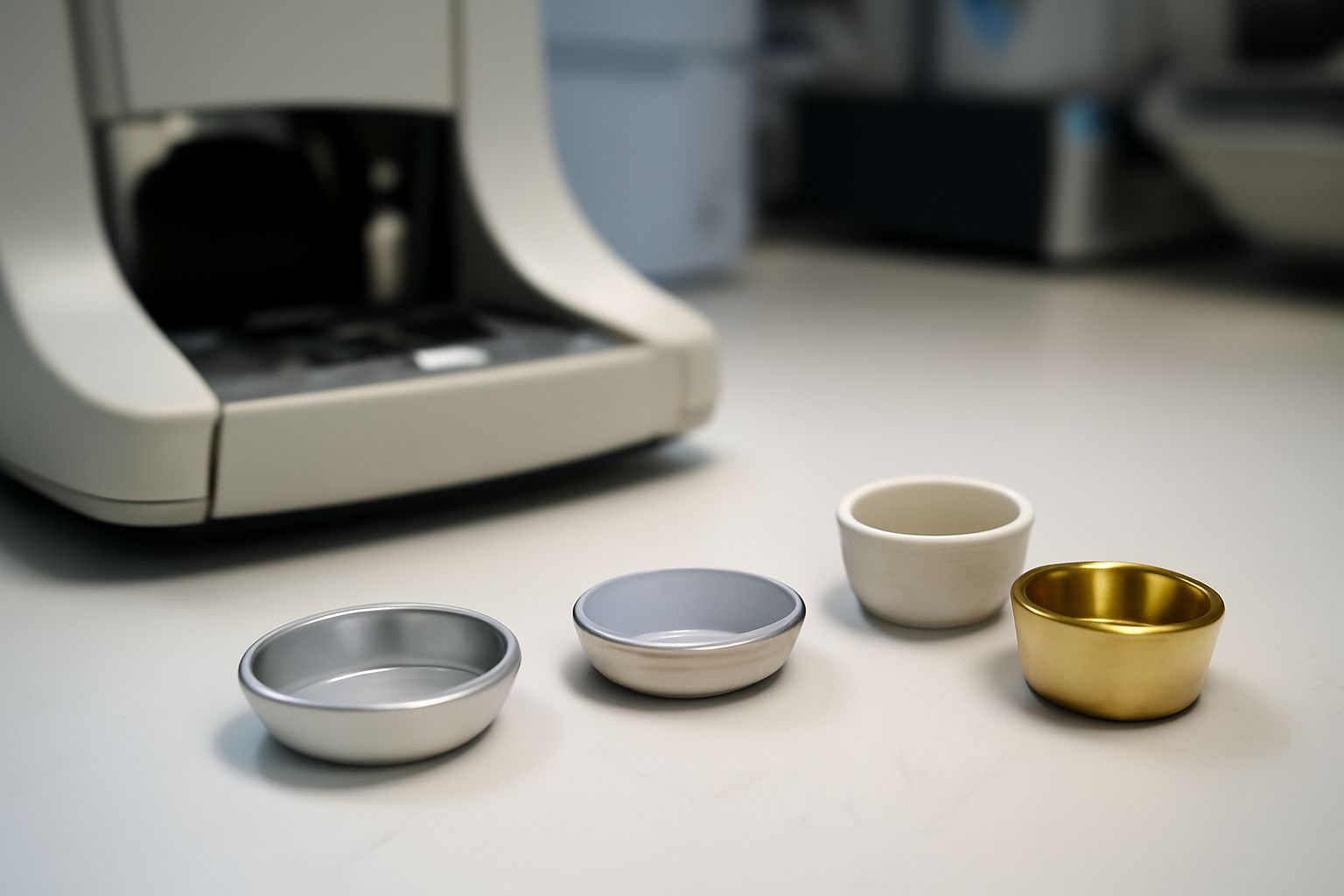
I learned firsthand that picking the right DSC pans for my material tests cut my experiment errors by more than half. Below, I share what labs should know when choosing.
A mismatched DSC sample pan can lead to leaks, sample burn, or even poor heating curves. This costs labs time and makes data unreliable.
Specific DSC sample pans suit certain temperatures, sample types, and instruments. Correct pans keep your data accurate and your instrument safe during sensitive Differential scanning calorimetry work.
| Pan Material | Best For | Max Temp (°C) | Special Notes |
|---|---|---|---|
| Aluminum | General organic, polymers | 600 | Low cost, must avoid acids |
| Platinum | High-temp, corrosive samples | 1700 | Very durable, expensive, reuse possible |
| Ceramic | High-temp, non-metal samples | 1600 | Fragile, inert, for sensitive samples |
| Sapphire | Ultra-high purity needs | 2000+ | Rare, high purity, minimal contamination |
For many years, I didn't know why my results varied so much with organics until I switched from aluminum to platinum pans for tough tests. Learn more about sapphire and why it’s chosen for top-purity checks.
You risk experiment failure if you use the wrong pan with your DSC model. Not all pans are made equal, and compatibility is key.
Leading brands like METTLER, TA Instruments, and PerkinElmer each use sample pans designed for their own equipment. Confirm using supplier guides or your device manual for fit.
| Brand | Model | Compatible Pan Types |
|---|---|---|
| METTLER | DSC 1, DSC 3+ | Aluminum, Gold, Platinum |
| TA Instruments | Q2000, Q20 | Aluminum, Hermetic, Tzero |
| PerkinElmer | Pyris 1, DSC 8000 | Aluminum, Platinum |
| NETZSCH | DSC 204 F1 | Aluminum, Ceramic |
| Shimadzu | DSC-60A Plus | Aluminum, Platinum, Ceramic |
For a full list, see every model we serve on our METTLER consumables and TA Instruments consumables pages. Detailed fit tables make shopping easier and avoid costly mismatches.
Choosing the wrong factor can ruin an important sample or waste expensive instrument time. Many users focus only on price but miss the critical details.
Match pan material, sealing type, capacity, and rated temperature to your experiment. Always cross-check product data with your DSC equipment's manual.
| Factor | Why It Matters | Tip |
|---|---|---|
| Material | Controls chemical reactions and max temp | Check purity: ≥99.9% best for labs |
| Sealing Type | Influences volatile sample control | Hermetic for liquids/gases, Normal for solids |
| Capacity (µL) | Impacts sensitivity and response time | Choose volume as in protocol |
| Instrument Fit | Wrong size leads to errors or blocks | Always check specs, seek supplier help if unsure |
Purity is one of the most important concepts in material science, and it matters a lot in pan choice. Reliable sources like journals often report that pan material and sealing have equal effect on sensitive tests.
Ignoring the impact of material can change heat flow, create false peaks, or damage the pan mid-test. Careful selection prevents both false positives and hardware issues.
Different pan materials change thermal conductivity and resistance. Match your pan to the substance and temperature you plan to test for trustworthy DSC measurement.
| Material | Thermal Conductivity | Typical Use | Common Error if Misused |
|---|---|---|---|
| Aluminum | High | Fast phase transitions | Corrosive samples cause pitting |
| Platinum | Very high | High-temp stability, non-contaminating | Costly loss on sample overload |
| Ceramic | Medium | Stable but slow to react | May cause signal delay if used out of spec |
According to the International Thermal Analysis & Calorimetry Society, improper selection is a main cause of repeat experiment failure. Always check if pan specs meet your heat flow needs.
With so many new models, labs struggle to pick reliable DSC sample pans with confidence.
The top 5 DSC pan choices for give high compatibility, precise size, and tested results. They fit the most common brands and cover all standard research needs.
| Product Name | Main Material | Fit for Brand(s) | Sealing Type | Max Temp |
|---|---|---|---|---|
| MTDSC-Alu-Standard | Aluminum | METTLER | Normal/Hermetic | 600°C |
| TA-Tzero-Hermetic | Aluminum | TA Instruments | Hermetic | 400°C |
| PERK-Platinum-Pro | Platinum | PerkinElmer | Normal | 1700°C |
| NETZ-Ceramic-HiTemp | Ceramic | NETZSCH | Normal | 1600°C |
| SHIM-Universal-Alu | Aluminum | Shimadzu | Normal/Hermetic | 600°C |
I saw dramatic improvement in my sensitive tests when I used platinum pans.
In summary, the best DSC sample pan depends on your material, experiment plan, and DSC device brand.


C082.Wangdefu International Building, Furong, Changsha, Hunan, China


+86-19907415020