


SHOPPING CART
Your cart is empty.
shop now
Your cart is empty.
shop now
You want solid data from your home experiments, but confusing accessory specs and unreliable results waste your time. Switch to properly designed pans to make every test count.
Thermal analysis accessories for personal labs must offer clear specifications for material, capacity, temperature limits, and manufacturing tolerance to provide accurate, reproducible test results every time.
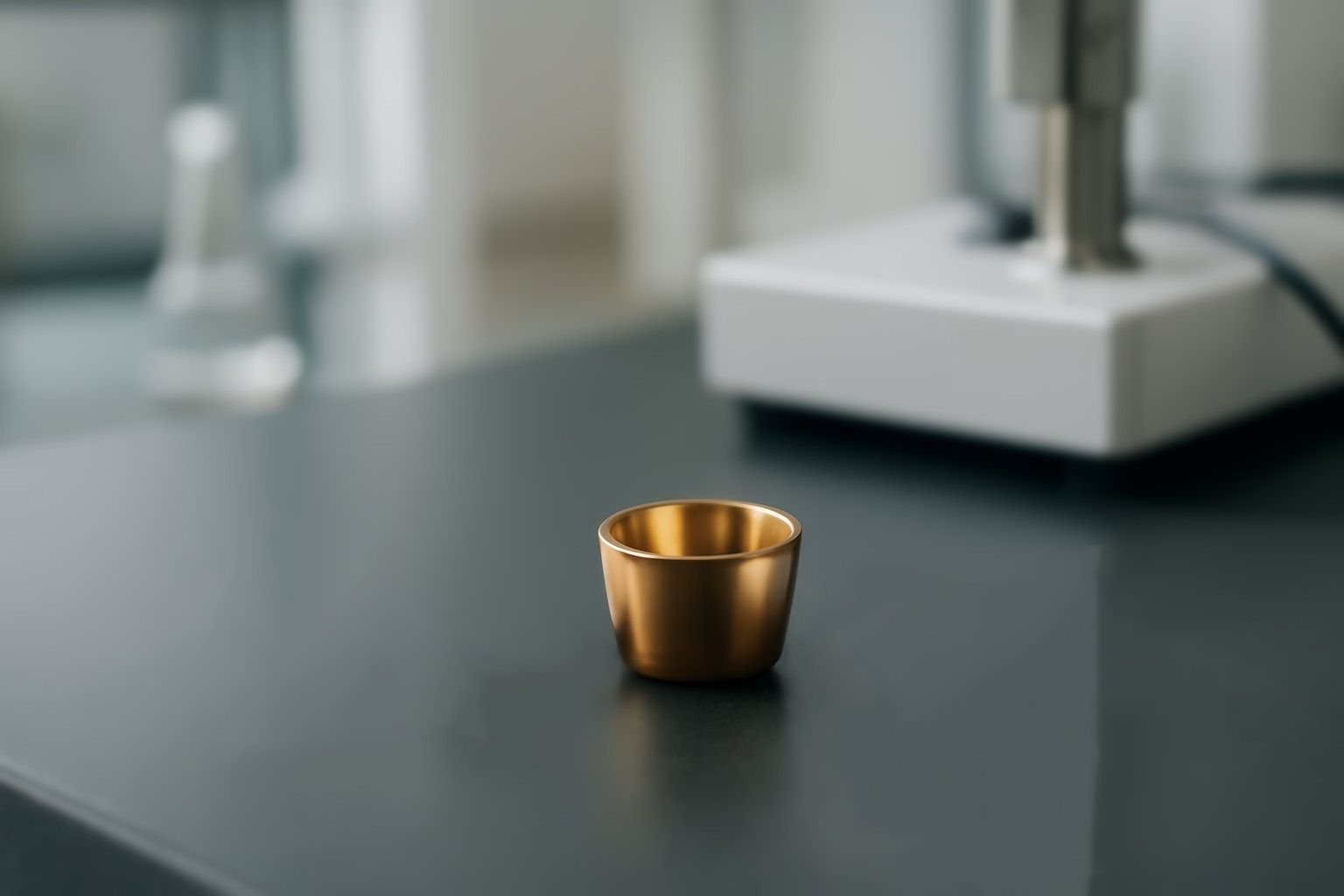
Trying new science at home is rewarding, but one overlooked detail can make or break your results. Understanding every technical spec lets you choose accessories that work right and push your experiments further.
It is easy to pick up standard sample pans, but only some materials deliver clean, reliable data from household science projects. Using the right metal or polymer will keep experiments consistent.
High-precision sample pans for DIY labs use materials like 99.99% pure aluminum, platinum, or inert polymer composites to deliver stable thermal response and avoid contamination during repeated use.
| Material Type | Main Features | Best For |
|---|---|---|
| Aluminum (99.99% Purity) | High thermal conductivity, lightweight, cost-effective, supports most DSC/TGA routines | General home experiments, training, polymer analysis |
| Platinum | Superb thermal stability, highest corrosion resistance, reusable, but expensive | Advanced or repeated heating cycles, reference samples |
| Polymer Composite (PTFE) | Non-stick, chemically inert, suitable for special sample cases or acids | Chemical testing, organic samples, nonreactive analysis |
From my own experience, using high-purity aluminum sample pans solved the contamination issue I struggled with when analyzing common plastics. Even after several trials, residuals did not affect the measurement baseline. The choice of pan material is always the single biggest factor controlling data quality; for DSC applications, this matters more than most lab newcomers realize. Ensuring that only compatible materials touch your samples can save dozens of hours wasted on rerunning failed tests.
Improper pan capacity often ruins home tests. Too much or too little sample, plus poor design, leads to unreliable results. The right fit helps control testing variables.
Personal lab accessories with tailored pan volume and correct lid design let users achieve good baseline response, quick heating, and less sample loss for more reproducible data.
| Design Aspect | Technical Role | How It Affects Results |
|---|---|---|
| Pan Volume (e.g., 20μL, 40μL) | Selects the amount of sample tested per run | Right volume avoids spillage, keeps thermal lag low |
| Crucible Shape | Determines surface exposure and uniform heating | Uniform results, lowers error in melting or reaction tests |
| Lid Style (hermetic, open, O-ring sealed) | Controls gas exchange or keeps volatile samples safe | Open: rapid reaction; sealed: safe for solvents/volatiles |
My own switching to hermetic lids kept evaporation problems under control during rapid TGA measurements. It was especially valuable when measuring water content in some common household chemicals. You must always align sample quantity with pan volume. Failing to do that means your reported weight changes or melting points cannot be trusted, especially when teaching science at home or submitting citizen science results. Consistency in outcome starts with the right match of pan design and the sample nature.
Using accessories beyond their rated temperature leads to melting and failure, ruining data in the process. Clear temperature specs keep each home experiment safe.
For household and DIY thermal analysis, essential temperature ratings are the maximum service temperatures: around 600°C for aluminum pans, 1600°C for platinum, and about 250°C for polymer composites.
| Material/Accessory | Max. Operating Temp | Typical Use Case |
|---|---|---|
| Aluminum Sample Pan | Up to 600°C | Most polymer, food, and pharmaceutical testing |
| Platinum Crucible | Up to 1600°C | Advanced ceramics, metals, minerals |
| PTFE Composite Pan | Up to 250°C | Moisture, organic, acid sensitive materials |
Accidentally exceeding the safe limit led to melted aluminum pans in a few of my first personal lab setups. Sticking to pans rated for your planned experiment avoids damage and ensures reliable thermal behavior. For reference, manufacturers publish safety specs—check sources like PerkinElmer’s material guides for exact temperature limits. This extra step means you get accurate results while protecting both samples and your hardware at home.
Tight tolerances make all the difference in lab work. Loose specs on size, flatness, or surface finish create errors that multiply in small-batch tests at home.
High-precision sample pans with micron-level tolerance ensure even heat flow and stable sample siting, essential for trusted thermal analysis results in any small-scale test.
| Tolerance Feature | Typical Value | Why It Matters |
|---|---|---|
| Dimension Tolerance | ±0.01 mm | Fits exactly in commercial instruments, repeatable placement |
| Surface Flatness | Less than 10 microns | Keeps clear contact with sensors, even heating |
| Material Purity | 99.99%+ metals | Reduces outgassing, keeps signal baseline stable |
My decision to choose accessories specifying surface flatness below 0.01 mm eliminated many random jumps in my heat flow signals. Tolerance is more than just a factory number; for many household setups, it can be the reason miniature runs match published data. It also lets you compare outcomes across different days or instruments, and is essential if you ever plan to publish or validate your results beyond your home bench.


C082.Wangdefu International Building, Furong, Changsha, Hunan, China


+86-19907415020