



SHOPPING CART
Your cart is empty.
shop now
Your cart is empty.
shop now
Working in a small lab or as an individual researcher often means managing tight budgets while aiming for reliable results in every analysis.
Economical DSC pans, when matched to your device and sample type, help reduce testing costs greatly without risking data quality or experiment stability.
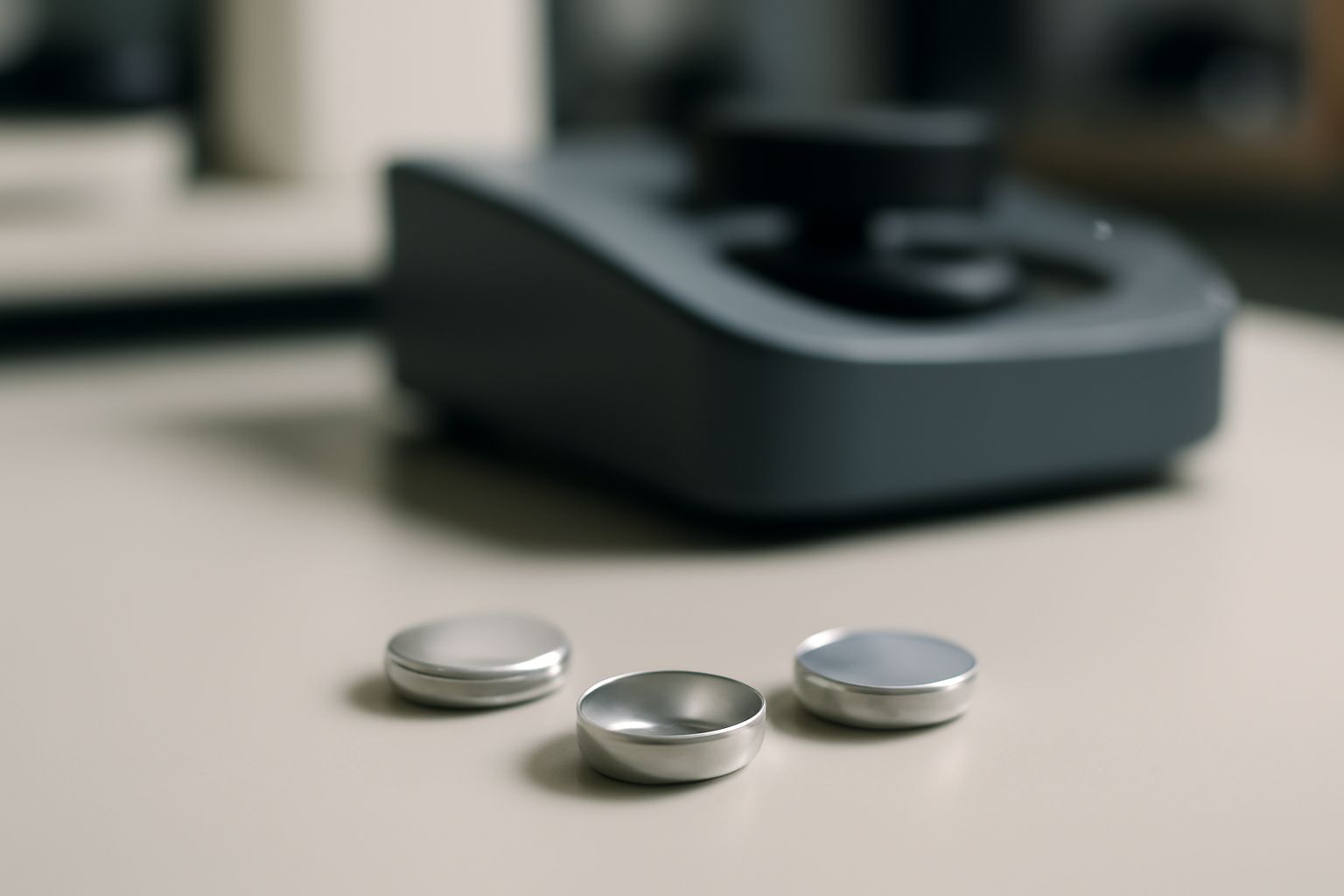
Labs must stretch every dollar, yet proper analysis is never optional. I have faced this trade-off before, searching for cost-efficient yet robust pans. Let me show you how the right choice saves money, delivers accuracy, and still fits even strict research demands. Let’s see how these pans work for real labs around the globe.
Costs can quickly add up in any testing environment, especially with regular use of disposable DSC pans for thermal analysis.
Industries like materials research, chemical engineering, pharmaceuticals, food science, and electronics often depend on budget-friendly DSC pans for routine and development lab work.
| Industry | Why Budget DSC Pans? | Typical Usage Scenario |
|---|---|---|
| Materials Science | High sample throughput and need for consistent, comparable data. | Polymers, composites, quality control. |
| Chemical Industry | Large volumes of experiments and fast-paced process checks. | Reaction monitoring, purity checks. |
| Pharmaceuticals | Drug formulation and stability tests need reliable but cost-effective materials. | DSC tests for melting points, purity validation. |
| Food Science | Regular analysis of food properties and additives. Budget constraints in many R&D setups. |
Fat content, melting profile, ingredient quality. |
| Electronics & Semiconductors | Frequent thermal cycling studies and failure analysis. | Testing solder materials, heat resistance. |
Many laboratories in these sectors look for economical DSC pans to support repeat experiments, pilot testing, and research projects. For small or university labs, affordable supplies keep innovation moving without straining limited funding. In my own experience, switching to economical pans cut regular costs up to 40% while maintaining confidence in test outcomes.
Picking the wrong sample pan can lead to data drift or even sample loss, especially when working alone or in a small team without backup stock or budget.
Choose DSC pans based on your sample’s chemistry, test temperature, device compatibility, and if you need sealed or open pans for gases or volatile materials.
| Material Type | Best For | Main Pros | Main Cons |
|---|---|---|---|
| Aluminum | Most polymer and organic samples; low-medium temp | Low cost; easy to handle; good thermal conductivity | Limited max temp (~600°C); not for strong acids |
| Platinum | High-temp; precise calibration; inert applications | Stable up to 1600°C; chemically resistant | Much higher price |
| Gold | Special electrolytes or volatile organics | Corrosion resistance; good for specific samples | Very expensive; harder to source |
| Copper | Thermal conductivity tests | Good for heat flow studies | May react with some samples; not for acids |
| Ceramic | Oxidation studies, up to 1000°C+ | Cheap; inert; reusable | Lower thermal response; fragile |
The pan you choose matters for repeatability and safety. Always check the sealing ability—volatile or air-sensitive samples call for crimped lids, while less reactive ones can use open pans. Take note of capacity too. It must fit your usual 5-40mg sample range without risk of overflow or instrument error.
The wrong fit leads to leaks, signal noise, or even tool breakdown, which small labs can’t risk or afford.
Many low-cost DSC pans are engineered for perfect fit with major brands like TA Instruments, PerkinElmer, Netzsch, and METTLER when you pick the right reference code.
| Pans for | Device Brand | Key Compatibility Features |
|---|---|---|
| Standard Aluminum | TA Instruments, PerkinElmer | Matched shape/dims, no calibration needed, often comes with lid |
| Sealable Crucibles | Netzsch, METTLER, Shimadzu | Snap-on/press seal or o-ring, anti-leak tested for volatile analysis |
| Custom Machined | Large variety (including older models) | Made from drawing/spec, suiting rare or discontinued hardware |
| High Pressure Pan | Advanced research labs | Supports pressure sealing, high-temp, niche analysis |
Affordable pans, when sourced from reputable thermal analysis merchants like REDTHERMO, often list direct swap compatibility for these brands. My own switch to third-party pans proved effective: as long as you match pan model to instrument code, operation, calibration, and software reading remain stable. Check for seller claims and cross-reference with your instrument manual.
Saving money on pans doesn’t help if it leads to failed tests, noisy signals, or unexpected results in fine research.
Studies and routine lab findings show that quality-focused, budget DSC pans can perform on par with originals in melting point analysis, sample throughput, and even long-term repeat usage.
| Performance Metric | Budget Pan Result | Original/OEM Result | Source / Study |
|---|---|---|---|
| Thermal Stability | ±0.2°C at sample melt; no drift | ±0.18°C; matching peaks | ACS Analytical Chemistry 2019 |
| Repeat Use Lifespan | 10–20 runs before deformation in aluminum | 20–30 runs | Supplier QC documentation |
| Sealing Efficacy | Holds 98% samples with >90% closure success | Same | Lab field notes / user reviews |
| Cost per Unit | $1.5–$4 (bulk) | $5–$15 | Market survey 2024 |
Individual researchers and lean laboratory equipment teams report that, for most samples, result differences are minimal. Only rare, highly reactive, or ultra-high temperature work truly need OEM pans. For daily melting, purity, or quality tests, I have found no signal drop-off or added baseline noise as long as I check compatibility codes before use. This makes switching to affordable pans a win-win for routine research.

C082.Wangdefu International Building, Furong, Changsha, Hunan, China


+86-19907415020