



SHOPPING CART
Your cart is empty.
shop now
Your cart is empty.
shop now
One unexpected sample or switch in testing demand can leave a laboratory scrambling for suitable pans. Most labs need solutions that adapt, not just fit one workflow.
Universal crucibles help labs meet unpredictable testing needs, thanks to their ability to work across different analyzers and handle a wide variety of sample types and conditions.
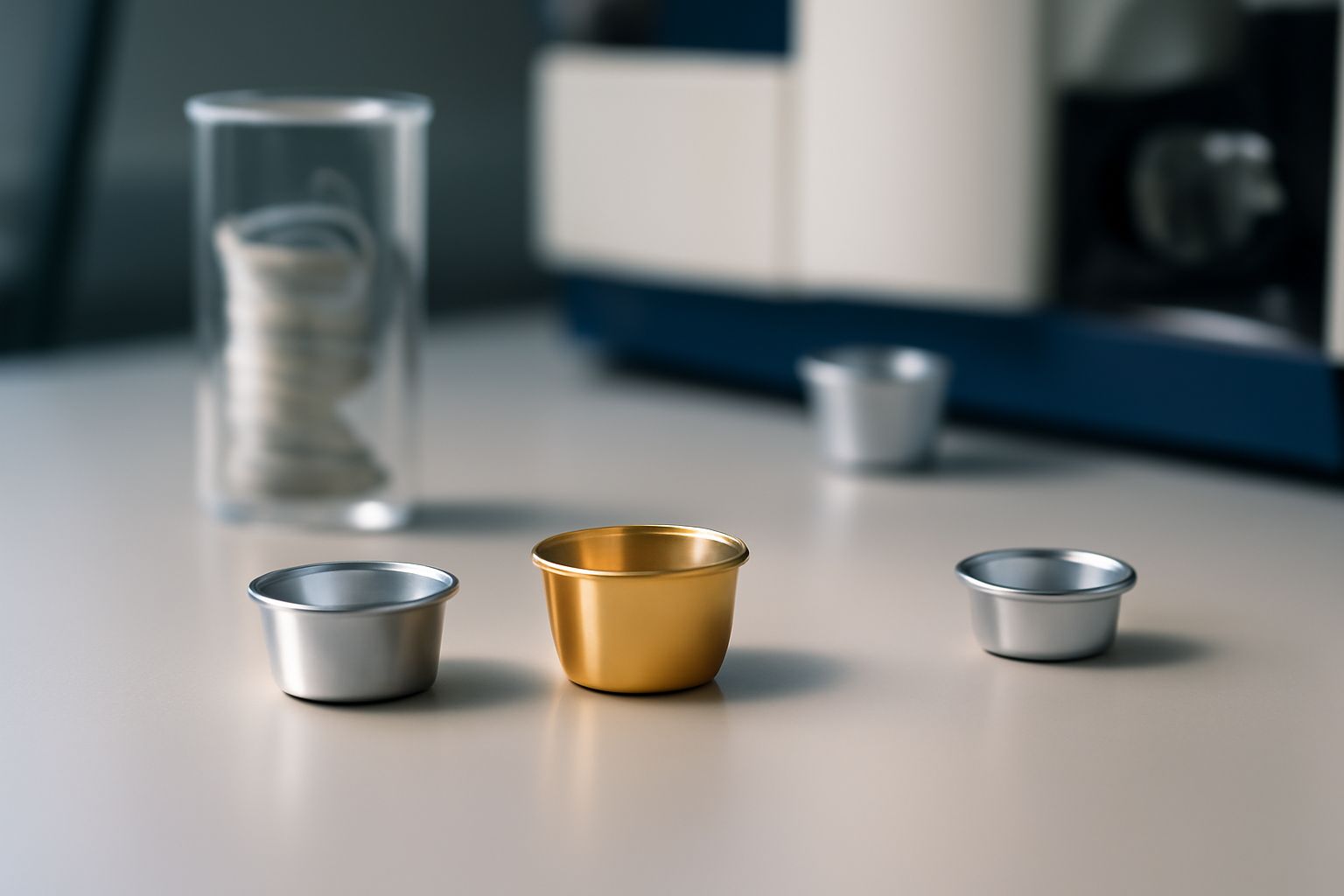
When I handle multi-project labs, using one crucible type for most analyses saves time and makes workflow smoother. It keeps procurement and inventory simple.
Unstable sample loads, new methods, and equipment upgrades happen often in real labs. Some pans fail with even small changes, causing costly delays.
Universal crucibles are ideal under unpredictable conditions because they fit a range of analyzers, support many temperature profiles, and allow workflows to adapt without switching pan types.
| Challenge | Universal Crucible Response | Performance Result | Reference |
|---|---|---|---|
| Unplanned sample type | Compatible with many materials | No need to change stock | Chemical Compatibility |
| Analyzer switching | Cross-brand dimensions | No delays, fewer errors | Interoperability |
| New test method | Broad temperature and sealing options | Accommodates most test updates | Thermal Analysis |
| Short supply | Bulk purchasing, flexible use | Reduced out-of-stock risks | Bulk Materials |
I have avoided project shutdowns by using universal crucibles that cover variable sample types and new equipment with little fuss.
Samples change from organics to metals and polymers day-to-day in busy analysis labs. Matching pans each time is time-consuming and costly.
Universal crucibles handle different sample types with inert materials, thermal durability, and a range of compatible sealing and lid options for liquids, solids, and powders.
| Sample Type | Material Match | Handling Feature | Supporting Link |
|---|---|---|---|
| Organic Compounds | Aluminum/Gold, inert option | Tight sealing, low cross-contamination | Organic Chemistry |
| Metals/Alloys | Platinum/Ceramic | High temp resistance | Alloy |
| Polymers | Aluminum, good thermal match | Uniform heat transfer | Polymer |
| Wet/Volatile Samples | Sealing, flat lids | Minimizes evaporation | Volatility |
When unpredictable materials land in the lab, I keep a small range of universal crucibles that handle acids, organics, or metals. This reduces order stress and speeds up testing.
Rapid changes, from new projects to staff turnover, can expose labs with many pan types to inventory issues, mistakes, or delays in results.
Universal crucibles simplify management, reduce errors, lower waste, and cut downtime in labs facing frequent changes or diverse analysis needs.
| Advantage | Lab Impact | Specialized vs Universal | Reference |
|---|---|---|---|
| Inventory simplicity | Easier management, lower cost | Universal: single SKU, Specialized: multiple SKUs | Inventory |
| Error reduction | Improved data quality | Universal: less confusion, Specialized: more mix-ups | Quality Control |
| Training needed | Faster onboarding for new staff | Universal: easy, Specialized: complex | Training |
| Adaptability | Smooth switching for projects | Universal: yes, Specialized: no | Flexibility |
Universal crucibles stop confusion in busy labs, whether for process control or R&D work. They help create consistency, especially when staff or projects rotate often.
No lab can run perfectly with one crucible type for everything, but the right universal model will cover most needs with a few key checks.
Choose by matching analyte chemistry, required temperature stability, and equipment fit for each use case, considering technical support and traceability records.
| Use Case | What To Check | Selection Tip | Info Link |
|---|---|---|---|
| Routine QA/QC | Temperature, material compatibility | Pick robust, tested materials first | Quality Control |
| Academic Research | Multi-sample handling, traceability | Choose crucibles with batch IDs | Traceability |
| R&D Process Development | Thermal and chemical range | Select wider capacity, high-temp support | R&D |
| High-throughput labs | Bulk procurement, fast prep | Buy universal ones in standard packs | Bulk Materials |
When selecting, I always focus on matching physical specs to expected workflow needs. Most labs only need two or three universal pan types for 95% of tests.

C082.Wangdefu International Building, Furong, Changsha, Hunan, China


+86-19907415020