



SHOPPING CART
Your cart is empty.
shop now
Your cart is empty.
shop now
Poor pan choices cause unreliable data and wasted experiments. Knowing the technical requirements guarantees every TA Instruments DSC run can be trusted for precise analysis.
Material, size, and stability are the key specifications for TA Instruments DSC sample pans. Selecting the right specs is essential for accurate heat flow measurement and meaningful results.
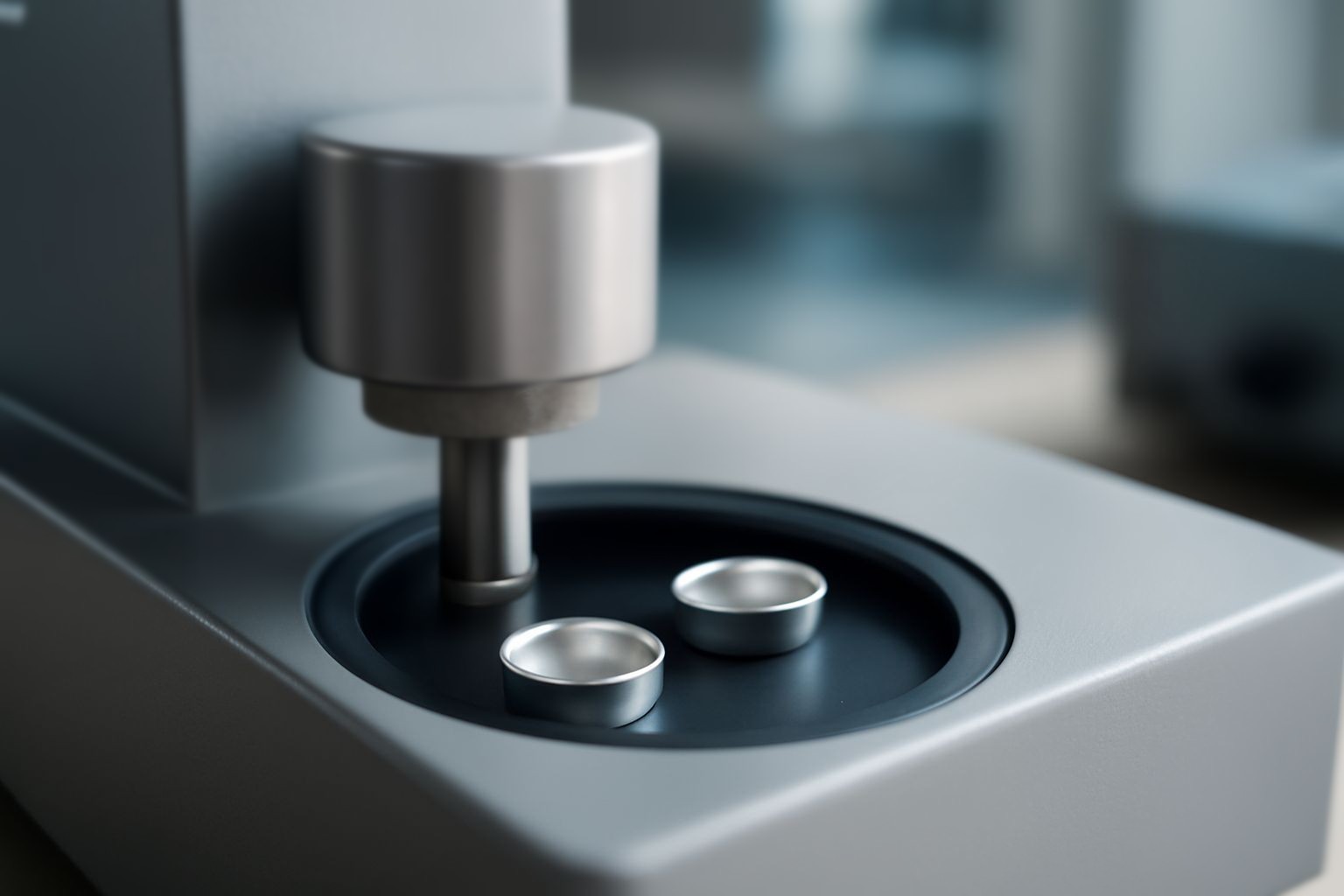
I have helped many labs optimize their DSC workflow by switching from generic to model-specific sample pans—subtle differences in these details often determine whether your results pass peer review or industrial QA. This article details the crucial factors every lab needs to consider when buying or configuring pans for TA Instruments DSC.
Not all sample pans are made to TA Instruments standards—choosing the wrong spec risks poor data and sample loss.
Key specs include outer diameter, inner height, material purity, pan mass consistency, lid style, and surface finish—each must align with instrument guidelines for compatibility.
| Specification | Recommended Value | Function in DSC | Reference |
|---|---|---|---|
| Outer diameter | 6.7–7.0 mm | Secure fit for TA pan tray/sample holder | Compatibility Guide |
| Wall thickness | 0.1–0.15 mm | Heat uniformity, durability | Wall thickness |
| Material composition | 99.99% aluminum, Pt, or specialty alloys | Inert baseline, stable response in analysis | Aluminum |
| Mass tolerance | ±0.01 mg | Reproducibility in heat flow measurements | Weighing |
| Seal/lid style | O-ring, crimp, high-pressure, or pin | Prevents evaporation, contamination | Sealing |
I always check product sheets and match every lot to my instrument platform. Small size differences can lead to drifting signals, extra cleaning after leaks, or even rejected test batches. My advice: verify specs with both manufacturer and peer references for every pan style before new orders.
The pan’s alloy or coatings govern baseline purity, reaction risk, durability, and lifetime in the TA Instruments DSC chamber.
High-purity aluminum provides best conductivity and inertness for polymers and most organics, while platinum or ceramics are chosen for advanced/high-temp studies and chemically aggressive samples.
| Material | Max Temp (°C) | Best Use Case | More Info |
|---|---|---|---|
| High-purity aluminum | 600 | Routine polymer/organic research | Aluminum |
| Platinum | 1600 | Metals, inorganics, ash/oxidation studies | Platinum |
| Ceramic/ceramic-coated | 1300–1500 | Harsh or corrosive samples, strong acids/bases | Ceramic |
| Gold-coated | 650 | Pharmaceutical, high-purity, moisture sensitives | Gold |
Choosing the right pan alloy avoids contamination spikes and baseline shift—problems I’ve seen plague results in multi-phase research. Confirming the match to your analytical goal brings more defendable, audit-safe results in every project stage.
Tiny changes in dimension amplify error during repeated runs, introduce baseline drift, and make reliable duplication nearly impossible for complex research.
Matching pan size (diameter, height, mass) to TA Instruments DSC ensures standardized heat transfer, sample retention, and less background noise in your outputs.
| Dimension | DSC Effect | Recommended Control | Extra Resource |
|---|---|---|---|
| Outer diameter | Proper seating, even heating/cooling | ±0.01 mm tolerance | Diameter |
| Wall thickness | Baseline and thermal lag | Document supplier spec, verify each lot | Wall thickness |
| Height | Fit for lids, instrument clearances | Match to device spec chart | Height |
| Mass | Signal reproducibility, ease of calibration | ±0.01 mg scale check, batch log | Weighing |
Whenever I detect outlier measurements or instrument errors, dimension is the first place I look. Lab teams now schedule regular dimensional QC checks, catching faults—before expensive instrument downtime or research reruns occur.
Poor thermal stability leads to warping, off-gassing, or pan breakdown during heating—distorting, or even ruining, the DSC analysis.
Crucial for TA Instruments DSC pans, thermal stability preserves integrity under ramped conditions, ensuring sharp phase change detection and consistent heat flow for calibration and routine tests.
| Thermal Property | Lab Effect | Test Practice | Reference |
|---|---|---|---|
| Max usable temp (°C) | Sets upper method limit for accurate scans | Cycle up to specified temp, log visual/mass change | Thermal conductivity |
| Inertness at temp | Keeps pan-sample reactions low | Use only certified, tested lots | Inert gas |
| Baseline stability/repeatability | Reduces recalibration, increases trust in data | Compare new lots against reference test runs | Calibration |
In my experience, high-purity aluminum pans, when validated for max temp and baseline, delivered the least rerun and audit headaches. Avoiding off-spec pans improves every outcome—from method validation to regulatory signoff and grant funding approvals.


C082.Wangdefu International Building, Furong, Changsha, Hunan, China


+86-19907415020