



SHOPPING CART
Your cart is empty.
shop now
Your cart is empty.
shop now
Confusion about technical specifications can cause labs to pick the wrong DSC pans. Inconsistent data and test interruptions often follow poor pan choices.
Reusable DSC sample pans stand out for their high thermal stability, precise dimensions, and robust sealing features. Their materials and long lifespan make them a dependable solution for accurate differential scanning calorimetry experiments.
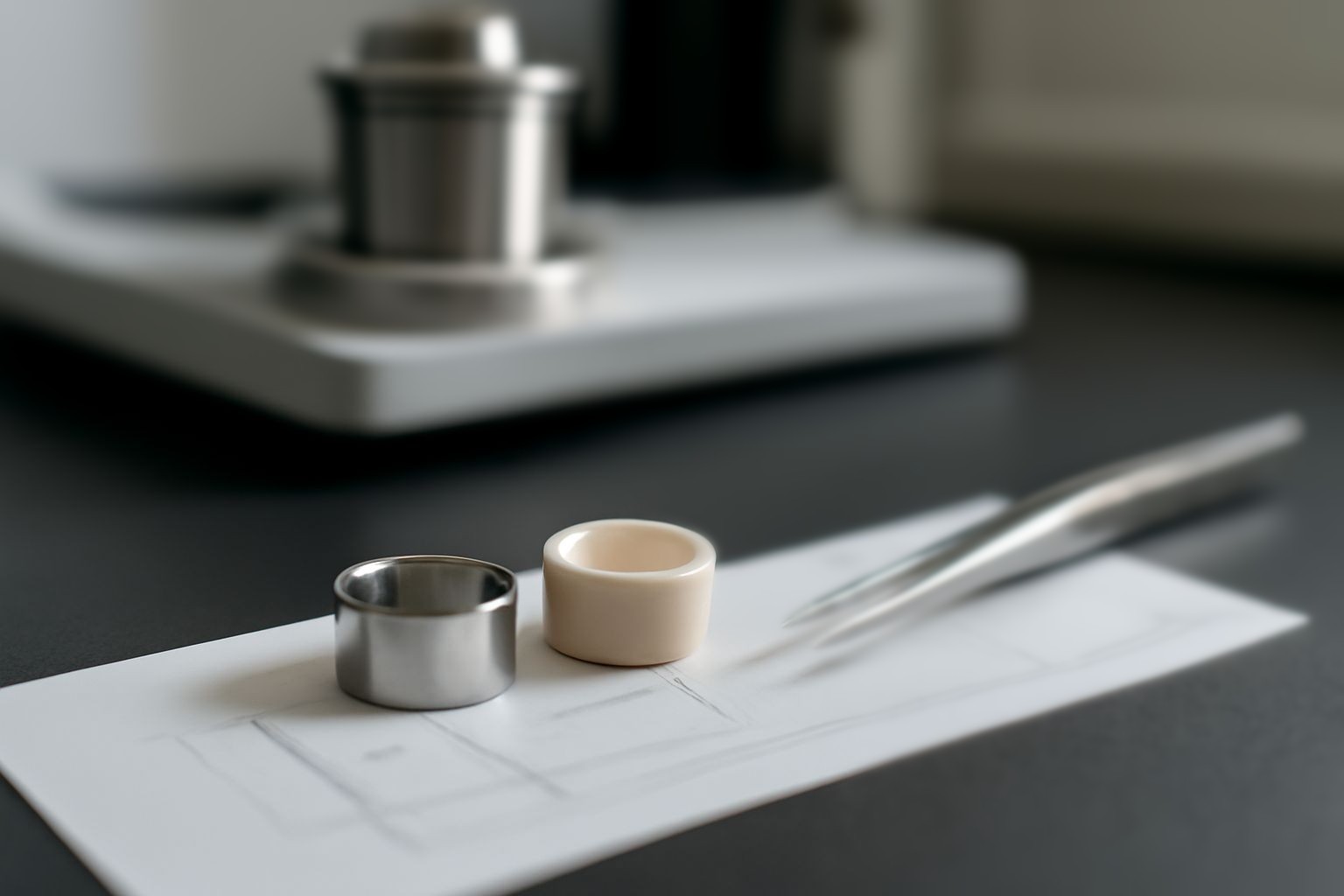
Choosing the right reusable DSC pan helps me achieve consistent results for each test. I will explain the most important features, covering size, materials, durability, and practical compatibility for all laboratory needs.
Sample pans that do not fit or withstand testing conditions can waste research resources. Exact size and optimal material choice are essential for proper thermal analysis.
Reusable DSC sample pans are commonly made from platinum, alumina, or other high-stability metals and ceramics. Standard dimensions include diameters from 5.0 mm to 7.0 mm and heights of 2.5 mm to 4.0 mm, customized by manufacturer and instrument model.
| Parameter | Typical Range | Material Options |
|---|---|---|
| Diameter | 5.0 – 7.0 mm | Platinum, alumina |
| Height | 2.5 – 4.0 mm | Gold-plated steel, aluminum oxide |
| Wall Thickness | 0.1 – 0.2 mm | High-purity metal/ceramic |
| Sample Volume | 20 – 40 µL | Defined by shape |
| Finish | Smooth, low reactivity (Platinum info) | Chemical resistance |
I compare pans with my equipment manual and seek certified product specs from manufacturers. Information found in industry guides helps make proper choices and ensures compatibility with sensitive samples.
Disposable pans can deform or break during high-temperature cycles. Poor thermal stability leads to inaccurate readings and sample loss.
Reusable DSC pans offer high thermal stability, retaining their shape and performance across repeated heating and cooling cycles at temperatures up to 1600°C. Disposables are limited by lower melting points and often fail in harsh protocols.
| Attribute | Reusable DSC Pan | Disposable Pan |
|---|---|---|
| Max Temperature | 1000–1600°C | 350–600°C (What is DSC?) |
| Thermal Cycling | Withstands hundreds of cycles | Single or few cycles |
| Dimensional Stability | No warping or deformation | Possible warping |
| Accuracy Impact | Stable results, less baseline drift | May affect thermal data |
| Failure Risk | Very low | Moderate to high |
I see less error and more reproducible data by switching to platinum pans for high-heat studies. Modern DSC research, such as recent reviews, supports investment in thermally stable pans for advanced analysis.
Pans that fail too soon cause lab interruptions, budget strain, and data inconsistencies. Lifespan depends on both material and usage habits.
A high-quality reusable DSC sample pan made from platinum or alumina lasts from 100 to 300 cycles under regular use. Exposure to corrosive samples or cleaning errors may reduce total lifespan, so proper care is essential.
| Material Type | Estimated Cycles | Best Practice |
|---|---|---|
| Platinum | 200–300 | Gentle cleaning, avoid abrasion |
| Alumina | 150–250 | Avoid sudden temperature changes |
| Gold-plated Steel | 80–150 | Use for non-aggressive samples |
| Disposable | 1 | Single use, discard after test |
| Modified Ceramics | 100–200 | Following manufacturer guidance |
I maintain a routine for careful pan inspection and cleaning to extend lifespan. Reference books like Springer’s DSC techniques offer further guidance for maximizing performance in busy research environments.
Poor seals or incompatible pans can cause leaks, loss of sample, or instrument malfunction. Compatibility is critical for safe and repeatable DSC testing.
Reusable DSC pans come with sealing systems such as mechanical crimping, screw caps, or snap-fit lids. They are offered in universal or instrument-specific designs, covering most major brands. Some models permit in-house customization for rare configurations.
| Sealing Type | Compatibility | Advantage |
|---|---|---|
| Mechanical Crimp | Wide, fits top models | Reliable, easy to handle |
| Screw Cap | Selective, matched fit | Secure, adjustable pressure |
| Snap-fit | Standard, generic use | Fast operation |
| Custom Seal | By request for rare brands | Supports unique research |
| Universal Lid | Many pan bases supported | Flexible for mixed fleets |
I confirm seal type against instrument specs before ordering new pans. Supplier comparison and documentation for leading systems—such as with REDTHERMO—keep my lab equipped for changing analysis needs.


C082.Wangdefu International Building, Furong, Changsha, Hunan, China


+86-19907415020