



SHOPPING CART
Your cart is empty.
shop now
Your cart is empty.
shop now
Unexpected DSC run failures take valuable time from busy labs. Many find that repeated pan issues create uncertainty about both process and results.
Most problems with DSC pans can be solved by identifying causes like handling, fit, or materials, then adopting regular maintenance and careful compatibility matching for each device and process.
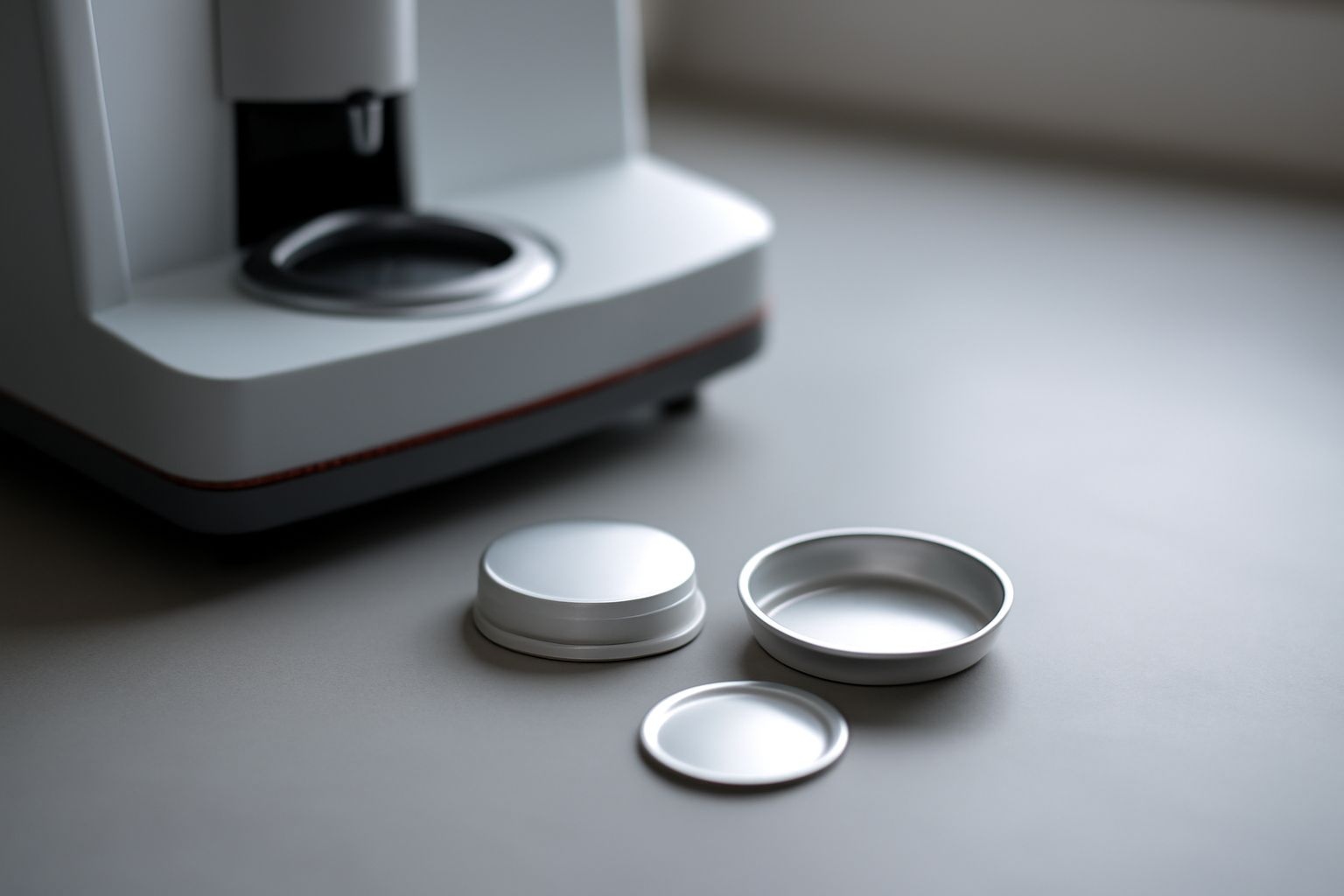
With each troubleshooting cycle in my lab, I have watched improved process and better pan selection restore consistent results. These are the key issues and solutions I want every user or buyer to know.
Pans can fail for many reasons that are not always obvious. Issues often appear during or just after heat cycles in the DSC machine.
Main causes include material defects, improper filling, overfilling, mechanical stress, or sample reactions within the pan at high temperature.
| Cause | Failure Effect | Recommended Fix |
|---|---|---|
| Low purity aluminum | Sample contamination, unexpected peaks | Choose ≥99.99% pans (aluminum info) |
| Poor pan sealing | Sample mass loss, leaks | Crimp evenly, inspect for gaps |
| Overloaded pans | Cracking, baseline noise | Weigh and portion sample correctly |
| Surface cracks or dents | Loss of heat transfer accuracy | Inspect pans before loading |
I once traced repeated failure to a batch of pans with thin walls and micro-defects left from forging. Good habit: visually check each pan and confirm material certificate with supplier. More about aluminum pan issues at Wikipedia.
Poor fit is a leading cause of noise, drifting baselines, or hardware faults in DSC runs. Device-specific compatibility is often under-checked by many users.
Fit issues are best resolved by consulting device spec sheets, choosing pans from suppliers with proven track records, and checking all pan dimensions before tests.
| Issue | Problem Description | Resolution Method |
|---|---|---|
| Rim diameter mismatch | Pans do not seat correctly | Use calipers, match to instrument specs (calipers) |
| Lid incompatibility | Leaks, poor sealing, or venting | Order original or tested alternative lids |
| Pan height variation | Carousel or tray misalignment | Sort pans by batch, maintain lot records |
| Material incompatibility | Thermal mismatch, signal drift | Check with manufacturer for compatibility list |
I keep batch records of every pan shipment, especially when mixing pan supply sources. If an odd result arises, the fastest fix is to match pan type and manufacturer to the recommended device list. For measurement basics, see Wikipedia.
Good maintenance prevents many common issues and allows for safe reuse of certain pans in routine testing. Poor storage and cleaning remain overlooked by many labs.
Pans should be handled with gloves, stored in dry, dust-free containers, and cleaned gently after each use. Reused pans require extra surface checks to avoid thin spots or surface changes.
| Practice | Benefit | How to Perform |
|---|---|---|
| Gentle cleaning | Removes residue, avoids new corrosion | Use mild solvents, soft brush, air dry |
| Dry box storage | Prevents oxidation and dust build-up | Seal box after every use |
| Batch rotation | Reduces wear on single set of pans | Track usage per pan, replace as needed |
| Routine inspection | Finds damage before testing | Light check for dents or cracks (maintenance basics) |
I have saved clients thousands in lost sample value just by introducing regular pan rotation and light-based inspections before every critical test. This simple routine raises pass rates and reliability. Learn more about maintenance routines at Wikipedia.
When results differ from expected values, pans are often overlooked as the main culprit. Careful troubleshooting can quickly narrow the issue to the pan and sampling setup.
Users should double-check pan type, batch, and condition. Re-running standard samples and comparing signals across two pan lots helps detect outliers and determine if replacement is needed.
| Discrepancy Type | Possible Root Cause | Corrective Action |
|---|---|---|
| Unexpected peak shift | Pan mass or batch error | Re-run with new, certified pan lot |
| Baseline noise increase | Surface residue, thin pans | Clean pans, increase wall thickness |
| Repeatability drop | Mixing pan sources/materials | Standardize on one pan source (reproducibility) |
| Signal distortion | Dented, warped, or oxidized pans | Discard and replace defective pans |
I recall an analysis project that consistently failed until I realized the pan batch had been replaced with a lower purity stock. After switching back, results matched expected literature signals again. To learn about reproducibility in experiments, see Wikipedia.
Most DSC pan issues have practical solutions—attend to quality, compatibility, and routine care to ensure consistent, high-performance thermal testing with every analysis run.
Contact Technical Support – info@redthermo.com

C082.Wangdefu International Building, Furong, Changsha, Hunan, China


+86-19907415020