



SHOPPING CART
Your cart is empty.
shop now
Your cart is empty.
shop now
DSC experiments can derail from minor errors in handling or sealing crucibles. Catching and fixing common issues makes thermal analysis more reliable, saving time and resources.
To solve problems with DSC crucibles with lids, focus on improving seal integrity, avoiding contamination, maintaining routine cleaning, and handling crucibles with care for consistent, accurate results.
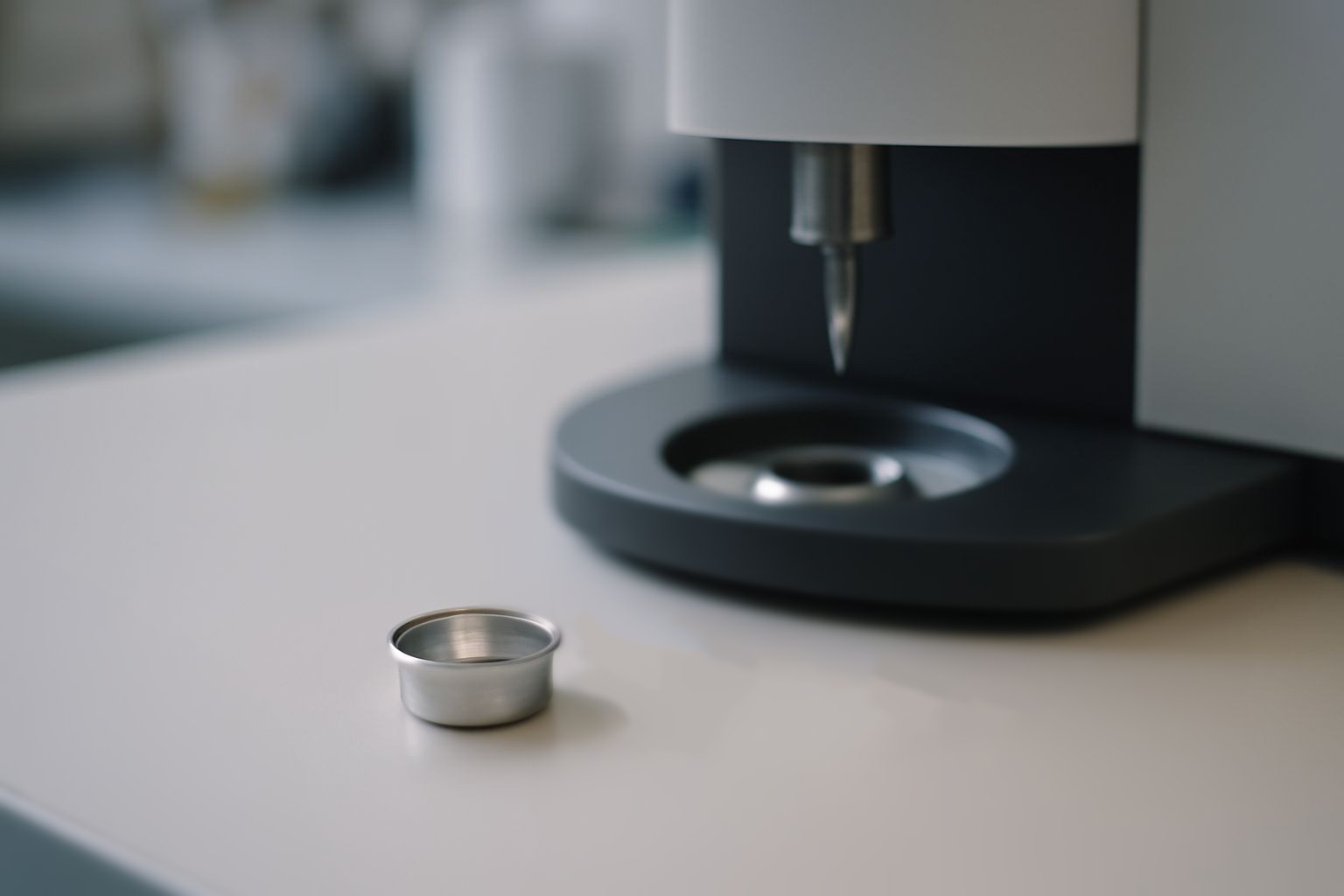
I have resolved many sample inconsistencies in the lab that traced back to pan sealing, cleaning, or handling. Careful step-by-step troubleshooting ensures each measurement reflects true sample properties. Each section in this article addresses typical DSC pan errors and hands-on solutions from practical experience.
Many users notice random shifts or baseline noise in repeated runs. This disrupts reliable thermal measurements and introduces uncertainty in material evaluation.
Inconsistent DSC results often stem from poor sealing, pan deformation, fluctuating lid fit, or cross-batch variation in crucible sourcing.
| Potential Cause | Symptom | Lab Impact | Further Reading |
|---|---|---|---|
| Seal failure or leaks | Signal baseline drift, evaporation | Lost sample, false peaks | Sealing |
| Material deformation | Irregular heating, poor pan fit | Noisy scans, calibration loss | Heat resistance |
| Contamination | Unexpected peaks, sticky residue | Test failures, longer prep/cleaning | Contamination |
| Supplier inconsistency | Batch-to-batch size or alloy difference | Non-reproducible baselines | Quality control |
When I spot inconsistent DSC results, I check pan batch, lid fit, and instrument calibration first. Routinely logging pan and lid by lot and rechecking checksums before key tests has saved my team hours of troubleshooting and prevented data loss.
Residual contamination inside pans or on lids leads to noisy data, background peaks, and risk of cross-sample errors in sequence testing.
To avoid contamination, use thorough cleaning protocols, restrict pan use to similar chemistries, and routinely replace worn or stained crucibles and lids.
| Decontamination Step | Purpose | Frequency/Trigger | Further Info |
|---|---|---|---|
| Solvent soak and rinse | Dissolve organic/inorganic residue | After every use, or suspicious scan | Reagent |
| Dedicated ultrasonic cleaning | Remove particles, thin layers | Weekly or after sticky/complex samples | Ultrasonic cleaning |
| Separate storage by chemistry | Prevent cross-contamination | Always—label bins by project | Lab storage |
| Replace worn/damaged parts | Maintain surface integrity, prevent absorbance | Inspect each month, replace as needed | Calorimeter |
I manage pan cleaning logs and require a visual check before every reuse. Dedicated cleaning stations for platinum or specialty pans extended their service life and reduced the risk of accidental cross-contamination—one of the main reasons for post-experiment reruns in my labs.
Skipping regular maintenance leads to unreliable scans and frequent equipment downtime from pan or lid failures.
Best practices include maintaining cleaning schedules, inspecting for warping, updating usage logs, and storing DSC crucibles and lids in dry, labeled containers away from reactive materials.
| Maintenance Task | How It Protects/Extends Life | Proper Frequency | Reference |
|---|---|---|---|
| Routine post-use inspection | Immediate detection of cracks or thinning | After every use | Quality control |
| Cycle log management | Removes aged pans from critical work | Weekly or per batch | Batch production |
| Dry, chemical-safe storage | Prevents corrosion, reactive damage | After each clean/reuse | Storage |
| Lubricate or calibrate crimping tools | Protect pan rim/lid fit for critical sealing | Monthly or after heavy use | Crimping |
I ask my team to check and log every pan and lid before each experiment. A simple maintenance checklist posted in the lab or included in digital LIMS keeps performance high, ensuring pan issues do not disrupt key thermal measurements.
Poor sealing exposes samples to air or allows volatile loss, undermining experiment reliability especially with trace or moisture-sensitive compounds.
To ensure seal integrity, use pans and lids designed for tight tolerance, check for uniform crimp, conduct leak tests, and always visually inspect the seal before the main experiment run.
| Sealing Check | Purpose | Lab Step | Links |
|---|---|---|---|
| Uniform lid crimp/press | Full rim engagement for best vapor block | Test a few pans before main batch | Crimp |
| Visual post-seal inspection | Detect gaps, misalignment, or edge damage | Microscope or magnifier review | QC |
| Pre-run vapor leak test | Spot seal failures in high-moisture or volatile work | Heat sealed pan, watch for early sample loss | Leak detection |
| Batch and lot number logging | Facilitates tracking and issue tracing | Note on project/lab sheet for each analysis | Batch tracking |
I recommend running a seal integrity test with a drop of colored water before starting new protocols. Every time my group implemented regular visual inspections and batch checks, our retest rates and sample loss plummeted, and overall confidence in experiment outcomes improved.


C082.Wangdefu International Building, Furong, Changsha, Hunan, China


+86-19907415020