



SHOPPING CART
Your cart is empty.
shop now
Your cart is empty.
shop now
Choosing low-quality or incompatible DSC sample pans can lead to failed polymer tests and unreliable research results.
DSC sample pans for polymer analysis need to provide chemical stability, precise volume, and temperature durability. The right pans ensure accurate thermal readings and repeatable transition results.
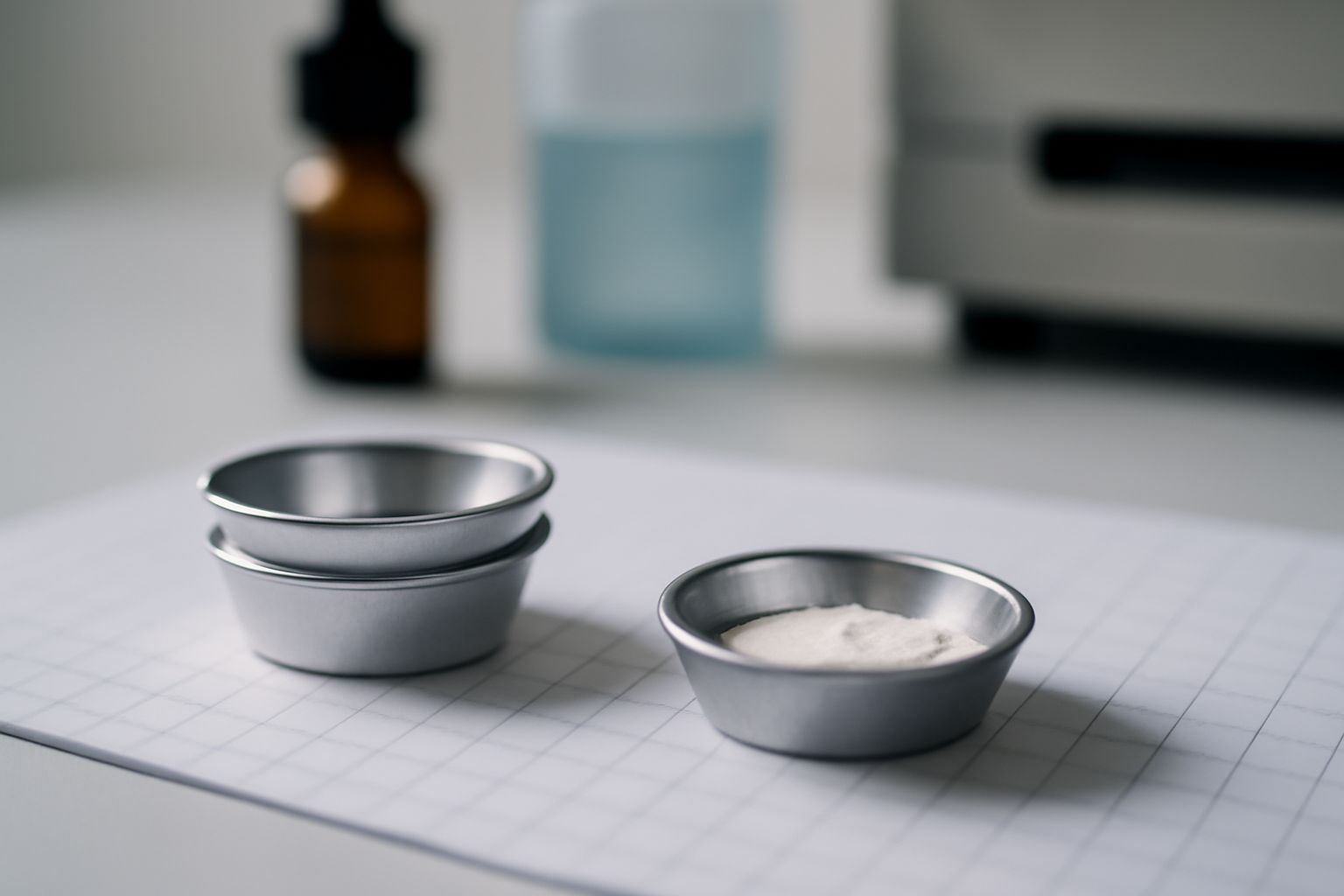
I made errors early in my experiments by using generic sample pans. Only after I started matching pan material and size to my polymer samples did I see clear, stable results. Every technical feature on your DSC pan matters for real-world polymer testing.
Pans made without the correct material composition can react with polymers or distort under heat. Testing results can become unpredictable and hard to repeat.
Aluminum and platinum are ideal materials for DSC pan construction in polymer analysis. They provide purity, thermal stability, and compatibility with most polymers, preventing contamination or thermal distortion during testing.
| Material | Key Properties | Polymer Application | Notes |
|---|---|---|---|
| Aluminum | High thermal conductivity, resists most organics, cost-efficient | Standard, non-corrosive polymers | Used in over 90% of DSC labs (Aluminum info) |
| Platinum | Extreme purity, high temp endurance, chemical inertness | Aggressive or high-temp polymers | Used when polymer risk contamination (Platinum properties) |
| Gold | Very inert, withstands aggressive chemicals, less common | Volatile or pharma-grade polymers | Higher cost, rare outside pharma research |
| PTFE/Ceramic | Non-metal, chemically resistant, low heat transfer | Specialty applications, certain fluoropolymers | Use when metals interfere |
In practice, I rely on high-purity aluminum pans for routine polymer work. I choose platinum if I test polymers at extreme temperatures or with aggressive reagents. Pan selection based on material safeguards both the sample and the DSC instrument, as recommended in DSC theory sources.
If sample volume does not match pan size, measurements become inconsistent. Too much or too little sample causes baseline errors or missed transitions.
Pan volume affects how well heat transfers from the DSC into the polymer. Accurate matching of sample size to pan capacity leads to reliable glass transition and melting point detection.
| Pan Volume | Sample Size (mg/μL) | Heat Transfer Quality | Impact on Results |
|---|---|---|---|
| 10–20 μL | 2–8 mg | Excellent | Fast baseline, strong peak shape, best for common polymers |
| 30–40 μL | 8–18 mg | Good | May slow baseline, useful for larger or low-heat samples |
| 50 μL+ | 18+ mg | Moderate | Risk sample burn-off, flattening thermal transitions |
I check my pan’s volume and never exceed the recommended filling, which is usually 80% of total volume. Volume ensures a balance between sample size and temperature sensitivity, as described in official polymer characterization guides. Consistent volumes improve data from run to run and reduce analyst error.
Using sample pans outside their rated temperature range causes warping or sample loss. A pan that deforms can produce faulty polymer analysis.
DSC pans made of aluminum handle up to about 600℃. Platinum pans manage temperatures up to 1600℃. Select pan types with temperature ratings that exceed the maximum required for your polymer testing.
| Material | Max Temperature (℃) | Common Applications |
|---|---|---|
| Aluminum | 600 | Standard DSC, most polymer transitions |
| Platinum | 1600 | High-temp polymer, rapid heating ramps |
| Gold | 1000 | Pharmaceuticals, volatile blends |
| PTFE/Ceramic | 300 | Low-temp, specialty, chemically active samples |
When switching between standard and high-temperature DSC studies on tough polymers, I move from aluminum to platinum pans. I have seen pan warping at high heat from generic sources, which always leads to unreliable data. Temperature is a critical property to audit in every sample pan order, as outlined in calorimetry guidelines.
Precision goes down if pan sealing, fit, or purity is not right. Challenges lead to broad baseline drift, unclear transitions, and repeated reruns.
To ensure precision, always use DSC pans with certified dimensions, high material purity, and strong sealing. These factors give repeatable thermal readings for every polymer analysis session.
| Precision Factor | Why It Matters | How to Confirm |
|---|---|---|
| Sealing Quality | Prevents evaporation and air leaks for polymers | Check seal styles: hermetic vs. standard (Hermetic seal) |
| Material Purity | Avoids unwanted thermal events and contamination | Review supplier’s purity certificate |
| Dimensional Match | Stops pan wobble and instrument error in DSC runs | Compare specifications with DSC instrument tray dimensions |
| Batch Consistency | Keeps every test reproducible and in control | Sample multiple pans per pack |
I always double-check the fit of each new pan batch with my DSC standard blank run before polymer testing. Consistent results across different lots tell me that pan production is reliable. Many international labs now require ISO 17025 certificates for their consumables to ensure the best accuracy.
Use high-purity, temperature-rated DSC sample pans with the right volume and sealing to secure reliable polymer thermal analysis results every time.
Ask REDTHERMO Experts for Technical Support

C082.Wangdefu International Building, Furong, Changsha, Hunan, China


+86-19907415020