



SHOPPING CART
Your cart is empty.
shop now
Your cart is empty.
shop now
Unexpected peaks or drifting baselines cause real frustration during DSC analysis. These problems can slow down research or force expensive retesting for labs.
Many common DSC issues result from using poor-quality crucibles or failing to achieve proper sample sealing. Choosing high-purity pans and proven methods helps fix inconsistent thermal analysis results.
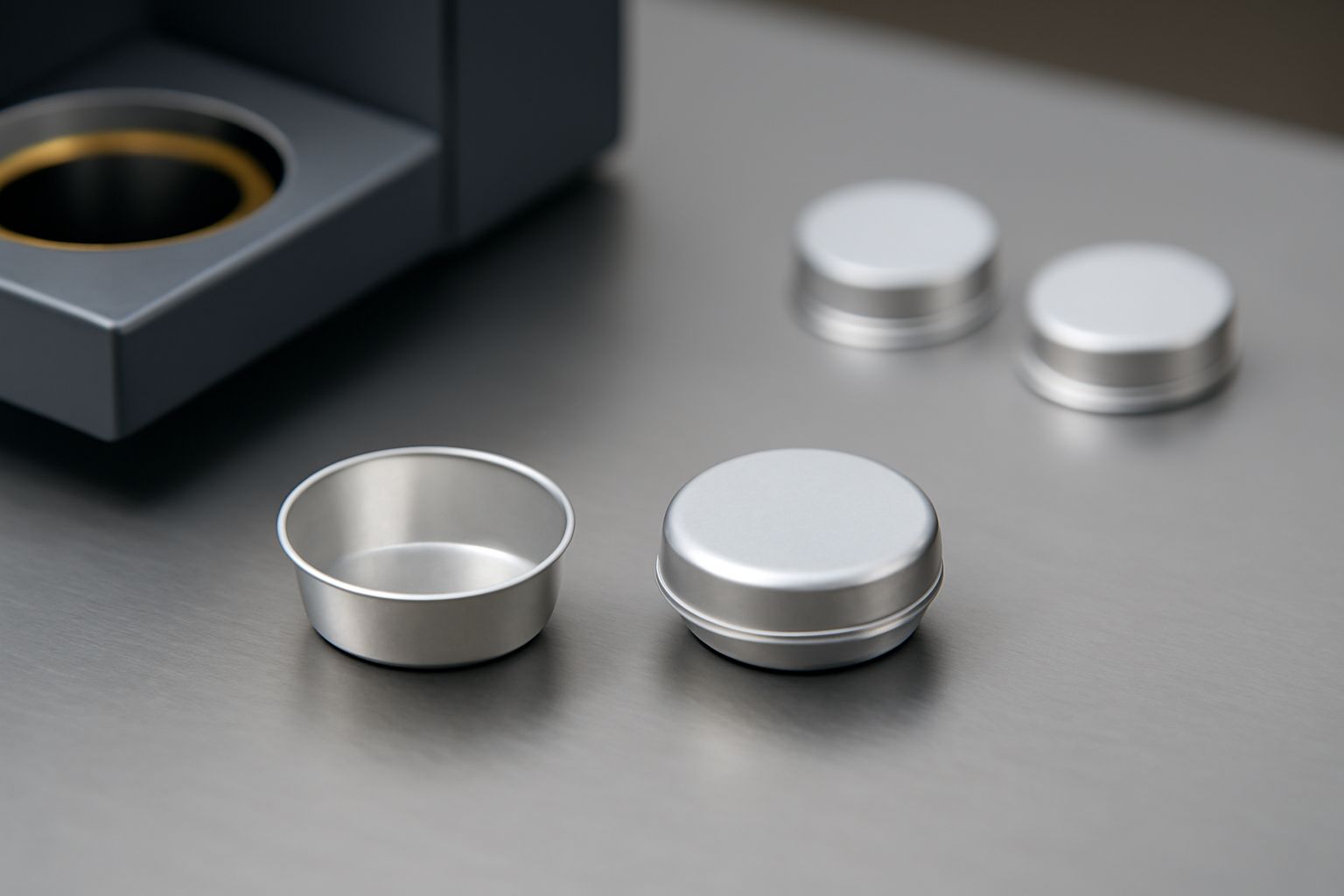
Small changes in crucible selection or handling can unlock stable, repeatable data. I have seen simple upgrades or minor adjustments fix issues in busy labs worldwide. Exploring each problem individually is the best way to regain confidence in every DSC test.
Wandering baselines and erratic peak shapes frustrate any DSC user aiming for clean results. These inconsistencies are usually traced back to equipment setup or crucible variation.
Common causes of inconsistent DSC results include crucible impurity, fit issues, uneven sample placement, and temperature gradients. Reliable pans and attention to loading reduce most errors.
| Problem | Effect during Test | Correction |
|---|---|---|
| Inconsistent crucible mass | Baseline drift, variable sensitivity | Use pre-weighed, batch-matched pans |
| Low aluminum purity | False peaks, chemical interference | Use ≥99.99% purity (aluminum) |
| Poor pan-device fit | Poor heat transfer, data noise | Verify specs with device guidelines |
| Uneven or loose sample loading | Asymmetric peaks, poor repeatability | Level samples and seal properly |
I remember a time when a lab’s whole analysis program was delayed because of random baseline jumps. Switching to a matched set of high-purity REDTHERMO pans solved it instantly. Checking these basic issues first usually restores reliable measurements fast.
Even trace contamination can disrupt sensitive analyses. Cross-contamination between samples or dirty pans remains a top reason for failed or inconsistent DSC results.
Contamination is prevented by careful cleaning, using dedicated pans for each sample type, and always handling crucibles with gloves or clean tweezers.
| Source of Contamination | Risk for Test | Prevention Method |
|---|---|---|
| Poor cleaning after use | Residue affects current sample | Use solvent and lint-free wipe |
| Mixing pans between samples | Carryover between tests | Use new pans for each test type (cross-contamination) |
| Finger oils or lab dust | Introduce unknown peaks | Wear gloves at all times |
| Improper storage | Dust, metal shavings on surface | Store in closed, clean box |
I often notice labs have the cleanest instruments but overlook crucible storage. Handling with bare fingers or reusing pans ruins weeks of careful baseline work. The fastest fix is to build clear cleaning steps into regular lab routines. Explore more about cross-contamination in Wikipedia.
Not all aluminum crucibles meet scientific standards. Bad quality can hide until it destroys a key analysis run in the middle of a project.
Poor quality crucibles often show uneven wall thickness, rough surfaces, and variable weights. Pay attention to these traits during incoming inspection or after test failures.
| Sign of Poor Quality | Problem Created | Testing Check |
|---|---|---|
| Visible dents or warping | Leaks or uneven heating | Inspect before use |
| Unusual colors or rough areas | Contaminants present | Rinse and recheck visually |
| Large spread in tare weights | Peak shift, unrepeatable baselines | Batch-verify in sets of 10+ pans |
| Out-of-spec dimensions | Device jams or fit failures | Measure with calipers or gauge (calipers info) |
I have seen situations where ordering from unknown suppliers resulted in whole batches being returned. Dents and roughness on the surface made repeatable loading impossible. My rule is to inspect and weigh every new batch, even from trusted vendors. Learn about calipers and measurement on Wikipedia.
Poor sealing allows gas leaks or sample loss during heating. Without a solid seal, even good pans produce inaccurate or noisy data.
Proper sealing comes from matching lid and pan, checking alignment, applying even crimping pressure, and confirming no visible gaps before starting tests.
| Step | Purpose | Tips for Best Results |
|---|---|---|
| Use correct pan-lid pair | Match fit for test type | Reference device guide |
| Check alignment on closure | Prevents leaks or lid tilt | Spot-check before crimping |
| Apply even force | Consistent seal without cracks | Use calibrated crimper (crimping details) |
| Visual check before use | Catches missed alignment or damage | Hold to light and inspect edges |
On many client visits, I find the right crimper makes the real difference in sealing success. Poor seals not only increase baseline noise but sometimes cause sample escape during runs. Always double-check with a simple light test even after automated closure. Learn more about crimping at Wikipedia.
Clean, high-purity crucibles and careful handling prevent most DSC issues. Set regular quality and sealing checks to cut down on failed runs and get reliable results every day.
Contact Technical Support – info@redthermo.com

C082.Wangdefu International Building, Furong, Changsha, Hunan, China


+86-19907415020