



SHOPPING CART
Your cart is empty.
shop now
Your cart is empty.
shop now
Every lab values fast, reliable results in testing. Supply limitations, unsuitable pans, and workflow gaps can slow down even the most skilled teams and cost labs real time and money.
DSC aluminum crucibles improve test efficiency by providing quick heat transfer, broad compatibility, and easy use across many testing environments. This helps scientists adapt to new materials and methods without delays or extra costs.
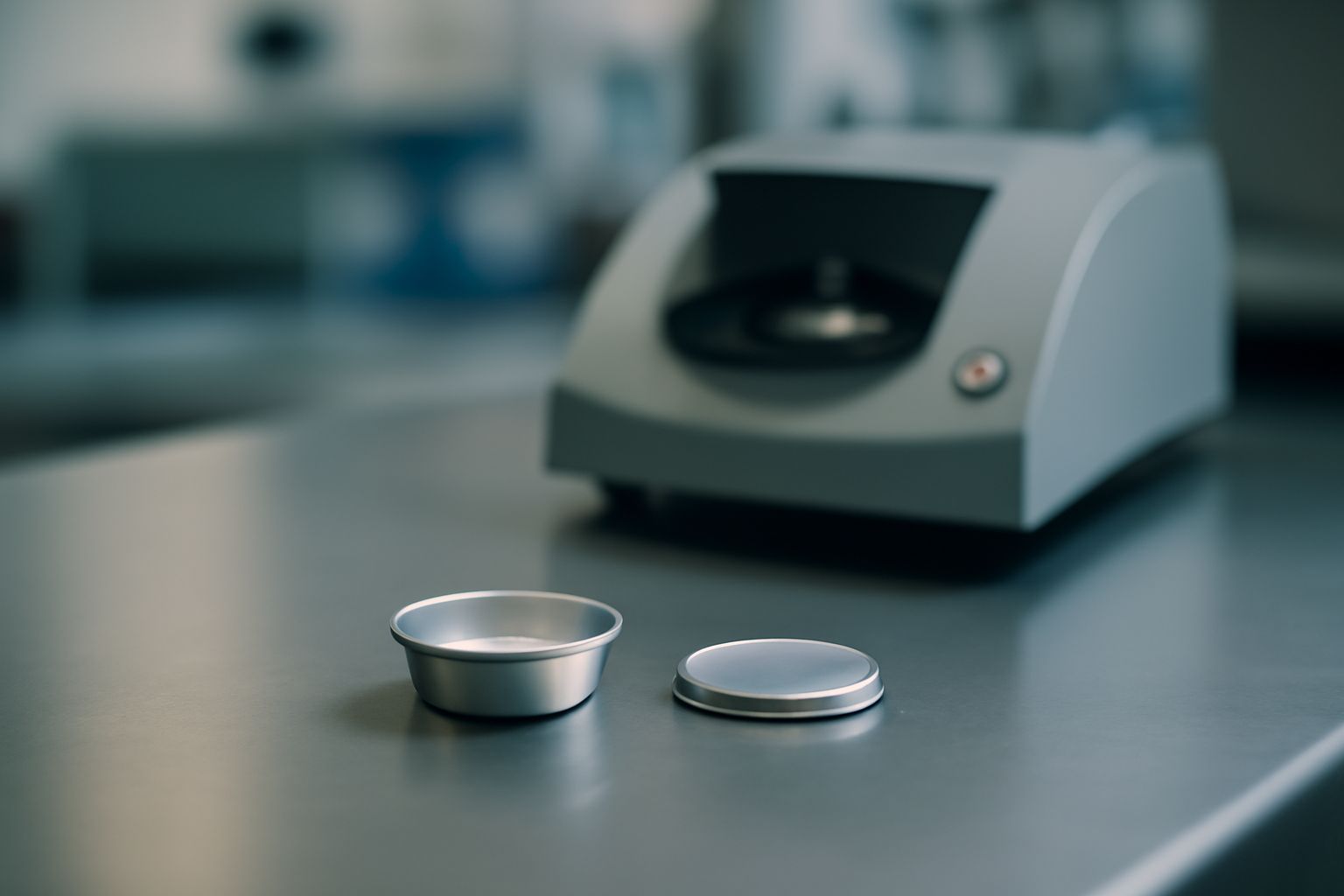
The flexible design of these pans helps me handle very different samples, switch projects, and keep up with high sample turnarounds. It is easy to see their broad value regardless of my industry focus.
Workflows move faster when every part of the DSC test is simple to set up, run, and reproducible. Disruptions often start with poor pan choices that slow heating or introduce errors into data sets.
Aluminum crucibles with precise sizing, smooth surfaces, and strong sealing work without causing jams, fit mismatches, or edge leaks. They allow seamless sample loading, easy removal, and consistent results for team use.
| Workflow Benefit | How Aluminum Pans Deliver | Practical Lab Impact |
|---|---|---|
| Quick Heat Response [Thermal Conductivity] | High conductivity gives instant sample heating | Reduces test cycle time |
| Simple Handling | Lightweight, uniform construction | Saves prep and cleaning steps |
| Reliable Sealing | Accurate dimensions and smooth finishes | Stops leaks, keeps testing setups clean |
| Batch Consistency | Precision manufacturing | Enables data comparison across runs |
Because I work on multiple projects at once, I depend on a pan stock that fits all standard DSC stations and gives reliable results no matter who is on my team.
Some labs test volatile chemicals, others need to run high temperatures or rapid cycles. DSC aluminum crucibles cover a wide range of needs, from flat-bottom pans to press-sealed types used for volatile or air-sensitive samples.
Picking the right crucible type depends on sample reactivity, max temperature, analysis sensitivity, and sealing needs for every lab environment or testing focus.
| Environment Type | Recommended Crucible | Key Functional Feature |
|---|---|---|
| High-Throughput Lab | Standard aluminum pans | Fast cycle, easy replacement |
| Pharma QC | Sealed pans with O-ring | Prevents sample loss, keeps purity |
| Polymer R&D [Polymer Info] | Press-lid, high-volume pans | Fits broad melting/transition range |
| Food Testing | Flat open pans | Easier cleaning, faster loading |
| Volatile/Air Sensitive | Hermetically sealed pans | Prevents evaporation, ensures safety |
I keep several pan types in stock so I can run different material tests back to back without long stops to clean or set up new tools.
Diverse sample types call for flexible containers. DSC aluminum pans work for solids, liquids, powders, and gels by offering a range of sizes, lid designs, and purity grades.
Some sensitive or reactive samples need inert pan materials or special coatings. Others need accurate sealing to allow analysis under different gas atmospheres or to prevent loss during heating.
| Sample Type | Best Pan Feature | Impact on Test |
|---|---|---|
| High Purity Solid | Low-contamination aluminum (99.99%+) | Stable baseline, sharp curves |
| Volatile Liquid | Hermetic seal | Prevents evaporation, keeps sample in pan |
| Reactive Powder | Non-stick or PTFE-coated pan | Easier cleanup, no stuck residue |
| Tiny Analytics [Microanalysis] | Microscale pans, smooth finish | Less sample, high sensitivity |
Every week I test both unknowns and standard compounds, so having access to a variety of pans changes how quickly and accurately I finish my test schedules.
Prototyping labs race to get results and iterate designs. DSC aluminum pans match this need by offering lightweight, easy-to-use containers with fast heat up and cool down times.
Single-use, standardized pans give every technician a fresh start, minimizing error and maximizing productivity during new product trials or fast-paced research cycles.
| Prototyping Lab Need | Aluminum Pan Property | Productivity Result |
|---|---|---|
| Fast Test Turnaround | Excellent thermal response | Enables more runs per day |
| Easy Setup and Use [Prototyping] | Pre-formed, ready-to-use pans | Less training downtime, fewer errors |
| Flexible Sample Sizes | Multiple pan depths and diameters | Handles all early R&D needs |
| Low Cross-Contamination | Disposable after each run | Keeps test data clean |
I prefer using standardized aluminum pans in fast-paced development environments because they fit every team member’s workflow and limit time spent cleaning or troubleshooting weird results.
DSC aluminum crucibles speed up testing, make sample work simpler, and adapt to changing lab needs, giving me a practical tool for precise and efficient thermal analysis.


C082.Wangdefu International Building, Furong, Changsha, Hunan, China


+86-19907415020