



SHOPPING CART
Your cart is empty.
shop now
Your cart is empty.
shop now
DSC experiments often go wrong because of overlooked issues with aluminum crucibles. Data errors, sample loss, and equipment problems follow if you ignore small warning signs.
Common DSC aluminum crucible issues like contamination, inaccuracies, warping, and compatibility can be avoided by cleaning, proper use, and regular equipment checks. Basic maintenance keeps your results reliable and protects your investment.
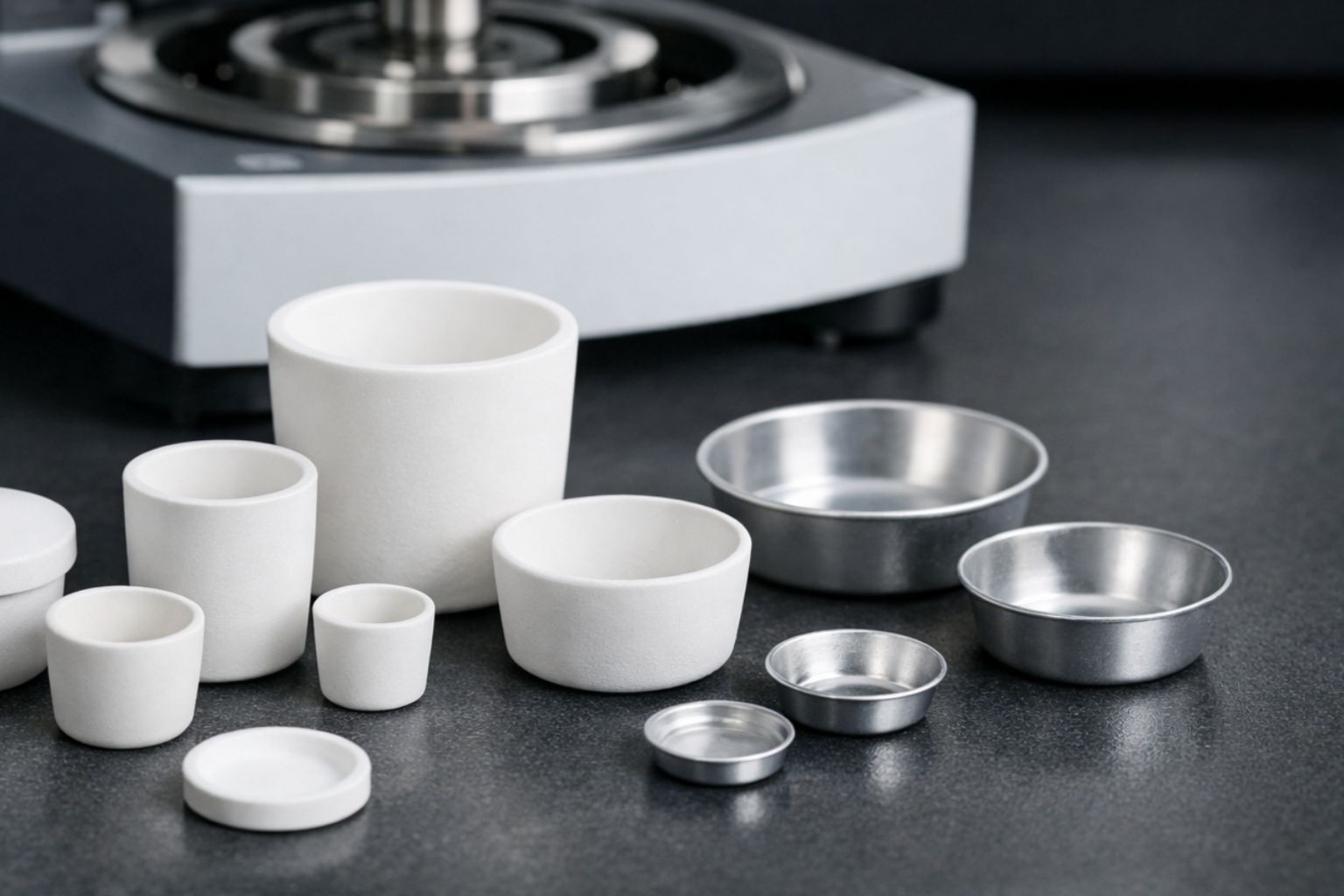
It pays to understand every problem that can show up in DSC runs. I have avoided expensive delays by building a habit of inspection and clean handling for every analysis and batch.
Sample residue and handling mistakes create contamination problems in DSC crucibles. These contaminants shift baselines and bring false peaks that ruin the next run.
Effective cleaning and storage methods prevent most contamination. When a pan is contaminated, use one or more proven cleaning steps before new tests.
| Contamination Issue | Cleaning Method | Prevention/Remedy |
|---|---|---|
| Stuck Residue [Cleaning Agents] | Soak pan in mild solvent, then rinse DI water | Dry at 100°C; avoid scratching |
| Fingerprint/Oil | Wipe with ethanol swab | Wear gloves, handle only edges |
| Surface Oxidation | Rinse in dilute acid, quick DI water wash | Store in airtight box, use quickly |
| Unknown Contaminant | Use fresh pan to ensure clean baseline | Track pan use records for each experiment |
I prefer to keep an emergency set of extra crucibles to swap in anytime serious contamination is discovered, as this avoids time lost in cleaning bad pans.
Measurement inaccuracies reveal themselves in shifting baselines or in unexpected peaks. Crucible condition, instrument setup, and incorrect specs can all contribute.
Focus on calibration, pan condition, and equipment baseline checks. Make sure to use pans within the right thickness and material tolerances for your DSC instrument.
| Problem Cause | Correction Step | Result/Outcome |
|---|---|---|
| Poor Pan Fit | Verify with caliper, replace pan if loose | Restores heat flow accuracy |
| Wrong Pan Thickness [DSC Principle] | Check manufacturer's spec vs model code | Matches signal and baseline stability |
| Contaminated Surface | Clean as above and re-run reference check | Reduces unexpected signals or drifting |
| Instrument Baseline Drift | Run blank, recalibrate DSC system | Improves repeatability for all pans |
I recommend always running a reference baseline after new pan shipments or after making any change to DSC settings.
Aluminum pans sometimes warp from fast heating, wrong sample size, or manufacturing defects. Bent pans leak, fail to seal, and harm repeatability in sensitive DSC tests.
To avoid warping, use the right heating rate, stay within manufacturer temperature limits, and never exceed recommended sample mass or volume.
| Warp Cause | Prevention Step | Test Outcome |
|---|---|---|
| Overheating/Exceeding Range [Heat Capacity] | Know max pan temp, keep under spec limit | No softening or bending during run |
| Too Large of a Sample | Weigh and portion samples precisely | Keeps pan shape stable, measurements even |
| Manufacturing Defect | Inspect before use; reject bad batches | Eliminates faulty pans from rotation |
| Rapid Heating Ramp | Use moderate ramp settings | Reduces thermal stress, increases lifespan |
I avoid bulk buying unknown brands, because even small differences in alloy or pressing can cause weak pans to warp and ruin critical test batches.
Compatibility issues cause pans to stick, leak, or fail to produce the expected results. Most of these problems trace back to pan dimensions, sealing methods, or batch tolerances.
Compare the crucible’s product code, specs, and sealing style with your DSC model before placing any large order. Request a test sample for unusual requirements or if using a non-standard setup.
| Compatibility Problem | Solution Approach | Success Indicator |
|---|---|---|
| Wrong Diameter/Tolerance [Calorimetry Basics] | Review manufacturer’s sizing guide | Pans fit sample holder with no play |
| Mismatched Sealing | Confirm cap and press match system | No leaks with pressure or volatile samples |
| Uncommon Sample Volume | Verify volume range with supplier | Temperature curves match standards |
| Incompatible Metals | Stick with approved alloys | No reaction in instrument or sample |
I find the simplest way to reduce incompatibility risk is to use only trusted suppliers and ask for samples when running new DSC projects.
By handling, cleaning, and maintaining DSC pans the right way, I help ensure better test results, longer pan life, and fewer costly errors in daily lab work.


C082.Wangdefu International Building, Furong, Changsha, Hunan, China


+86-19907415020