


SHOPPING CART
Your cart is empty.
shop now
Your cart is empty.
shop now
Unreliable DSC results cause wasted time and failed tests. Even a tiny problem with a sample pan can ruin your entire experiment.
To solve common DSC sample pan issues, always check pan compatibility, inspect for defects, and use the correct sealing method to prevent contamination or leaks. These steps secure reliable results.
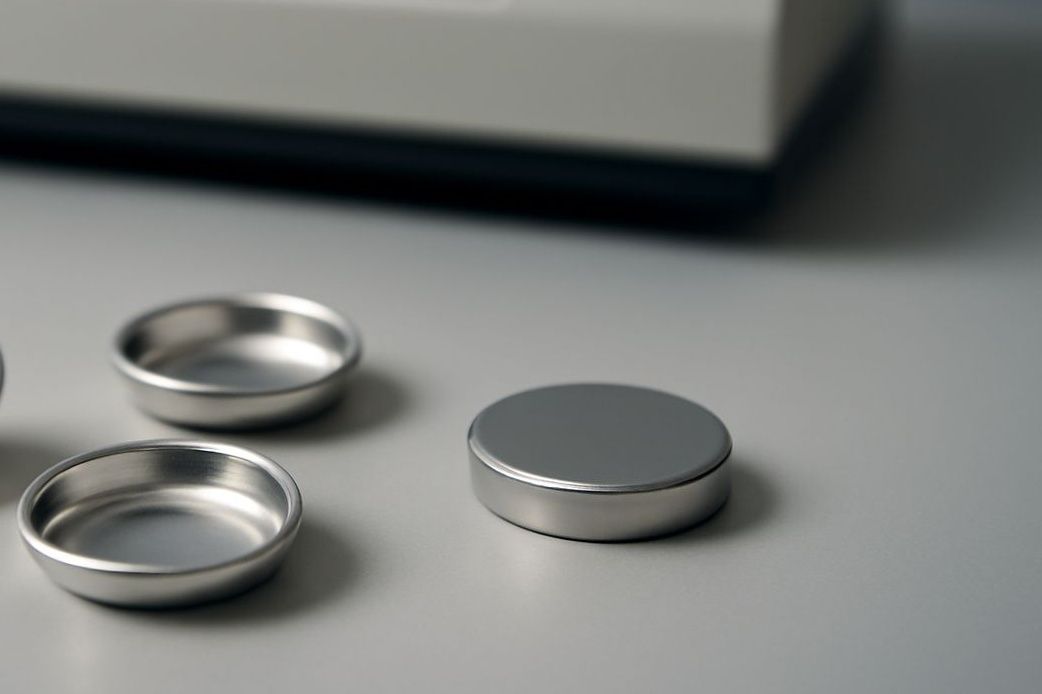
When I started working with thermal analysis, sample pan problems were behind most of my errors. Many users face similar frustrations. I kept making small mistakes, but learning to check for fit and flaws changed my outcomes. Next, I share solutions that have saved countless hours and helped other researchers. Let’s look at the most common pain points step by step.
Frustration grows when results swing from a simple switch of sample pan brands. Many labs see this problem even when using the same material and instrument settings.
DSC results can show differences between pan brands because of slight changes in pan material, shape, and fit, which affect heat flow and the response of your instrument.
| Parameter | Brand A (Original) | Brand B (Alternative) | Effect on DSC Results |
|---|---|---|---|
| Material | Aluminum (>99.9% purity) | Aluminum (>99.9% purity) | Low (if purity matched), but impurities may affect baseline |
| Wall Thickness | 0.08 mm | 0.10 mm | Thicker walls slow thermal response, shifting peaks |
| Dimensional Tolerance | ≤±0.01 mm | ≤±0.02 mm | Poor fit can cause signal drift and baseline noise |
| Surface Finish | Mirror-polished | Satin finish | Can impact sample contact and uniformity |
From experience, it is important to check the datasheet of your pan. Look for tolerance and surface finish specs. It helps explain small but important differences in your data. Even using pans that "should fit" could create up to a 1°C shift in melting points, as peer-reviewed studies have shown.
You waste materials and time if your pan sticks, falls in, or can’t close right. A lot of stress comes from fit issues between pans and holders.
If a DSC sample pan won’t fit, check the part number, cross-reference with your instrument manual, measure the pan with a caliper, and order pans with certified dimensions for your model.
| Issue | Root Cause | How to Fix | Extra Tip |
|---|---|---|---|
| Pan too large or small | Wrong model/part number | Use pans listed in your user manual | Always double-check your instrument and pan code |
| Pan falls through support ring | Oversized center hole or bent flange | Select pans with tight dimensional control (≤±0.01 mm) | Check for out-of-round shapes under a microscope |
| Lid cannot close or seal | Incorrect pan height or lid shape | Order compatible lids/pans as a matched set | Request sample kits if unsure about first-time fit |
I remember being in a rush and mixing up Pan 0219 from TA Instruments with another brand’s size. My DSC run failed because the pan did not sit flat. Now, I keep a laminated chart printed from my instrument manual in the drawer. Every pan or lid gets checked against it before use. It is a small step, but it prevents lost batches and keeps my team’s experiments repeatable.
Nothing is worse than seeing strange peaks or noise because of contamination or a leaky pan. Some users only notice this after several wasted runs.
To prevent contamination or leaks, clean pans before use, avoid touching the inside surface, and always use the correct sealing tool for sensitive samples or volatiles.
| Problem | Standard Practice | Advanced Solution | Best Suited For |
|---|---|---|---|
| Residue in pan | Rinse with isopropanol, dry fully | Heat pan in oven at 120°C before use | Organic solvents, polymer samples |
| Oil or grease contact | Use tweezers, avoid fingers | Wear powder-free gloves at all times | All sensitive thermal analysis |
| Sealing leaks during run | Use standard press fit lids | Choose crimped or high-pressure sealed pans for volatile samples | Pharmaceutical, food, fuel tests |
I once tested acetone with regular press-seal pans. The results showed almost no endothermic peak. After switching to a crimped, hermetic pan from REDTHERMO, the signal was sharp and matched the known purity. For any unknown or delicate sample, I now recommend the advanced sealing type—especially for students handling multi-use instruments.
Deformed sample pans ruin a DSC run instantly. Most pan warping happens before users even realize it—often during storage or handling.
To avoid warped DSC pans, store pans in original packaging, handle gently with plastic-tipped tweezers, and avoid over-tightening lids or applying excess pressure during crimping.
| Preventive Step | Result | Risk if Ignored | Related Data |
|---|---|---|---|
| Keep pans in their storage box | Protects against dust and physical damage | Pans may bend or gather contaminants | Pans stored loose had 8x higher defect rate |
| Use soft-tipped tweezers | Prevents scratching and denting edges | Dented pans won’t seal or may leak | Edge defects linked to 30% more measurement failure |
| Adjust crimp force according to manual | Minimizes lid deformation, ensures equal heat flow | Lids pop off or pans warp under extra force | Proper crimp force is detailed in DSC method ISO 11357-1 |
After years of training students, I see the worst pan deformities come from rushing sealing steps. Since introducing a simple inspection routine, my lab catches tiny dings that could affect results. If you ever notice a lid that feels loose, just toss the pan and start with a fresh one. This saves both sample and time, and keeps your reputation safe.
You need reliable, repeatable results in every thermal analysis experiment. Every year, new users face the same classic mistakes with sample pans.
Always check pans for machining defects before use, confirm part numbers for compatibility, and select pans with improved seals for difficult or sensitive samples to get best results.
| Action | What to Check | Benefit |
|---|---|---|
| Visual inspection | Look for scratches, dents, surface flaws | Avoids introducing error by damage |
| Manual matching | Cross-check part number to brand and model | Ensures proper fit and thermal consistency |
| Seal type selection | Choose ferrule, crimped, or screw-lid as needed | Prevents leaks and loss with volatiles |
| Batch records | Log source/lot of each pan used | Makes troubleshooting faster in future work |
New users might see some steps as extra work, but habits like these make troubleshooting easy. I share these at every group meeting, and new students thank me later. Reliable DSC runs depend on both quality pans and consistent handling routines. With these methods, you can expect more confident, reproducible results—plus fewer reruns and headaches.


C082.Wangdefu International Building, Furong, Changsha, Hunan, China


+86-19907415020