


SHOPPING CART
Your cart is empty.
shop now
Your cart is empty.
shop now
Many labs feel pressured to cut costs but still demand reliable test results. The right sample pan choice can make the difference.
You can balance cost and quality for DSC sample pans by selecting trusted compatible brands, reviewing technical specs, and performing cost-benefit analyses focused on both price and test integrity.
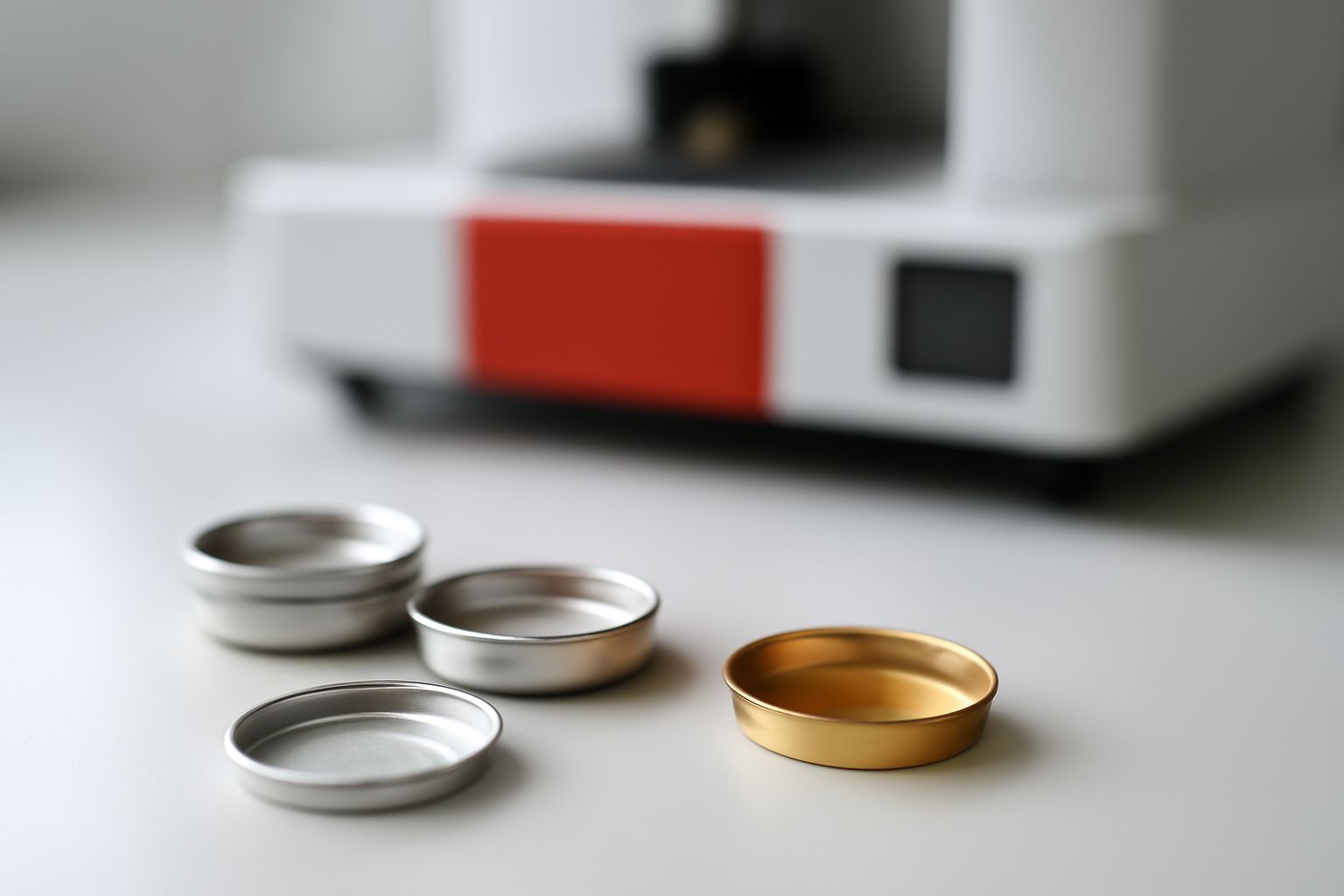
Balancing cost and quality in laboratory consumables is not just about the cheapest price. I have spent years helping labs choose sample pans that fit both their technical and financial needs. Labs must assess each component — from supplier reliability to hidden costs like procurement delays or inconsistent results. Let’s break down each factor to find practical strategies that work in real-world conditions.
Many labs hesitate to use off-brand pans, worried about data quality or equipment risks. That uncertainty can hold back savings.
Generic DSC pans from reputable third-party suppliers are often as reliable as original options as long as material purity, dimensions, and sealing designs strictly match established standards.
Pans may look identical, but their performance depends on a few key parameters, like alloy composition, manufacturing tolerances, and sealing style. I have worked with both OEM and carefully vetted generic pans; in both cases, sample test reproducibility and baseline stability are critical. Here’s a side-by-side feature comparison:
| Feature | Brand-Name DSC Pans | Generic/Third-Party Pans |
|---|---|---|
| Material Purity | Explicitly certified, alloy traceable | Often 99.99% pure, need documentation |
| Dimensional Tolerance | Strict ISO/ASTM fit for official devices | Match must be verified (±0.01 mm ideal) |
| Sealing Performance | Designed for original crimper integrity | Must match seal pressure and leak test |
| Compatibility | Guaranteed fit for specific models | Look for precise model-code match |
| Documentation | Full traceability (batch, lot, SDS) | Best suppliers provide the same |
| Cost | 3× – 5× higher per unit | High savings possible (30-70%) |
Labs who trial third-party pans should request technical data sheets and run validation experiments, just as they would with OEM supplies. If the supplier can provide both documentation and positive compatibility references, most risks can be managed.
Lab managers care about year-end budgets, not just per-unit price tags. Picking the right pans can mean thousands saved or lost.
You can estimate annual pan costs by multiplying pan cost per test by projected usage and factoring in order frequency, shipping, and validation costs for each supplier type.
In my experience, thorough cost forecasting helps avoid budget surprises. Both OEM and third-party pans have additional costs beyond sticker price. Here’s a basic model to compare:
| Parameter | OEM Brand-Name Pans | Generic Supplier Pans |
|---|---|---|
| Pan Unit Cost (USD) | 20 | 8 |
| Pans Used per Year | 500 | 500 |
| Annual Pan Cost (USD) | 10,000 | 4,000 |
| Shipping (USD) | 500–1,000 | 200–400 |
| Validation Costs (USD) | Minimal (pre-qualified) | Testing batch at startup (300) |
| Total Annual Cost | ~$10,500–$11,000 | ~$4,500–$4,700 |
The biggest driver is unit price, but shipping times matter too. Some third-party suppliers hold local stock or use courier delivery, so replenishment is faster — and missed tests due to stockouts are less likely. Always check for extra taxes or import fees based on your lab’s location.
Labs want to reuse pans to stretch budgets, but cleaning and reliability questions create doubt about risk versus reward.
Pan reuse can lower costs in low-sensitivity tests, but risks include contamination, loss of seal strength, and test inconsistency. Critical results may suffer if reuse is pushed too far.
When I tested pan reuse, I found that cleaning procedures took real time and effort. Even so, material memory and physical wear can degrade test outcomes. Below is a quick guide to when reuse is practical, and when it is risky:
| Reuse Situation | Suitability | Main Risks | When Reuse Works |
|---|---|---|---|
| Routine QC, Non-corrosive Samples | Possible | Low, if cleaned right | Screening, teaching labs |
| Tricky Chemicals or Reactive Samples | Dangerous | Residual contamination, data drift | Avoid reuse |
| High-Temperature or Sealed Tests | Bad idea | Seal failure, leaks, bad results | Single use only |
| Critical R&D or Validated Assays | Never reuse | Trace error, sample-memory | Brand-new pans only |
If you choose to clean and reuse, keep detailed cleaning logs and validate results for each new lot of samples. Most modern labs limit reuse to teaching demos or non-critical QC routines for safety and data reliability.
Even with a good supplier list, some labs pay more or risk test quality due to missed details at the buying stage.
Optimize procurement by building a model-to-pan compatibility table, verifying documentation, comparing suppliers, and prioritizing those with reliable stock and test data support.
Across all my lab projects, the most effective teams built sourcing workflows using checklists and systematic supplier reviews. This helped prevent costly mistakes and avoided long test delays. I recommend this structured approach:
| Step | Action Item | Why Important | Helpful Tool/Link |
|---|---|---|---|
| 1 | Identify instrument model + required pan specs | Prevents mismatches, failed tests | Lab Techniques |
| 2 | Crossmatch with supplier model tables | Ensures perfect fit and sealing | REDTHERMO Model Chart |
| 3 | Request documentation (SDS, lot, QA) | Traceability, technical confidence | SDS Info |
| 4 | Run side-by-side validation tests | Check for baseline drift/compatibility | Validation Papers |
| 5 | Log supplier performance (stock, replies, delivery) | Builds trusted partner list | N/A |
This approach keeps procurement practical. Always push suppliers to provide clear model-matching charts, ready stock details, and technical support to avoid gaps in your workflow. Consistent sourcing wins over impulse price cutting in the long run.


C082.Wangdefu International Building, Furong, Changsha, Hunan, China


+86-19907415020