


SHOPPING CART
Your cart is empty.
shop now
Your cart is empty.
shop now
Finding affordable thermal accessories for your own lab can be tough. You want both reliable results and a reasonable price, but too often, you have to choose just one.
The most effective way to balance cost and quality for thermal analysis accessories is to select trusted compatible products, confirm fit with your equipment, and compare real-world test results before buying.
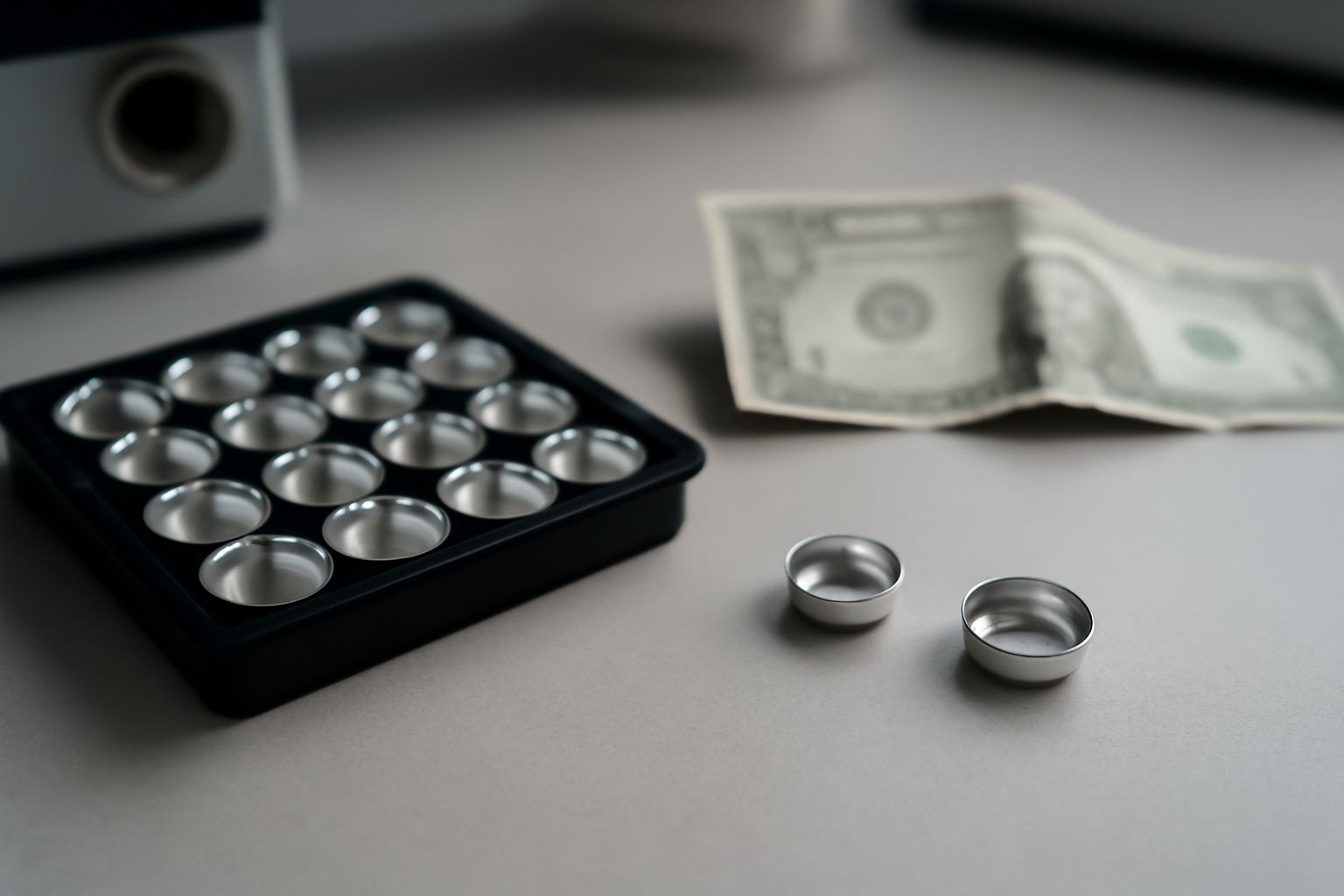
If you have ever struggled to justify the price of original sample pans or worried about performance when trying a cheaper option, you are not alone. Many individual scientists and small labs face the same cost-quality dilemma. With the right approach, you can avoid unnecessary trade-offs and make every lab purchase count. Here is what works best for smart lab buyers.
Lab budgets are tight—yet quality must never slip. Cheaper alternatives can often raise doubts about performance or compatibility, which makes deciding harder.
Third-party sample pans offer similar performance to OEM options for most thermal analysis applications. They are often produced with the same materials and manufacturing standards, and major brands like REDTHERMO provide compatibility with leading instruments.
| Aspect | OEM Accessories | Third-Party Pans |
|---|---|---|
| Material | High-purity aluminum or platinum | Same as OEM, verified 99.99% purity aluminum chemistry |
| Compatibility | Perfect fit for branded devices | Engineered for OEM match, fit certified with TA Instruments, NETZSCH, and others |
| Quality Control | Stringent, company-backed processes | Strict batch testing, often ISO-certified for laboratory use |
| Price | High, 2–3x more than average | 30–50% lower price, ideal for personal labs |
| Support | Brand technical team | Responsive email and direct engineer support (like REDTHERMO) |
My experience shows that sourcing third-party accessories helps maintain a strict budget without losing confidence in test results. The key is making sure replacement pans are specifically designed and interchangeable with your equipment model. Several reputable suppliers share their production tolerances and testing standards so you know exactly what you are getting.
Most personal labs operate on lean budgets, making it important to understand real cost savings. Sticker shock from OEM supplies is common, but is the trade-off actually worth it?
On average, OEM sample pans cost two to three times as much as compatible versions from trusted third-party manufacturers. Buying compatible pans can lower expenses by 30 to 60 percent without reducing equipment performance.
| Accessory Type | OEM Price (USD/pack) | Compatible Price (USD/pack) | Typical Savings (%) |
|---|---|---|---|
| DSC Aluminum Pan | 120 | 60 | 50% |
| TGA Platinum Crucible | 950 | 650 | 32% |
| Sealed Pan Set | 200 | 105 | 47% |
| Custom Pan (per drawing) | Depends, 250–500 | Custom quote | Usually 35–55% |
When shopping, always check the per-unit cost and the number of pieces per pack. For example, some branded packs may have strict minimum order quantities, while trusted third-party suppliers like REDTHERMO can ship as few as 10–20 pieces rapidly. Sources: [PerkinElmer Consumables Price List 2023], [REDTHERMO Official Site].
Relying only on price can lead to hidden costs—like poor results or equipment troubles. Individual labs need both reliable performance and transparent pricing from every accessory.
You can ensure value by choosing vendors who publish clear compatibility charts, support small batch orders, and have real-world performance data. Always look at peer reviews, verify technical drawings, and ask for sample validation when possible.
| Step | What to Check | Why It Matters |
|---|---|---|
| 1. Confirm Compatibility | Look for specific device model match | Prevents leaks and false readings |
| 2. Read Peer Reviews | Check for performance reports on research forums or ResearchGate | Builds confidence and uncovers hidden issues |
| 3. Ask for Data Sheet | Technical drawings and batch test certificates | Confirms manufacturing precision and tolerances |
| 4. Try Small Order First | Test in your equipment before larger purchase | Gives direct proof of fit and function |
I always run a quick pilot test with a few sample pans before committing to a larger batch. Vendors who allow small-batch purchases and publish detailed specs signal strong quality control. This saves you both money and time in the long run.
Bulk discounts are popular for companies, but not everyone can use hundreds of accessories quickly. Personal labs often do not need huge quantities at once.
Bulk purchase discounts can still help individual buyers—especially when suppliers offer low minimums for price breaks. Look for offers starting around 20 or 50 pieces, rather than 200 or more.
| Order Volume | Bulk Discount Offered | Recommended For |
|---|---|---|
| 10–20 pans | Little or none | Pilot tests, new instruments |
| 20–50 pans | 5–12% off | Personal labs, students, consultants |
| 50–100 pans | 10–18% off | Busy personal labs, group projects |
| 100+ pans | 15–25% off | Shared labs, small institutions |
Suppliers like REDTHERMO have adapted to smaller bulk tiers since more buyers now only need project-sized quantities. I have seen even small labs benefit from 5–10% savings by joining orders with nearby users or splitting packs within a research group. Always clarify what wholesale rates mean before purchasing.


C082.Wangdefu International Building, Furong, Changsha, Hunan, China


+86-19907415020