


SHOPPING CART
Your cart is empty.
shop now
Your cart is empty.
shop now
Many students want to save costs in their lab work. Cheap DSC crucibles can seem like an easy fix, but what can they really do?
Discount DSC crucibles handle routine experiments in universities and colleges, such as melting point and crystallization labs. When matched with the right instrument, they allow students to complete essential analyses without overspending or running out of supplies.
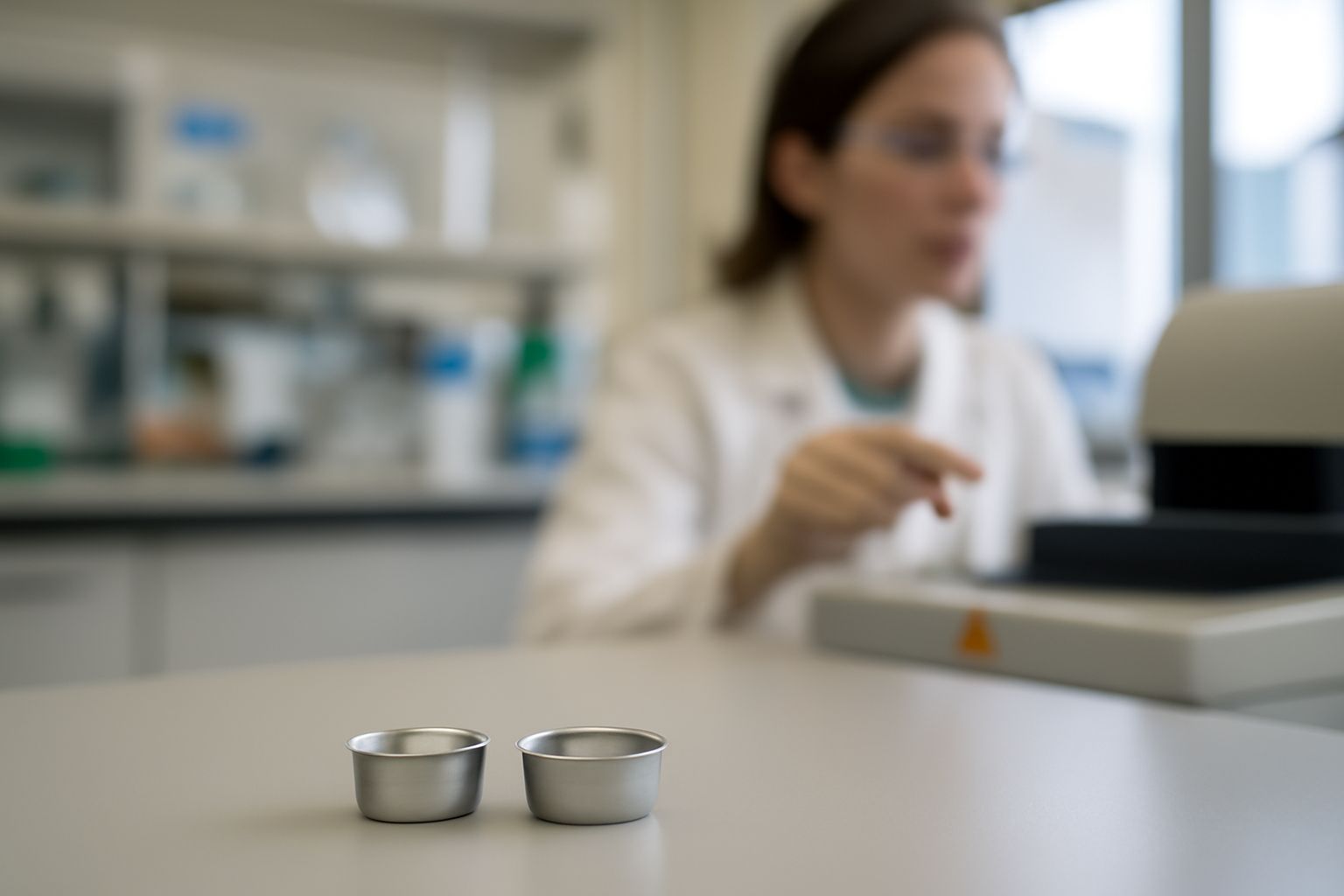
New students often wonder if using discount crucibles will compromise their results. The truth is, with the right preparation and understanding, these budget items work reliably in most educational labs. I have seen even basic crucibles deliver dependable thermal data when chosen wisely. Let’s look closer at how and where students actually use these in real experiments.
University chemistry labs need to keep expenses low. Many instructors choose discount DSC crucibles so classes can run smoothly without waiting for expensive supplies.
Introductory and advanced chemistry experiments—like testing melting points, heat capacity, and crystallization—make use of budget DSC crucibles. These allow consistent results at a lower cost, making thermal analysis more accessible for every student.
| Experiment Type | Why Use Discount Crucibles? | Common Challenges | Result Impact |
|---|---|---|---|
| Melting Point Tests | Reliable, single-use; easy disposal | Possible residue in pan | Generally accurate, if pan is quality |
| Crystallization Curves | Low cost enables more repeats | Requires careful calibration | Consistent when cleaned |
| Heat Capacity Labs | Large numbers of trials possible | Uniformity of crucible mass matters | Minor variance, usually within tolerance |
| Purity Verification | Quick screening, affordable for all | Sealing may be less robust | Best with simple samples |
My experience has shown that, when students follow standard procedures, budget crucibles rarely limit data quality in these standard differential scanning calorimetry labs. For new classes, this cost-saving choice encourages wider participation.
Students in material science want dependable gear for serious research. Teachers sometimes hesitate with low-priced supplies. Still, budget DSC crucibles can work well if students know what to expect.
Budget crucibles hold up in most polymer and material science labs. They measure transitions like glass transition temperature and basic thermal properties, as long as students confirm compatibility with their DSC equipment and avoid high-risk temperature cycles.
| Lab Focus | Crucible Needs | Low-Cost Crucible Suitability | Student Tips |
|---|---|---|---|
| Glass Transition Studies | Consistent heating/cooling | Suitable for routine polymers | Pre-weigh crucibles to check mass |
| Curing/Crosslinking Tests | Good sealing, high purity pans | Use with stable polymers only | Avoid using with highly reactive resins |
| Decomposition Analysis | High temp resistance | May be limited for >500°C | Check specs for temperature limit |
| Thermal Stability Screening | Uniform pan thickness | Good with controls in place | Always run a known standard |
I encourage students to look up their DSC instrument compatibility chart before starting. Most standard polymer samples—like polystyrene or polyethylene—yield expected results with reliable budget pans. For complex or high-precision studies, a quick consultation with the lab supervisor is best.
Senior students rely on consistent supplies to get valid data for their final projects. Choosing discount crucibles is tempting, but are they up for tougher demands?
Discount crucibles are fit for most capstone projects if students match the pan’s specs to the test needs. For studies needing fine precision or repeated high-temperature cycles, students should double-check tolerance limits and keep a backup set of higher-grade pans for comparison.
| Project Task | Budget Crucible Role | Concern | Workarounds |
|---|---|---|---|
| Comparative Analysis | Allows broad sample coverage | Sample carryover risk | Use fresh crucibles per run |
| Long-duration Scans | Saves cost on large batches | Potential deformation over time | Do not exceed specified cycle limits |
| Multi-step Reactions | Low price enables enough repeats | Pan seal integrity | Use extra lid sealing or known control |
| Precision Calibration | Provides practice with "real" setups | Accuracy may drift if reusing pans | Test with new, identical crucibles each run |
Across the years, I’ve watched students successfully finish in-depth research with discount DSC crucibles by closely tracking calibration and handling. Sticking to manufacturer tolerances helps protect the integrity of every result.
First-time users worry about making mistakes. Discount DSC crucibles can lower stress by being affordable, but students need to learn best practices early.
Beginners should check basic steps: pan cleaning, proper weighing, avoiding overfilling, and following waste disposal rules. Understanding the thermal analysis process and tool limits prevents damage and supports reliable lab results.
| Step | Action | Common Mistake | Advice |
|---|---|---|---|
| Preparation | Inspect each pan for dents | Missing small cracks | Discard any suspect pans before use |
| Loading Samples | Keep fillings light and uniform | Overfilling | Stay well below the rim |
| Sealing Crucibles | Apply even pressure to lids | Loose-seal causes leaks | Use recommended press or hand tool |
| After Use | Follow disposal procedures | Mixing metal and chemical waste | Sort pans according to campus rules |
When I started, I often missed small defects that could affect thermal readings. Careful inspection and sticking to the basics really pay off, as that ensures every experiment runs smoothly, even with budget tools.


C082.Wangdefu International Building, Furong, Changsha, Hunan, China


+86-19907415020