


SHOPPING CART
Your cart is empty.
shop now
Your cart is empty.
shop now
Laboratory teams find themselves at a turning point as DSC sample pan standards shift worldwide, raising important questions about cost, speed, and eco responsibility.
Most material science and quality labs now select DSC sample pans based on purity, reliable delivery, and increased focus on recyclable materials. These new priorities stand out in industry reports and procurement data.
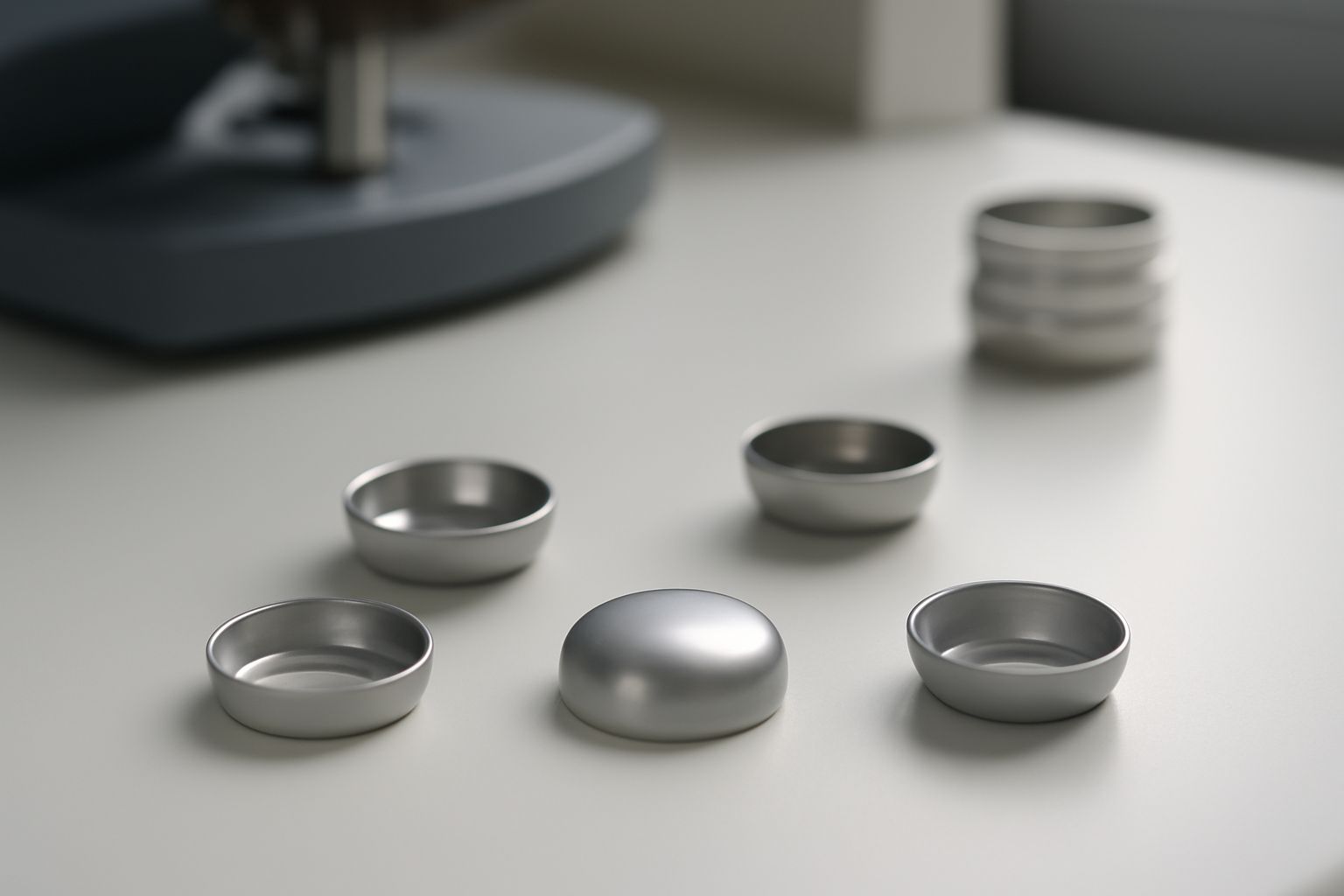
I have noticed rapid changes in what global labs want, especially after reading the latest market and industry news. Labs are shifting to faster, purer, and greener pans. Below, I will break down the latest global preferences, supply chain updates, what top markets consider most important, and how sustainability is changing every decision. Let us dive deeper into each trend shaping how labs pick DSC sample pans this year.
Research teams and laboratory buyers want sample pans that guarantee clean results, rapid arrival, and easier recycling—especially aluminum, platinum, and innovative custom types.
Today, most labs select high-purity aluminum pans for routine Differential Scanning Calorimetry (DSC) tests due to their predictable heat response and availability. Platinum crucibles and sealed pans also gain popularity for advanced or specialty needs.
| Material/Type | Main Use Case | Current Trend | Key Buyer Concerns |
|---|---|---|---|
| Aluminum | General DSC analysis, polymer & pharma research | Most popular; fast delivery, 99.99% purity expected | Consistent results, low cost, recyclable |
| Platinum | High-temp, high-precision, long-term use | Growing demand for repeated measures in critical tests | Stability, reusability, price |
| Sealed/Press-fit Pans | Volatile/air-sensitive sample analysis | Used in pharma, chemistry, battery R&D | No leakage, tight sealing |
| Stainless Steel | Specialty research, corrosive sample work | Small but steady; custom demand noted | Durability, compatibility |
| Custom Designs | One-off research, method development | Strong rise; rapid prototyping via suppliers | Exact fit, technical guidance |
The range is widening, but recycled materials and purity standards are now front of mind. Some labs now benchmark suppliers on both technical performance and proven delivery, following the latest supply chain reviews in the scientific press.
Worldwide disruptions shook lab teams, forcing them to rely less on local brands and more on international suppliers with proven stock and fast logistics.
Since 2021, delays and uncertainty led many material science labs to search for suppliers who can ship custom and standard pans within days, not weeks, improving reliability for urgent research.
| Year | Main Challenge | Key Change | Impact on Labs |
|---|---|---|---|
| 2020 | Factory shutdowns, international shipping delays | Stockpiling, delayed projects | Testing gaps, research slowdowns |
| 2021-2022 | Rising shipping costs, unstable transit | Centralized warehousing, use of global express | Faster restocking, but cost increases |
| 2023 | Supplier diversification | Labs shifted to platforms with real-time stock | Less backorder, more small-batch orders |
| 2024 | Integrated supply chains | 24-48h DHL/UPS fast shipping, direct-from-factory | Labs expect overnight delivery and status tracking |
This shift means OEM brands are not the only trusted source. Suppliers with transparent inventory and quick export—often based in China—are now seen as equal alternatives as reported in industry supply chain surveys.
Quality benchmarks, brand compatibility, delivery speed, and technical support now decide which pans labs pick across these regions. Each market has clear must-haves.
Labs in the US focus on proven results and clear pricing. In Europe, precise documentation and partner reliability are key. Japan values unique custom options and punctual shipments.
| Market | Critical Selection Factor | Important Feature | Recent Change |
|---|---|---|---|
| United States | Compatibility with branded DSC instruments | Transparent model cross-list, quick return policy | Shift to direct website orders, easy PayPal payments |
| Europe | Reliable availability, certified specs | Full documentation, CE mark, small-batch support | Preference for partners with local stock or fast EU-wide delivery |
| Japan | Custom pan design and speed | Fits unique device needs, sample-handling consultation | Many choose platforms with Japanese language support, real-time chat |
In all regions, I have seen that labs want a mix of low risk and high flexibility. They do this by checking cross-compatibility tables, supplier reviews, and looking for service guarantees in line with ISO 9001 standards.
Laboratories now score suppliers on recycling programs, material origin, and the size of each shipment—environmental reporting shapes contract choices.
Labs in mature markets are, for the first time, willing to pay more for aluminum or steel pans with a proven recycled content and less packaging, and expect partners to track their environmental footprint.
| Sustainability Area | What Labs Now Look For | Impact on Procurement | Recent Case Example |
|---|---|---|---|
| Recycled Content | Aluminum/steel pans with recycled raw material | Preferred over virgin metal if performance is reliable | Multi-national pharma group switched to 50% recycled pans (2024) |
| Low-Waste Packaging | Reduced plastic, simple labeling (QR-based) | Chosen for eco initiatives, especially in public tenders | European research institute cited waste cut by 20% in 2023 |
| Supplier Sustainability Reporting | Track record in reducing [CO2] for shipping | Grows in RFP weighting; labs often request annual supplier report | US university demanded emissions statement as contract condition |
| Circular Economy | Closed-loop take-back of used pans | Pilot programs for pan recycling gain traction | Several chemical companies now offer lab pan return schemes |
In conversations with buyers this year, nearly all mentioned sustainability targets from their parent company. Recent studies from McKinsey confirm that green procurement is no longer a niche request.
Sample pan markets favor speed, purity, and sustainability, reshaping lab procurement worldwide and demanding ever-more responsive, transparent suppliers across every region.
Contact Technical Support (info@redthermo.com)

C082.Wangdefu International Building, Furong, Changsha, Hunan, China


+86-19907415020