



SHOPPING CART
Your cart is empty.
shop now
Your cart is empty.
shop now
Laboratories often miss out on new DSC pan technologies by sticking to old habits. Ignoring market shifts can leave your research behind or raise costs over time.
Staying informed about DSC pan trends helps labs upgrade their accuracy, efficiency, and cost control. Knowing what’s new in materials, standards, and usage can guide you to a better purchase.
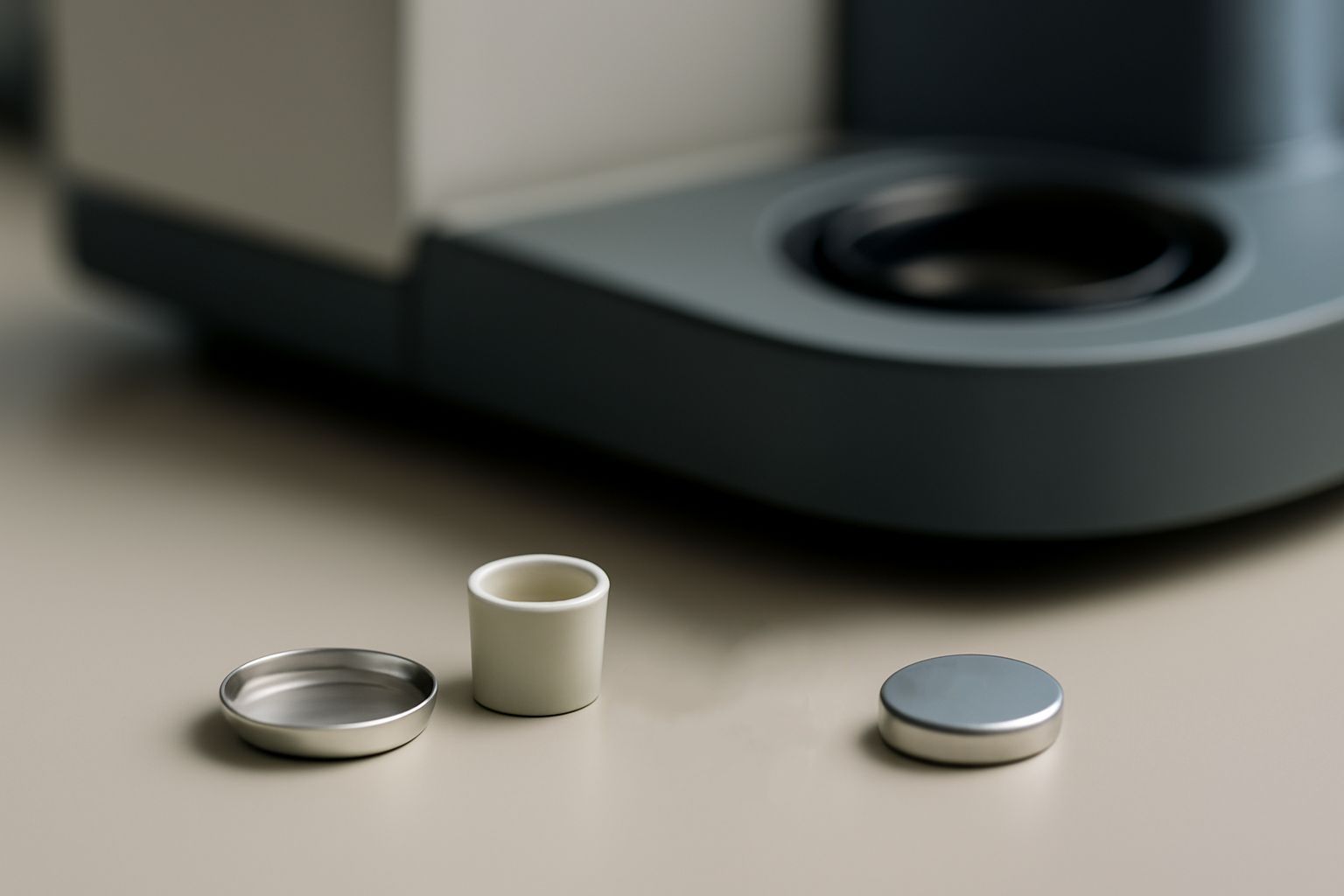
I once relied only on the DSC pans I first learned about, but that led to missed opportunities and costly surprises. Now, I follow industry updates and technology news regularly to avoid falling behind. Let’s look at the most important market trends so your lab can make the best pan selections.
Many labs now use more complex samples, and traditional pans struggle to keep up. Missing out on new pan materials limits your performance.
DSC pans now come in advanced materials like ultra-pure aluminum, platinum, gold, and high-strength ceramics. Some feature improved seals and coatings for better sensitivity and temperature range.
| Material | Benefit | Application | Reference |
|---|---|---|---|
| Ultra-pure aluminum | High conductivity, precise baseline | Polymer and routine testing | Aluminium |
| Platinum and gold | High temperature, inert, chemical resistant | Pharmaceuticals, metals, ceramics | Platinum |
| Advanced ceramics | Up to 2000°C, non-reactive | Extreme temperature and reactive chemicals | Ceramic |
| Special coatings | Reduced contamination and sticking | Food, pharma, and biology studies | Coated materials study |
I used to think all aluminum pans were equal. The new generation of pans bring cleaner baselines and higher durability. Checking technical sheets for updated materials pays off as the market advances and brings new options.
Relying on outdated standards can cause trouble with audits and reduce data trust. New needs demand stricter requirements for pans.
Industry standards for DSC pans have become more detailed. Recent updates focus on compatibility, purity, and traceability to ensure reliable and repeatable results.
| Standard | Key Changes | Impact on Labs | Reference |
|---|---|---|---|
| ASTM D3418 | Added specs for pan purity and fit | Improves accuracy in glass transition tests | 2021 revision |
| ISO 11357 | Stricter tolerance and sealing tests | Enhances cross-brand reliability | ISO 11357 |
| FDA/Pharma | Traceability and contamination control requirements | Protects data for regulated drugs | FDA Guidance |
My last audit found a mismatch in documentation because I overlooked a new ISO revision. Now I check standard updates quarterly. Following new standards keeps labs competitive and audit-ready.
Traditional fields like polymers still drive much DSC use, but new industries are growing fast. Lab managers can miss these new needs if they focus only on old markets.
DSC pans now see demand from areas like battery R&D, advanced electronics, food safety, and environmental testing. These sectors require pans with tougher specs and advanced features.
| Application | DSC Pan Demand | Reason for Growth | Reference |
|---|---|---|---|
| Battery research | High-temperature, pressure-sealed pans | Thermal runaway and safety testing | Battery science |
| Advanced semiconductors | Low-contamination, ultra-flat platinum pans | Precise transition and quality control | Semiconductor industry |
| Food safety | Coated/anti-stick pans | Testing for allergens, fats, moisture | Food safety |
| Environmental monitoring | Chemically-resistant, hermetic pans | Pollution and hazardous waste analysis | Environmental monitoring |
My biggest surprise was the rush of orders from battery research labs. These labs demand pressure-sealed and ultra-pure pans for safety. Understanding these market shifts lets you better serve the labs of tomorrow.
The fast pace of product development means labs can fall behind easily. I once missed out on an improved pan line because I did not monitor industry news.
Check supplier updates, join scientific forums, and follow technical journals. Subscribe to market research and attend industry events to keep your lab ahead.
| Source | Update Frequency | How to Benefit | Reference |
|---|---|---|---|
| Supplier newsletters | Monthly | Instant alerts on new materials and promos | Industry LinkedIn |
| Technical journals | Quarterly | Product benchmarks, performance studies | Thermochimica Acta |
| Conferences/workshops | Yearly | Live demos, emerging trend sessions | Scientific conference |
| Professional forums | As needed | Peer reviews, troubleshooting | Internet forum |
I set up alerts and joined a materials science group on LinkedIn. I now learn about releases and peer advice before making any pan purchase. A small habit like this keeps my lab competitive and prepared.
Tracking DSC pan market trends ensures your lab invests in pans that deliver the latest benefits in accuracy, stability, and value with every new project and test.


C082.Wangdefu International Building, Furong, Changsha, Hunan, China


+86-19907415020