



SHOPPING CART
Your cart is empty.
shop now
Your cart is empty.
shop now
Each type of lab test needs the right crucible to avoid data problems and sample loss. Picking the wrong material can ruin results and waste project budgets.
You should select heat analysis crucibles based on the instrument and test type. Different materials and shapes suit DSC, TGA, electronics, pharmaceutical, or food science testing, supporting the best results for each application.
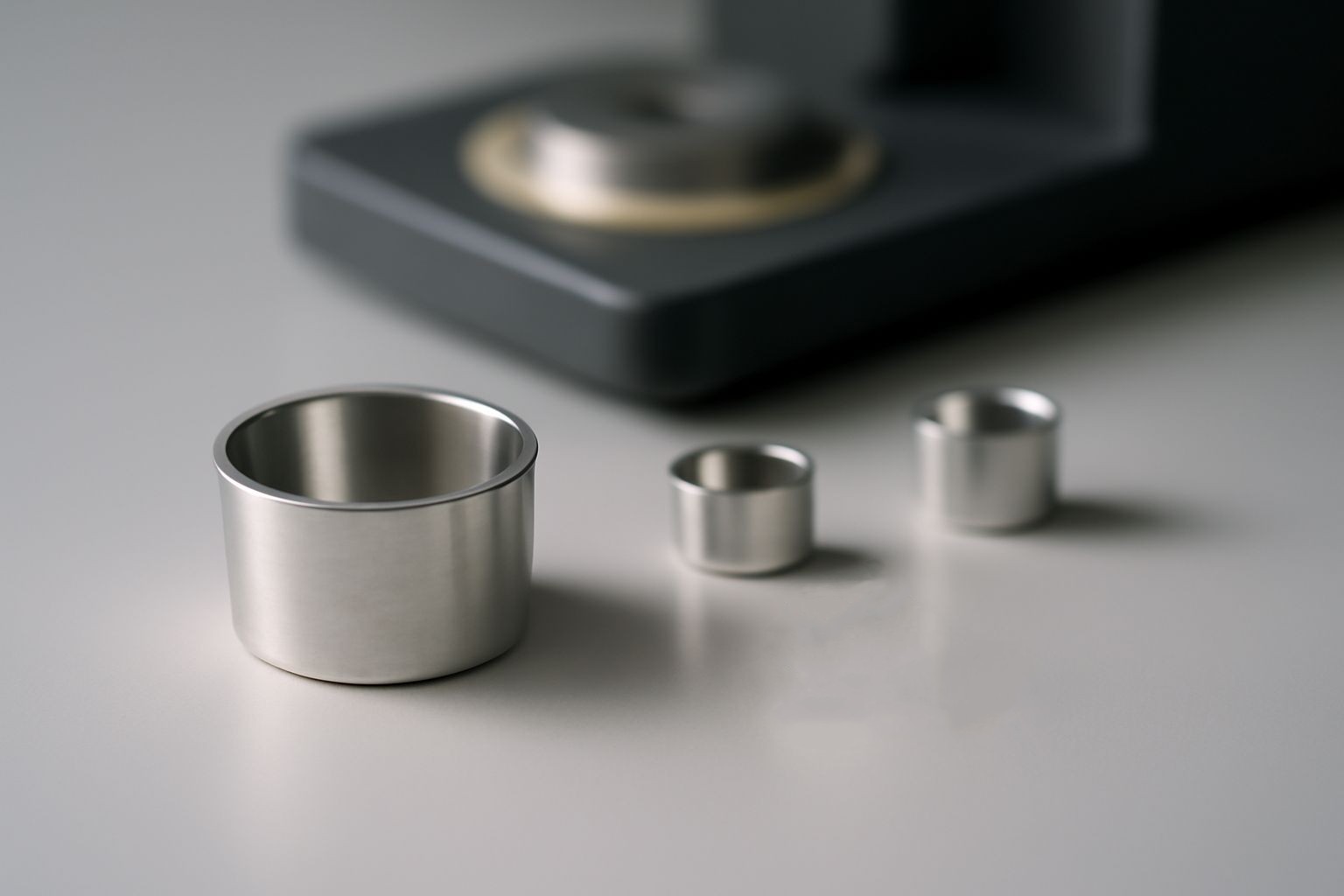
I see that labs with scenario-specific crucibles avoid downtime, reduce contamination, and always find it easier to match their accuracy targets and quality demands in critical testing.
Material science labs focus on reproducibility and clear measurements. The type of crucible directly affects the sensitivity and repeatability of both DSC and TGA methods.
For DSC and TGA, aluminum crucibles are commonly used for general polymer, resin, and organic tests because they conduct heat well and are cost-effective. Platinum crucibles are better for high-purity or high-temperature studies. Always match the crucible to your test for reliability (Differential Scanning Calorimetry).
| Test Type | Material | Max Temperature (°C) | Main Benefit | Common Use |
|---|---|---|---|---|
| DSC | Aluminum | 630 | Fast heat flow, affordable | Polymers, resins |
| DSC | Platinum | 1600 | Purity, oxidation resistance | Ceramics, metals |
| TGA | Aluminum | 630 | Lightweight, rapid response | Organics, rubbers |
| TGA | Platinum | 1600 | No contamination, stable baseline | Inorganic salts, advanced materials |
Electronics often requires thermal tests up to 1600°C or above. The right crucible protects sensitive materials and equipment from damage caused by extreme heat and stress.
Platinum and sapphire crucibles work best here. Both withstand high temperatures and resist oxidation. Platinum is most common for semiconductor, solder, and metal powder analysis. Sapphire is used for the most extreme applications where chemical interaction must be close to zero (sapphire).
| Material | Max Temp (°C) | Thermal Shock Resistance | Key Application | Cost Level |
|---|---|---|---|---|
| Platinum | 1600 | High | Microchip packaging, soldering | Very high |
| Sapphire | 2000 | Excellent | Advanced wafer research | Highest |
| Alumina ceramic | 1750 | Medium | Battery and capacitor testing | Moderate |
Pharmaceutical tests need crucibles that keep samples pure and eliminate risk of trace contamination. Low-quality crucibles often lead to failed batches or regulatory delays.
High-purity aluminum crucibles are the standard in pharmaceutical labs for DSC and TGA because of their clean surface and low reactivity. Platinum and gold crucibles are chosen for extra-sensitive or high-temperature applications. Pick inert crucibles to protect sample safety and compliance (pharmaceutical).
| Material | Purity Standard | Common Use | Contamination Risk | Test Example |
|---|---|---|---|---|
| Aluminum | 99.99% | Routine DSC batch tests | Very low | Stability, melting point |
| Platinum | 99.95% | Impurity detection, degradation | Negligible | API endpoint, mass loss |
| Gold | 99.9% | Drug development, trace analytics | Negligible | Polymorph monitoring |
Food science focuses on fats, proteins, and sugars that can react with vessels or pick up flavor. Crucibles here must be both clean and non-reactive to keep real results.
High-purity aluminum pans are most widely used because they prevent flavor pickup and reduce sticking. Ceramic pans also have very low reactivity and suit certain niche applications. The ideal choice depends on the sample and analytical goal (food science).
| Sample Type | Material | Main Benefit | Contamination Risk | Lab Scenario |
|---|---|---|---|---|
| Fat content | Aluminum | No taste transfer, fast heating | Very low | Butter, margarine analysis |
| Sugar/protein | Ceramic | No sticking, stable baseline | Low | Confectionery development |
| Aroma testing | Aluminum | No odor pickup | Minimal | Flavor R&D |
| Moisture | Ceramic | Even drying, easy cleanup | Low | Bread shelf-life study |


C082.Wangdefu International Building, Furong, Changsha, Hunan, China


+86-19907415020