


SHOPPING CART
Your cart is empty.
shop now
Your cart is empty.
shop now
Not sure which DSC crucible to pick? Many beginners struggle with unexpected errors or poor results when using the wrong crucible for their materials.
The right DSC crucible depends on your sample type, experiment goals, and lab conditions. For beginners, matching the crucible’s material to your sample chemistry and handling needs is key to accurate thermal analysis.
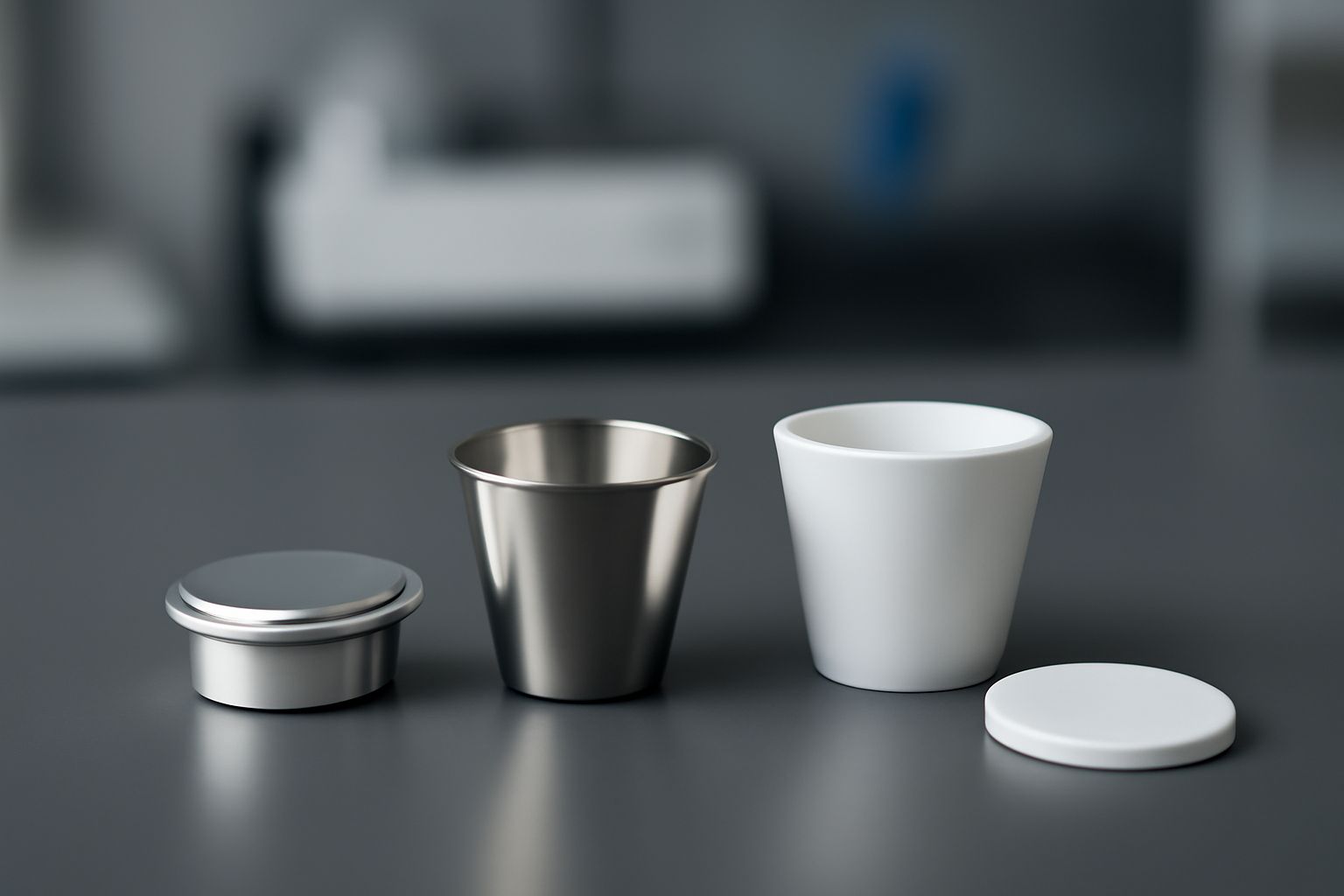
Different testing scenarios can feel confusing at first. You may worry about damaging expensive samples, getting inconsistent data, or not knowing which item actually works best. I have been there, too. In this practical guide, I walk you through common DSC crucible choices, problems you might face as a beginner, and tested solutions. Read on to make confident, scenario-based decisions for all your DSC applications.
It is easy to choose the wrong DSC crucible just because “everyone else uses it.” You risk sample waste or inaccurate measurements if you do not match your sample type with the right crucible.
Aluminum pans are best for standard polymers, while platinum or ceramic crucibles suit corrosive metals and samples needing high-temperature treatment. For pharmaceuticals, non-reactive materials are critical.
| Sample Type | Recommended Crucible Material | Why | Special Note |
|---|---|---|---|
| Polymers | Aluminum | Good thermal conductivity, low cost, covers most DSC temperature ranges | Use hermetic pans for volatile samples |
| Metals | Platinum, Ceramic | High temperature stability, resistant to corrosion | Platinum suits oxidative environments (see Platinum on Wikipedia) |
| Pharmaceuticals | Aluminum (non-reactive), Sapphire | Prevents contamination, works for trace analysis | Check compability for each API and excipient |
For many years, I used only aluminum pans for polymers, but learned the hard way that some volatiles require hermetic sealing. A DSC crucible acts as much more than a container—it is your first filter for sample integrity and data reliability. Manufacturers like METTLER, PerkinElmer, and TA Instruments each make a wide variety, so always check your method’s demands before selecting a pan.
Changing sample types can cause memory effects, cross-contamination, or equipment problems if you are not careful. Beginners often forget to clean or swap crucibles and get mixed results.
You must use separate, labeled crucibles for each material type and decontaminate between runs. Never reuse a pan across different chemistries without deep cleaning.
| Scenario | Recommended Crucible Approach | Steps to Avoid Issues | Why It Matters |
|---|---|---|---|
| Switching Polymers to Metals | Use new or thoroughly cleaned crucibles | Remove organic residue with appropriate solvents. | Prevents unwanted catalytic reactions |
| Alternating Pharmaceuticals and Polymers | Label and store crucibles separately | Clean using lab-grade detergents, rinse well, dry in oven | Ensures trace-level purity and avoids memory effects |
Cross-contamination is one of the most frequent causes of poor calorimetry results, but it took me several failed trials to finally invest in color-coded pans and labels for routine switching. As a beginner, document your workflow and always mark crucibles for their allowed chemistries. This habit saves both time and costly errors in the long run.
Humidity, lab air quality, and ambient temperature can ruin even the best DSC setup. Many new users do not realize environment impacts crucible performance just as much as choice of material.
Store crucibles in sealed containers in a dry place. Pick lids or seal types based on local humidity, and never touch inner surfaces with bare hands.
| Environmental Factor | Risk | Prevention | Related Data |
|---|---|---|---|
| Humidity | Condensation changes sample weight and baseline | Use desiccants or store pans in vacuum boxes | Desiccator effectiveness: up to 98% moisture removal |
| Contamination | False positive or negative thermal events | Wear gloves, use clean tweezers, work on wipe-clean surfaces | Trace impurities can bias glass transition readings by >0.2°C |
I learned to keep my DSC pans in airtight storage after discovering unexplained mass increases due to summer storms. Lab air can easily carry fine particles, so clean storage is as vital as your method. Always handle with gloves and tweezers, and purchase only from suppliers who vacuum-pack their pans.
Highly reactive or volatile samples can corrode pans, cause leaks, or give false DSC signals if not handled correctly. Beginners may underestimate the risks involved.
Select hermetically sealable crucibles and chemically inert materials such as platinum or gold. Only open in ventilated areas and avoid overfilling.
| Substance Type | Handling Precautions | Crucible Material | Protection Strategy |
|---|---|---|---|
| Corrosive Chemicals | Use fume hood, minimize exposure | Platinum, Gold | Hermetic sealing, frequent inspection |
| Volatile Organics | Avoid overheating, seal tightly | Aluminum (hermetic) | Pre-weigh and record data to monitor losses. See volatility for why evaporation happens fast. |
When working with volatile samples, I always use hermetic pans and double-check seals under the microscope. I have lost good samples to leaks before and now always document filling mass. Never re-use a pan for strong acids or bases; even small scratches will react. You gain confidence as you learn to respect both the sample and the crucible—especially as a beginner.


C082.Wangdefu International Building, Furong, Changsha, Hunan, China


+86-19907415020