



SHOPPING CART
Your cart is empty.
shop now
Your cart is empty.
shop now
So many polymer DSC studies fall short due to generic sample pans that do not fit specific material transitions. Advanced analysis can defeat standard consumables every time.
The best sample pans for advanced polymer DSC studies are those matched tightly to your instrument and research purpose. Custom pan designs raise accuracy, support new transitions, and provide reliable data for complex polymers.
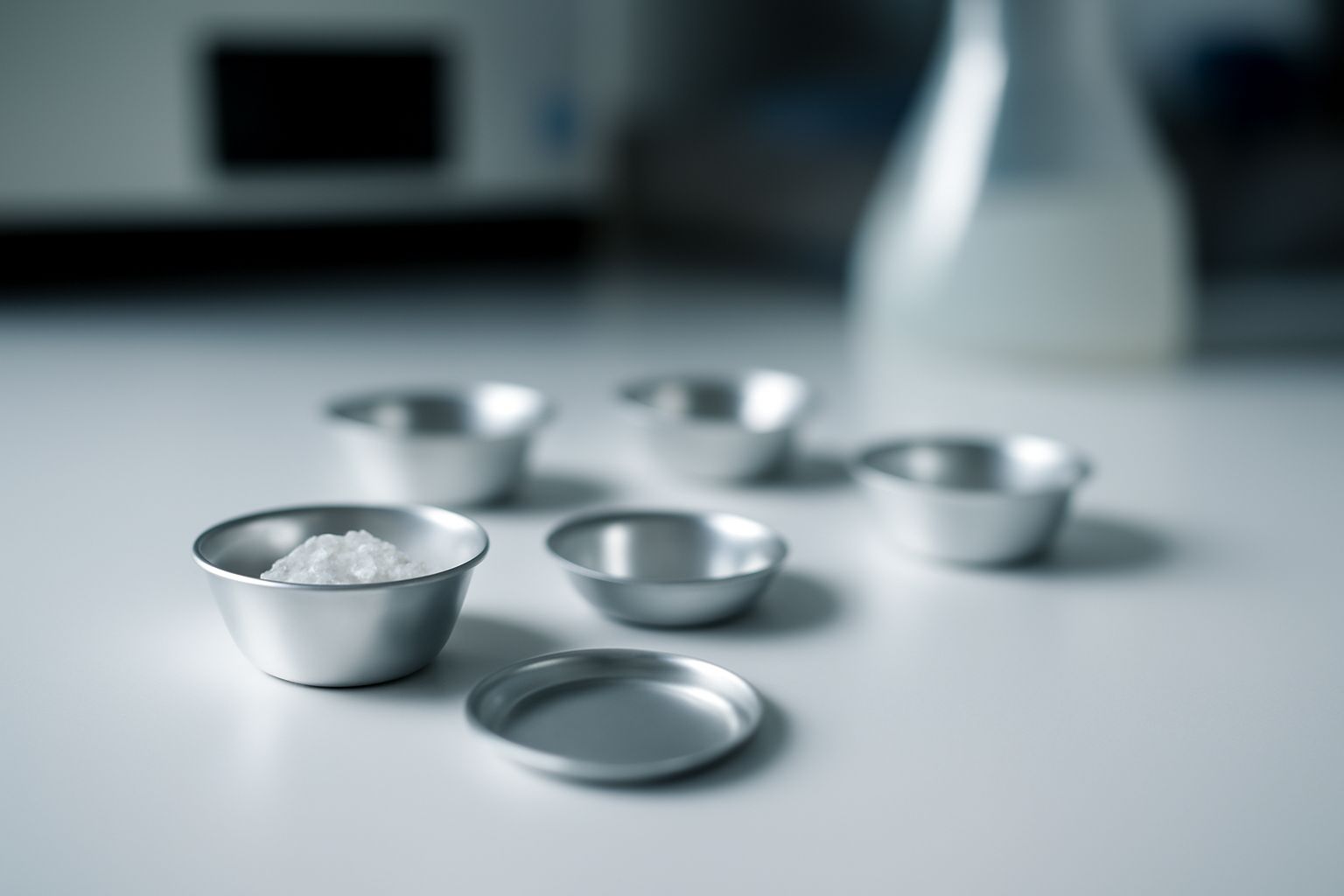
I struggled to pinpoint subtle glass transitions until I switched to pans designed for narrow heating zones and high seal strength. The right sample pan has changed my entire study workflow, especially in advanced polymer research. The details really matter here.
Missed polymer transitions and noisy baselines usually come from simple pan errors, not the DSC itself. Good practice means starting from your consumables.
The best practices for polymer transition analysis include using pure, certified sample pans, checking fit with your DSC tray, and choosing the correct seal type for each polymer's chemical and thermal profile.
| Best Practice | Why It Works | How to Apply |
|---|---|---|
| Material Purity & Sealing | Reduces contamination and loss | Use certified 99.99% aluminum pans with matching lids |
| Dimensional Fit | Prevents baseline drift | Test with a calibration run on your DSC |
| Seal Type Choice | Protects against sample evaporation | Pick hermetic pans for volatile or softening polymers (hermetic seal) |
| Sample Loading Control | Maintains repeatability | Fill 60-80% of pan and avoid sample overload |
After years of uneven test results, I now set aside time before each run to check pan seal, purity, and label. Most major polymer labs put this checklist in their study SOP and cite it in advice on DSC polymer transition analysis.
Generic sample pans often limit data resolution or cannot hold unique polymer forms. Custom pans can help extract hidden transitions or study unusual phase behavior.
Customized pans offer better volume, specific sealing, and improved thermal contact suited for your polymer and equipment, producing more accurate and detailed analysis results in research projects.
| Custom Feature | Research Benefit | Application Case |
|---|---|---|
| Adjustable Volume | Fits large or micro polymer samples | Low-amplitude signal detection |
| Special Seals or Vents | Enable high-pressure or volatile tests | Testing novel/unstable or high-mass loss polymers |
| Material Choices | Reduces contamination and artifact peaks | Platinum for aggressive or ultra-high temperature samples (platinum info) |
| Instrument Match | Boosts tray/pan thermal contact | Reduces calibration effort, improves repeatability |
Custom-made pans from technical drawings, or direct consultation with the supplier, can minimize scientific noise. This comes up in every advanced polymer conference and is highlighted in published research on challenging new materials, as seen in many polymer characterization guides.
Poor pan features blurs phase transitions and weakens any polymer study. High-accuracy work means every detail in the sample holder can help or hurt the final reading.
Pan features that support accurate polymer thermal studies include stable construction, certified purity, surface finish for consistent heat transfer, and sealing that is tight but accessible for sample recovery or handling.
| Pan Feature | Impact on Data | Advice for Use |
|---|---|---|
| Material and Finish | Reduces contamination and uneven heat flow | Opt for 99.99% aluminum/optionally gold, mirror-polished |
| Wall/Bottom Thickness | Produces sharper thermal transitions | Measure thickness, prefer thinner but not fragile |
| Sealing Type | Controls pressure, protects analysis process | Hermetic for aggressive or volatile samples |
| Pan Uniformity | Keeps results repeatable in batch analytical runs | Source from factory-certified suppliers for each production lot |
I often confirm pan wall thickness with a micrometer in my study runs. Some brands offer uniformity certificates and cross-reference their lots with ISO 17025 guidelines. Consistent data depends as much on pan sourcing as on your instrument.
Polymer research is diverse—rigid plastics, elastomers, copolymers all need different pans. Standard consumables rarely support advanced or custom compound work.
Start with your DSC model, temperature range, sample physical form, and volatility. List your polymer study needs and select pans supporting the performance, fit, and signal accuracy for those requirements.
| Study Parameter | Pan Solution | Additional Tip |
|---|---|---|
| High Temp (600°C+) | Platinum, thick-wall pans | Check supplier’s rated temp |
| Moisture sensitive/Volatile | Hermetic, O-ring sealed | Store pans in low humidity prior to use |
| Micro-sample/Trace | Small volume, flat bottom | Choose low-mass pans to boost sensitivity |
| Material compatibility | Check for polymer/metal reactions | Consult with technical support pre-order |
| Large sample/thick sections | Deep dish or reinforced design | Test blank runs with pan + carrier |
I keep a reference chart for every new project and share details with my supplier. By focusing on detailed needs, my polymer team cuts error rates and delivers solid, reproducible data. Nearly every polymer study has unique pan requirements that are more important in advanced investigations.
For reliable advanced polymer DSC studies, use customized or carefully matched sample pans. Pan selection aligned to research needs ensures accuracy and unlocks better scientific discovery.
Consult REDTHERMO for Advanced Pan Selection

C082.Wangdefu International Building, Furong, Changsha, Hunan, China


+86-19907415020