


SHOPPING CART
Your cart is empty.
shop now
Your cart is empty.
shop now
Choosing the wrong DSC sample pan can ruin polymer analysis and waste time. Many miss critical details and get unreliable results.
The best DSC sample pans for polymer analysis match your material's needs, minimize contamination, and handle sticky or volatile samples. Right pans ensure dependable, accurate thermal results with less hassle.
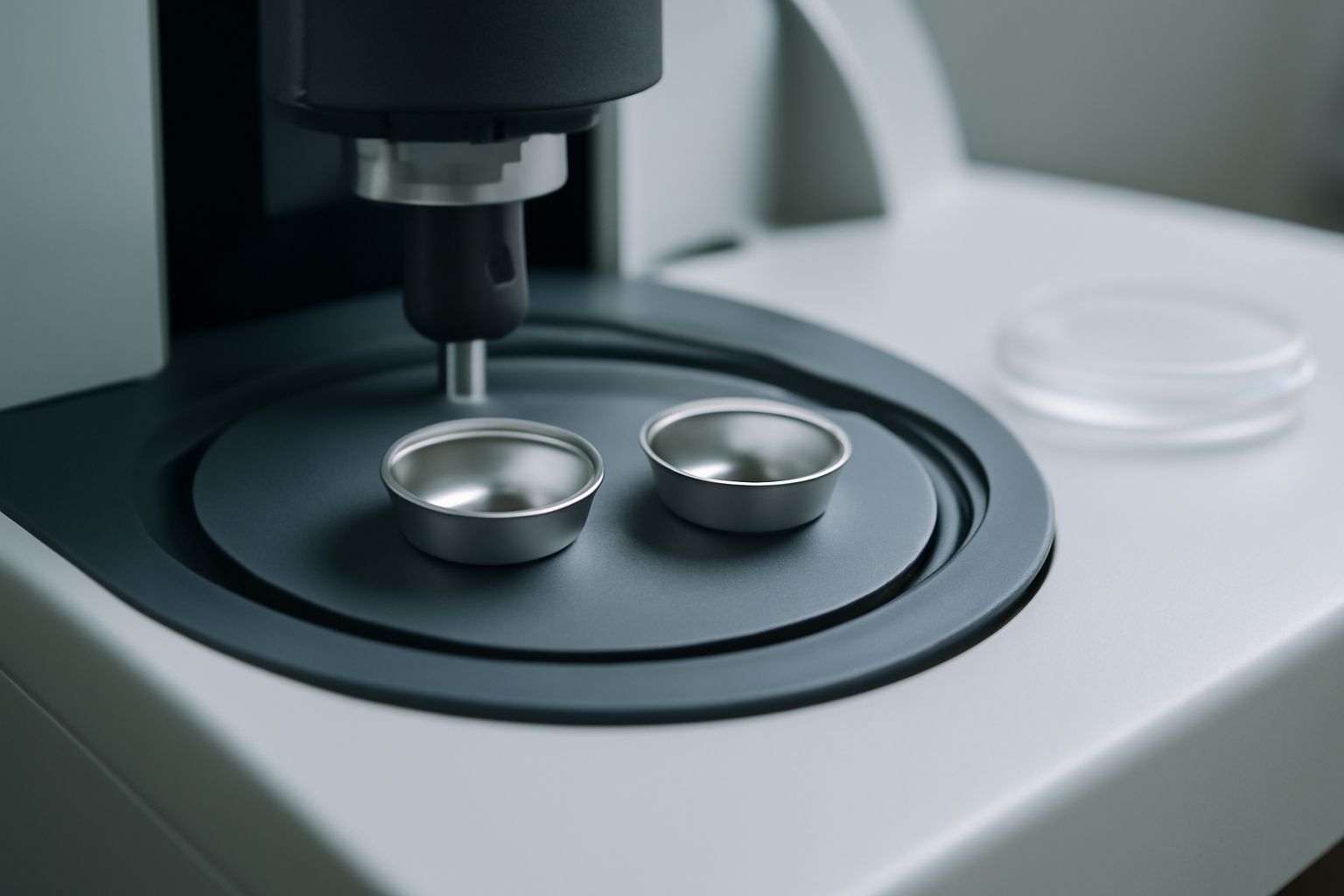
Many labs face problems when switching between polymers, plastics, and elastomers during thermal analysis. I have learned that the smallest details in pan selection, like seal type or material, can make a difference. Poor fits mean unreliable data and failed projects. Below, I share what works for me and why it saves both time and resources, especially if you're running frequent or critical DSC tests.
Not all pans perform the same way when analyzing polymers by DSC. Poor selection risks contamination, poor sealing, or loss of volatile content.
High-purity aluminum pans are the standard for most polymer DSC work. Specialized materials, like platinum or alumina, are useful for more complex, high-temperature, or reactive polymers.
| Material | Polymer Analysis Usage | Strengths | Typical Limitations |
|---|---|---|---|
| High-Purity Aluminum | Most common; good for general polymers, plastics, and rubber DSC testing | Excellent thermal conductivity; low cost; compatible with many instruments | Limited temp range (to ~600 °C); can react with strongly acidic polymers |
| Platinum | Specialty polymers, composites, and high-temp samples | High inertness; very high temp use (>1600 °C); minimal reactivity | Very expensive; less common for routine quality control |
| Alumina | Some special engineering plastics or aggressive samples | High temperature use; good inertness | Brittle; limited by fragility; not always available in all DSC models |
| Sealed/Hermetic Aluminum | Moisture-sensitive, volatile, or low-melting polymers | Prevents sample loss; keeps atmospheric gases out | Difficult to reseal after first use; may require more careful handling |
When selecting the best pan, I often double-check polymer compatibility with the pan material. Some plastics will react with metals at high heat. Sources, such as this published review (ScienceDirect, 2017), confirm that aluminum covers most needs, but not all. I always weigh cost, performance, and the risk of contamination before making a final pick.
Moisture and volatiles escape easily during DSC heating, changing true mass and ruining results. Simple open pans will not work for sensitive polymers.
Hermetic or crimped aluminum pans protect moisture-sensitive and volatile polymer samples. These pans keep water and volatiles inside, giving more reliable DSC readings.
| Precaution | Why it Matters | Practical Tip / Reference |
|---|---|---|
| Use Hermetic Pans | Prevents evaporation and mass loss during heating | Choose pans with O-ring or crimp seal for volatile samples |
| Seal Quickly After Loading | Avoids moisture pickup or volatile losses before test | Work in a dry box or with desiccant nearby |
| Check Seal Integrity Before Run | Leaks let air in and volatiles out, making data unreliable | Gently tap the pan, watch for leaks under a microscope |
| Store Prepared Pans in Low-Humidity | Prevents pre-test moisture uptake from the air | Use a dry cabinet for storage |
Some sensitive polymers, like polyamides and hydrogels, quickly gain or lose water. I pay extra attention to pan sealing and storage for these. Mistakes can change measurement results by several percent, as seen in lab experiments. Published errors for unsealed pans support this (see ACS example). Using hermetic pans and dry handling works every time.
Running many DSC tests in sequence raises the risk of leftover residue or impurities mixing between samples. This can change results or ruin sensitive polymer readings.
Always use fresh, disposable pans for each sample. Clean the pan holders, and avoid reusable pans when purity truly matters in polymer analysis.
| Method | How It Helps | Notes / Reference |
|---|---|---|
| Single-Use (Disposable) Pans | Removes chance of residue transfer | Cost is low for aluminum pans; see market overview at Wikipedia calorimeter |
| Thorough Cleaning of Pan Holders | Removes polymer traces, plasticizers, and volatiles | Use solvent cleaning, then bake out if possible |
| Use Different Holders for Different Polymers | Keeps high-risk samples isolated (e.g., PVC vs. silicone) | Label holders and track usage with logs |
| Avoid Overfilled Pans | Prevents spills and sticky polymer overflow | Follow the instrument manual for max fill volume |
I learned the hard way that reusing pans, even after cleaning, can introduce oils or tiny polymer fragments into later DSC runs. This is especially risky with elastomers and high-melting engineering plastics. Clear labeling, strict cleaning, and changing pans every time is now my standard method.
Sticky, soft, or low-melting polymers can make pan loading messy, lead to leaks, or cause running errors in DSC. Poor pan choices complicate results and cleanup.
Pans with non-stick coatings, vented lids, or reinforced walls work best for sticky and soft polymers. They stop messy spills and keep measurement areas clean.
| Feature | What It Solves | Common Applications |
|---|---|---|
| Non-Stick Pan Coating | Reduces polymer adhesion; easy release after test | Sticky rubbers, thermoplastic elastomers |
| Vented/Pin-Holed Lids | Lets gas escape gently, stops pan blow-off | Low-melting or foaming plastics like EVA or PE |
| Reinforced Aluminum Walls | Keeps shape, prevents bending at softening temperature | Soft, thick samples or cycle testing |
| Inert Surface Liners | Stops interaction between pan and sensitive polymer | Reactive polymers, easily oxidized materials (see passivation) |
I once struggled to get accurate DSC results with sticky TPU resin. Using a non-stick and vented pan, the problem went away. Many manufacturers now offer surface-treated or specialty pans made for these polymer types. Using the right feature lets you focus on results, rather than worrying about payback on ruined pans or failed runs.
Matching DSC pan type to polymer traits cuts errors, prevents sample loss, and guarantees accurate thermal analysis every time. Prepare with the right pan for dependable results.


C082.Wangdefu International Building, Furong, Changsha, Hunan, China


+86-19907415020