



SHOPPING CART
Your cart is empty.
shop now
Your cart is empty.
shop now
Many students struggle with uncertainty during DSC tests, risking unreliable data and wasted materials. Misusing aluminum pans can make results hard to trust and experiments time-consuming.
Students should select the right aluminum pan type, ensure it matches the instrument, and follow careful sealing and loading steps. This leads to more accurate DSC results and better learning in lab settings.
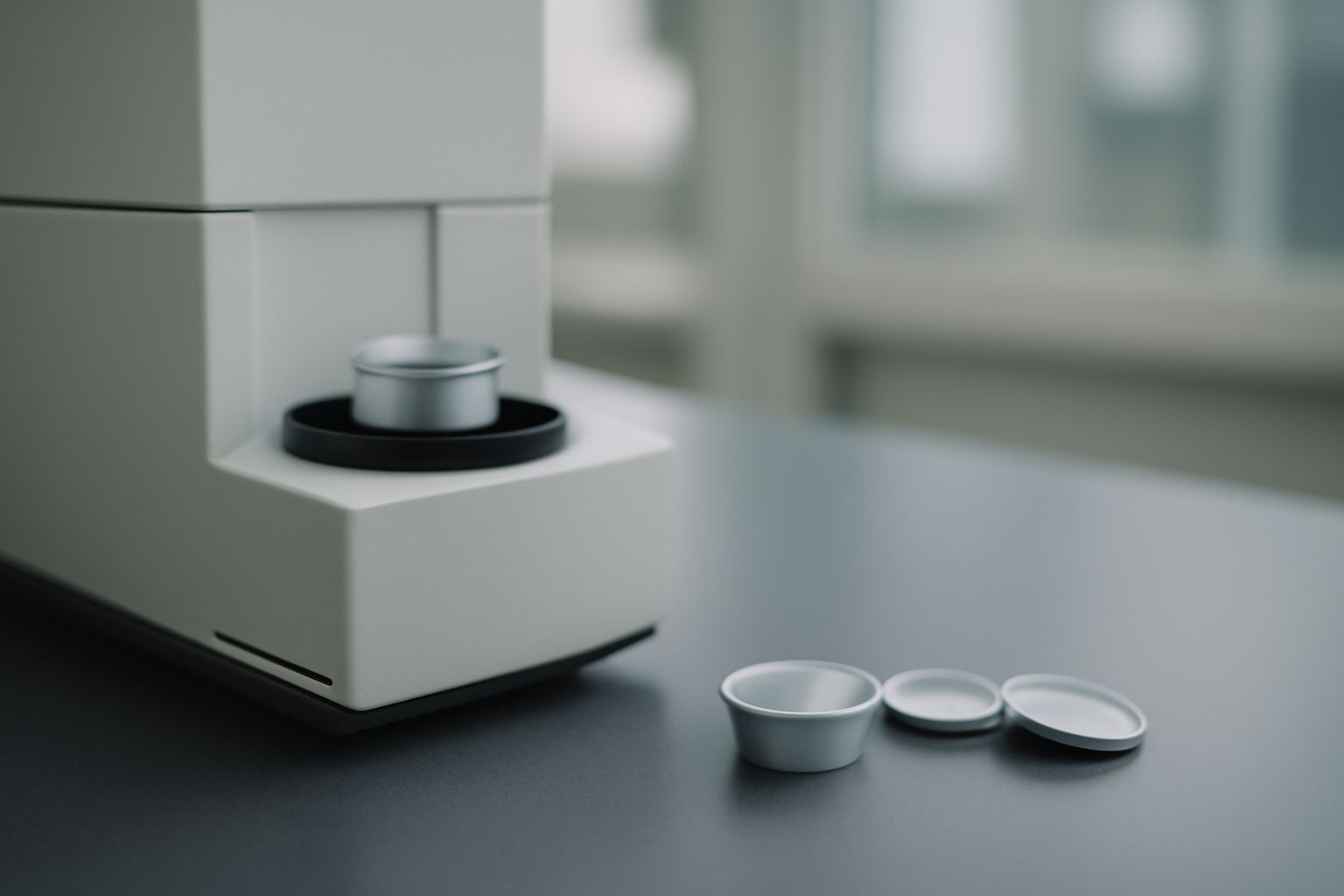
This guide shows how smart choices with aluminum pans can simplify DSC analysis, strengthen data quality, and build your skills for industry labs. Reading on will help you avoid common mistakes and keep your studies on the right path.
Many students rush the pan preparation process, leading to misplaced samples or leaks that disrupt DSC runs. Following best practices is key to consistent, repeatable data.
The best practices for using aluminum pans in DSC include choosing compatible pans, loading correct sample quantities, and sealing them tightly to prevent loss or contamination. Always check compatibility with your DSC system.
| Best Practice | Description | Reason for Importance |
|---|---|---|
| Choose Compatible Pans | Pick pans that match your DSC instrument brand and model. For example, pans for TA Instruments may differ from those for METTLER. | Ensures correct fit; prevents leakage and false baseline shifts in the test. |
| Use Clean Tools | Always use tweezers and gloves when handling pans and lids to avoid fingerprints and contamination. | Improves accuracy and avoids interfering substances. |
| Weigh Samples Carefully | Use an analytical balance for precise measurement (typically 1–10 mg). | Minimizes mass errors and supports data comparability. |
| Seal Pans Properly | Use a pan crimper or pressing tool to tightly seal pans. Ensure the lid is firmly attached and undamaged. | Prevents sample loss and ensures reliable endo/exothermic events in curves. |
Choosing the right crucible, preparing samples properly, and sealing pans are habits top labs use daily. These habits can turn DSC learning into a hands-on, rewarding experience for any student. Referencing user manuals from major DSC brands can also provide step-by-step guidance for pan handling.
Modern DSC equipment has pushed the boundaries for aluminum pan design and requirements. Students using new DSCs may use pans that behave differently from traditional ones.
Technological advancements in DSC enable aluminum pans to withstand higher temperatures and achieve better baseline stability. Innovations like hermetic sealing and micro pans support sensitive and volatile samples.
| Advancement | Effect on Aluminum Pans | Student Benefit |
|---|---|---|
| Higher Heating Rates | Pans now withstand high-temperature gradients, minimizing warping and oxidation issues. | Allows study of rapid phase changes and real-world production scenarios. |
| Hermetic, Pressure-Tight Seals | Improved lids and crimping enhance the pan’s enclosure strength. | Supports safe analysis of volatile samples, prevents gas leaks and accidents. |
| Miniaturized Pan Designs | Small volume pans (milligram range) give faster thermal responses. | Enables analysis of costly samples and sharper resolution of transition events. |
| Material Purity Improvements | Use of 99.99% pure aluminum reduces background noise in data. | Gives clearer, more reliable results for each test. |
The student community benefits from these DSC advances since they simplify complex measurements and prepare young analysts for the technology found in advanced R&D labs worldwide. Many contemporary textbooks, such as the Principles of Thermal Analysis, now dedicate entire sections to the impact of pan choice in modern instrumentation.
Many labs have introduced new DSC workflows, data logging, and analysis techniques. Students need to know what is changing to remain skilled and informed.
Emerging trends include the use of automation in pan loading, data management software, sustainable pan materials, and machine-learning tools for DSC interpretation. These trends are setting the stage for the next generation of lab work.
| Trend | Description | What It Means for Students |
|---|---|---|
| Automation in Sample Prep | Robotics automate weighing and pan sealing, streamlining routine DSC runs. | Reduces manual errors and frees up time for more complex projects. |
| Advanced Data Management | LIMS and custom software store and organize pan test data from multiple devices. | Simplifies report generation and enables error tracing. |
| Sustainable Pan Materials | Emerging eco-friendly aluminum and recycling programs for pans. | Aligns studies with industry sustainability goals and reduces lab waste. |
| Machine-Learning Assisted Analysis | Software learns to spot irregular thermal events faster than humans. | Improves accuracy, shortens training times for new students. |
These trends are driven by the demand for efficiency and green practices. Major DSC manufacturers are investing in these upgrades, and students who follow these trends become better positioned for new roles in the materials industry.
Tracking international news helps students discover new applications, standards, and technology hubs for DSC analysis. It also spotlights regulatory and safety changes.
International news can shape student practices by highlighting regional priorities, such as stricter sample handling laws in Europe or rapid innovation in Asia-Pacific labs. It promotes a global mindset in scientific work.
| News Topic | Source Example | Impact on Student Practice |
|---|---|---|
| New Regional Safety Laws | Updates from the European Chemicals Agency | Students learn to comply with global safety norms, making their test results more relevant internationally. |
| Breakthrough DSC Research | Papers in journals like Nature Materials | Keeps students aware of the frontier for aluminum pan methods and analysis challenges. |
| Mergers and Brand News | Industry announcements on new pan production techniques or partnerships. | Alerts students to shifts in available supplies and technology upgrades. |
| International Standards Updates | New releases from ISO | Students can adjust their techniques to meet the latest widely accepted criteria. |
Following global news teaches students to think beyond their immediate university and prepares them for teamwork in diverse technical environments—a key skill as science grows more interconnected. Key trade publications like Analytical Scientist and academic journals provide ongoing updates for those eager to keep their knowledge up to date.


C082.Wangdefu International Building, Furong, Changsha, Hunan, China


+86-19907415020