



SHOPPING CART
Your cart is empty.
shop now
Your cart is empty.
shop now
Are you frustrated by unreliable test results or delays in your laboratory due to the wrong sample holders? You are not alone; I faced these exact issues early in my career.
When choosing thermal analysis sample holders, focus on material durability, compatibility with your equipment, and supplier reliability to ensure accurate results and efficient workflows.
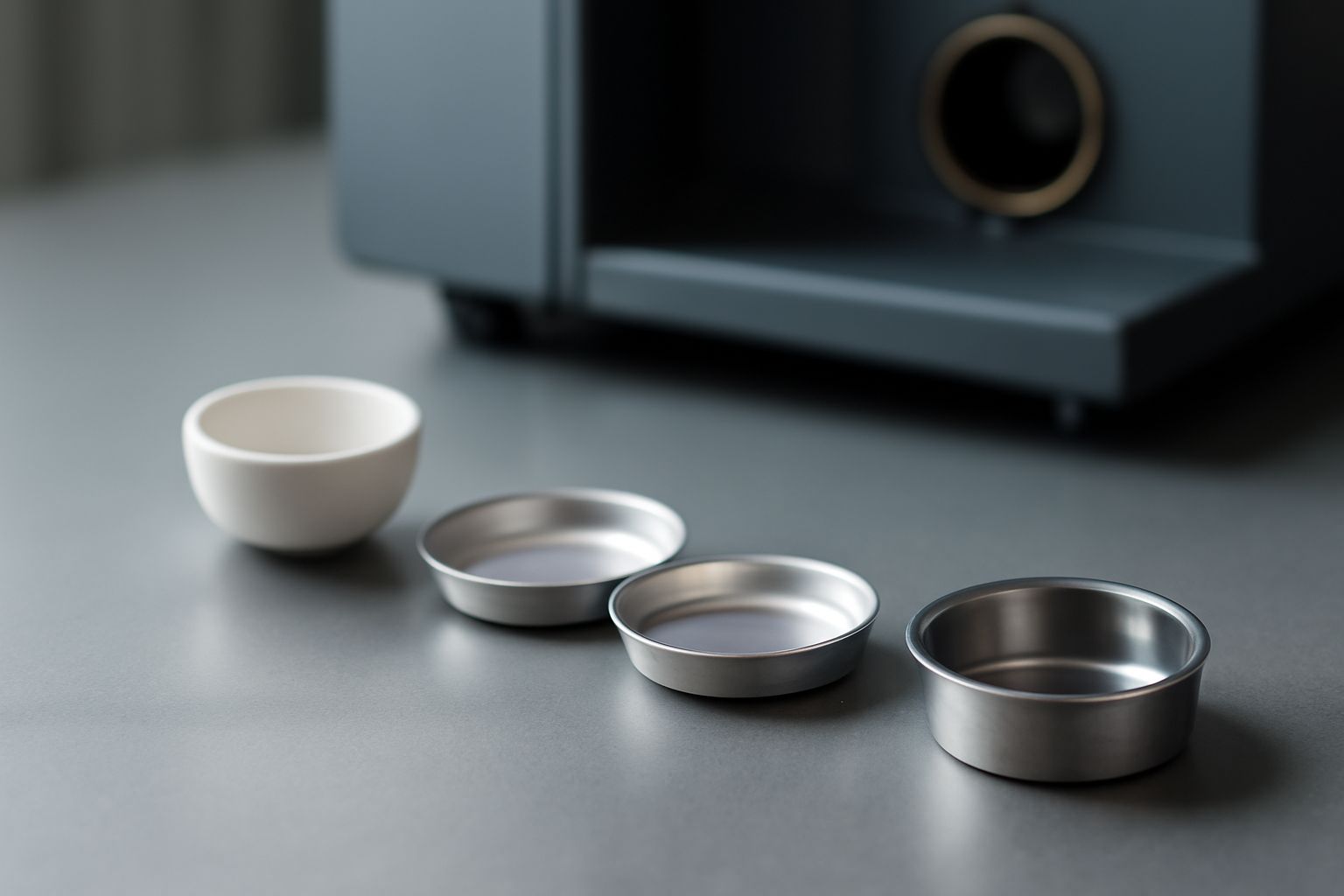
Many lab engineers struggle to balance price, technical performance, and delivery times when buying sample holders. Based on my hands-on experience in material testing, I can confirm that proper sample holder selection is the foundation for stable and consistent data. If you want to reduce equipment downtime and increase experiment repeatability, take product specs and ordering support seriously. Let us look at the key details step by step.
Do you ever wonder which features actually matter when picking sample holders? In my first lab project, I wasted time and samples by using holders without proper lids. The details make all the difference.
The most important features are material type, precise fit, sealing options, and heat resistance. You also need to check if the sample holder matches your testing method and instrument model.
| Feature | Description | Importance |
|---|---|---|
| Durability | Withstands repeated heating and cooling cycles without warping. | High |
| Precision Fit | Matches your instrument chamber specifications, prevents leakage. | High |
| Material Purity | Reduces contamination, ensures reliable results. | High |
| Sealing Design | Includes options like crimped, screw, or O-ring lids for volatile or sensitive samples. | Medium |
| Maximum Operating Temperature | Must endure your process temperature. Aluminum works to about 600°C, platinum to much higher. | High |
I see quality assurance engineers always cross-check technical datasheets and compatibility charts. By doing so, they avoid re-testing and expensive downtime. For example, TA Instruments, NETZSCH, and METTLER sample holders all have unique designs, so always confirm model numbers to avoid costly returns.
Have you ever had a sample fail because the holder warped at the wrong temperature? I have. Choosing the right material can prevent data losses and equipment damage.
Sample holder materials—aluminum, platinum, ceramic, and specialty alloys—impact heat transfer, contamination risk, and temperature stability. The correct choice depends on your testing method’s needs.
| Material | Max Temp | Contamination Risk | Typical Use |
|---|---|---|---|
| Aluminum | Up to 600°C | Low if high purity | DSC, routine TGA applications |
| Platinum | Above 1500°C | Very Low | STA, high-temp research |
| Ceramic | Up to 1200°C | Medium | TGA, aggressive chemical samples |
| Silver/Gold Alloys | 600–1000°C | Very Low | Special corrosion tests, volatile samples |
The thermal conductivity of your holder impacts how heat moves through your sample, which is why high-purity aluminum is usually best for routine calorimetry. Platinum pans, though expensive, are the standard for advanced research due to their chemical resistance and reliable data delivery in high-heat conditions.
Are you caught between choosing a high-end sample holder or saving costs? I often weigh this decision for every new project, especially when budgets are tight.
Sample holder costs depend on material quality, design complexity, and order quantity. Custom pans for rare tests cost more, but bulk packs of standard holders reduce price per piece.
| Type | Unit Price (USD) | Common Order Size | Total Typical Cost |
|---|---|---|---|
| Aluminum (Standard) | $1–$2 | 50–200 pcs | $50–$400 |
| Platinum (Standard) | $80–$120 | 1–5 pcs | $80–$600 |
| Custom Shape/Size | $2–$10 | 10–100 pcs | $20–$1000 |
| Specialty Material | $5–$30 | 10–50 pcs | $50–$1500 |
I find that purchasing standard pans in bulk offers major savings for routine labs, while customized holders suit specialized research teams. Some global suppliers, like palladium manufacturers, offer high-end solutions, but these are best reserved for extreme applications. Always match your order size to your lab’s workflow to avoid overstock or shortages.
Did you ever buy what you thought was the right holder, only to find it did not fit? This mistake happened to me once; since then, I never skip compatibility checks.
You can assess compatibility by checking instrument manuals, using supplier cross-reference tables, and confirming mechanical drawings or dimensions before making a purchase.
| Step | What to Check | Action |
|---|---|---|
| 1. Identify Equipment Model | Instrument brand and version (e.g., TA, NETZSCH, Mettler) | Find model plate or consult user manual |
| 2. Check Pan Specs | Pan dimensions, lid type, max temperature | Compare with supplier’s product sheet |
| 3. Use Cross-Reference Tools | Supplier-provided tables or compatibility lists | Look for a clear brand-to-brand mapping |
| 4. Request Drawings | For custom holders, get detailed mechanical drawings | Confirm fit with your own caliper or instrument tray |
| 5. Ask for Test Reports | Sometimes needed for regulated labs | See if the supplier provides a performance certificate |
Reliable brands always publish compatibility charts for DSC and TGA models. I recommend keeping a reference folder of all your instrument model numbers and preferred pan SKUs. This simple habit prevents costly errors and speeds up ordering.
Choosing the right sample holders means fewer retests, safer results, and lower laboratory costs in every thermal analysis project.


C082.Wangdefu International Building, Furong, Changsha, Hunan, China


+86-19907415020